
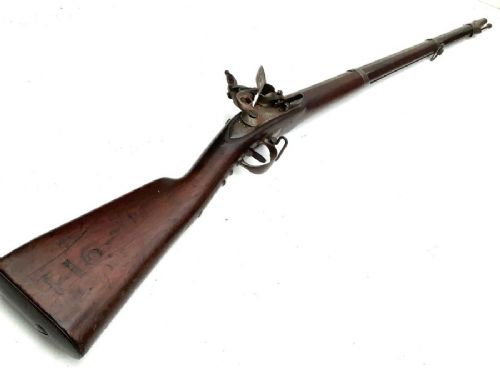
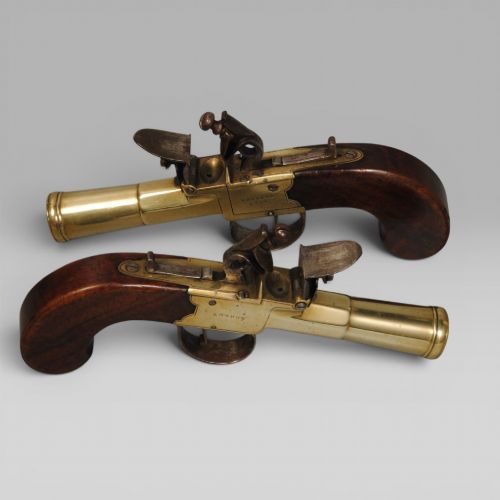

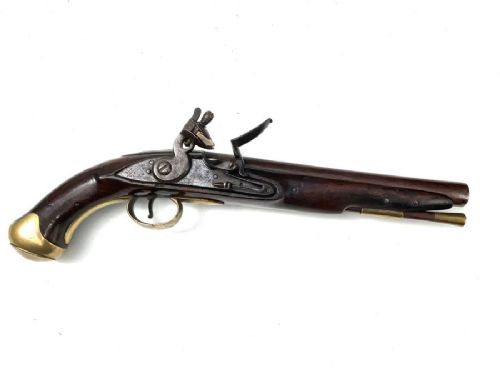


18th Century Flintlock
An 18th century flintlock is a mechanical firearm driven by a spark-producing mechanism, sought after for its tactile history and period engineering.
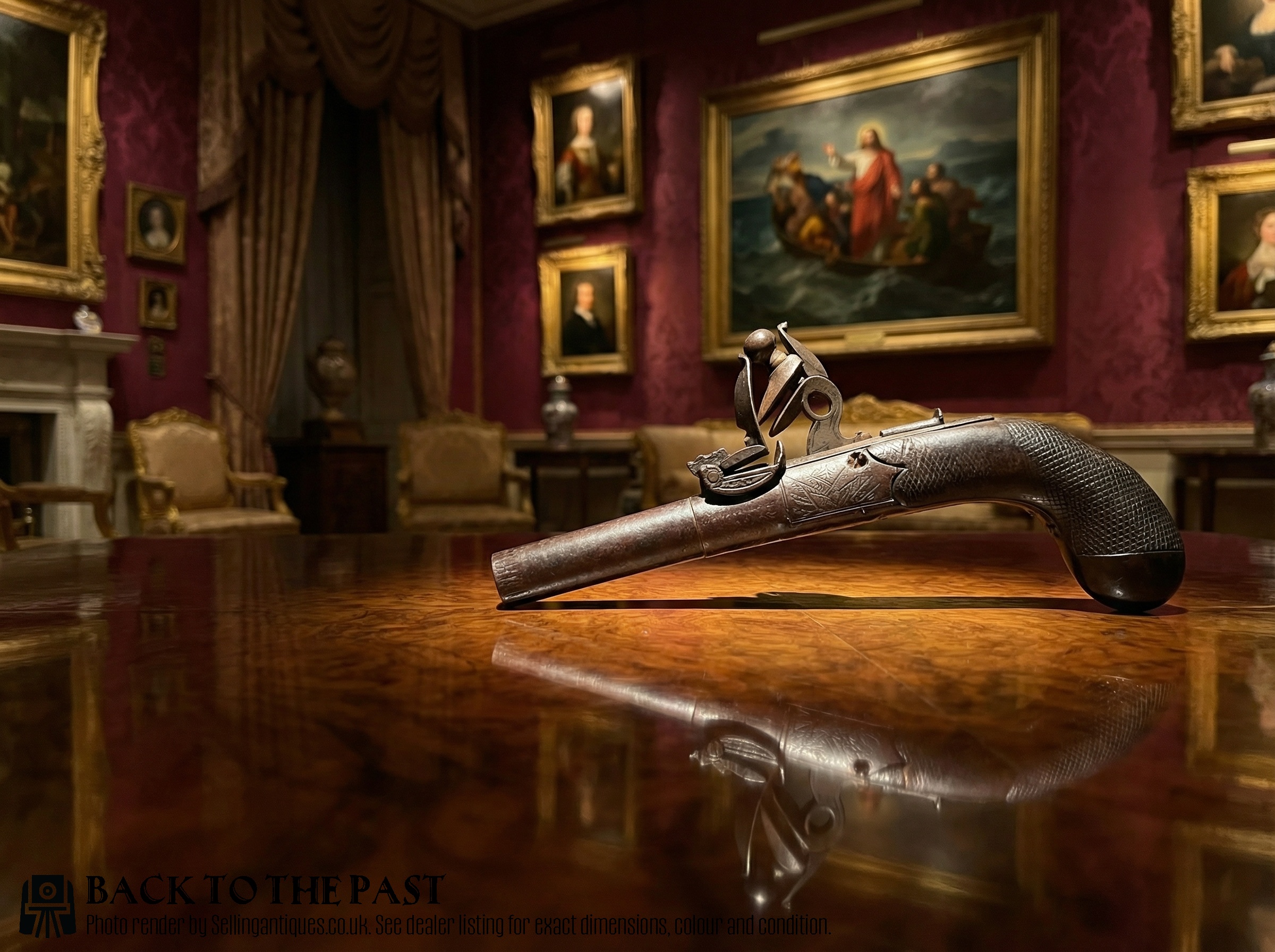
18th Century Flintlock
An 18th century flintlock encompasses military arms, pocket pistols, holster arms, and long-barreled blunderbusses spanning the Georgian era and continental Europe.
The selection ranges from British service arms and Queen Anne pocket pieces to Italian Brescia-type pistols and Ottoman Balkan holster arms.
Buyers encounter both martial weapons bearing proof marks and civilian pocket arms designed for personal defence during the Georgian period.
How they were made
Makers shaped stocks from walnut and other dense woods, fitted with steel lock plates, iron barrels, and brass or bronze furniture.
Craftsmen enriched select models with intricate silver inlay, gold detailing, and brass mountings, while proof houses stamped barrels to verify strength.
18th Century Flintlock Retail Price Guide 2026
Typical asking prices for 18th century flintlock among the pieces listed under this phrase on Sellingantiques today, from the lower quarter to the upper quarter. They describe what is for sale here now, not the wider market.
Listings feature steel, walnut, brass, wood, silver, and iron across Georgian, 18th Century European, Ottoman Balkan, and Queen Anne styles.
What varies in quality
Quality rests upon the crispness of the lock mechanism, the integrity of the timber stock, and the prominence of maker signatures or proof marks.
Artisanal execution separates standard military-issue arms from civilian pieces featuring specialised turn-off barrels, spring bayonets, or detailed metal engraving.
J. Robinson·Dutton·Wilson·Knubley·Egan·Ketland and Co·Francesco Rossi·Richards·Twigg·Ezekiel Baker
The 18th Century Flintlock Glossary
- Flintlock
- A firearm ignition mechanism that uses a flint striking a steel frizzen to create sparks for gunpowder ignition.
- Holster pistol
- A large sidearm carried in a saddle holster by cavalry troopers and travellers during the Georgian period.
- Blunderbuss
- A muzzle-loading firearm with a flared barrel designed to scatter lead shot at close range.
- Bore
- The interior diameter of the gun barrel, often measured by the number of lead balls of that diameter weighing a pound.
- Proof mark
- An official stamp applied to a barrel or action to certify it has been tested for safety under gunpowder pressure.
18th Century Flintlock: Frequently Asked Questions
How do I identify an 18th century flintlock?
Examine the lock plate mechanics, timber grain in the walnut stock, and any visible maker signatures or proof marks stamped into the metal.
Compare the form against known military or civilian patterns from the period to confirm its origin.
Were these pistols used in combat?
Many examples served active military roles in cavalry regiments, naval units, and infantry campaigns across Europe and the Ottoman Empire.
Others functioned as civilian pocket arms for personal protection on Georgian roads.
What is a blunderbuss?
A blunderbuss is a short-range firearm distinguished by its characteristically flared muzzle designed to scatter shot effectively.
These were widely utilised by coach travellers and naval forces for defensive purposes.
How should I display an antique flintlock?
Keep the firearm in a stable environment away from direct sunlight and excessive humidity to protect the walnut stock and steel components.
Mount it securely on a wall bracket or display it within a cabinet designed for antique arms.