


Antique British Handgun
An antique british handgun carries centuries of military and civilian history, prized by collectors for its mechanics and design.
Antique British Handgun
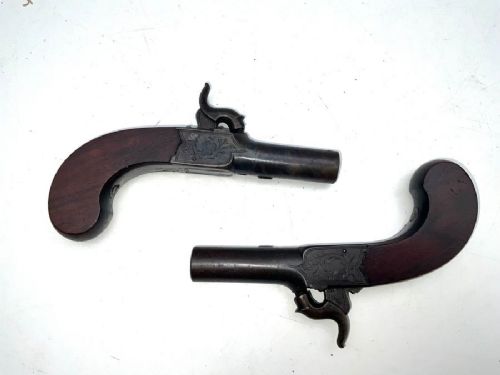
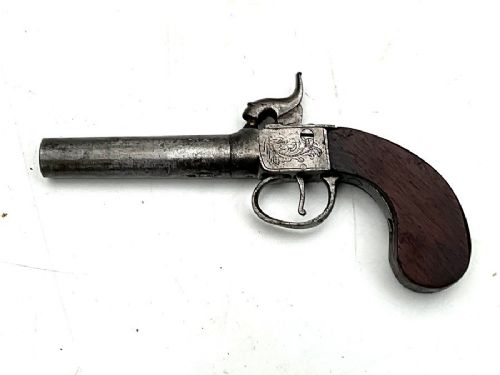
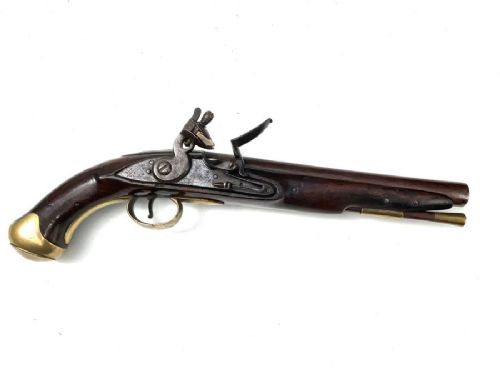
An antique british handgun spans the Georgian, Regency, and Victorian eras, encompassing both military service arms and private pocket pistols. When exploring this selection, buyers frequently encounter percussion and flintlock ignition systems originating from makers in London and official arsenals.
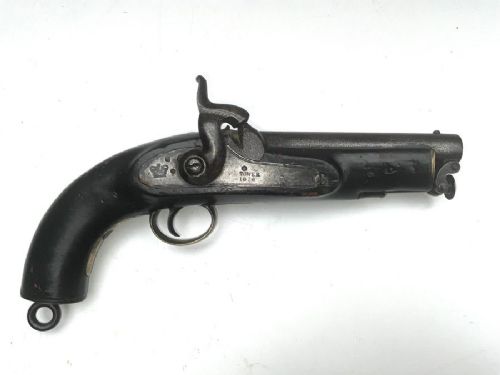
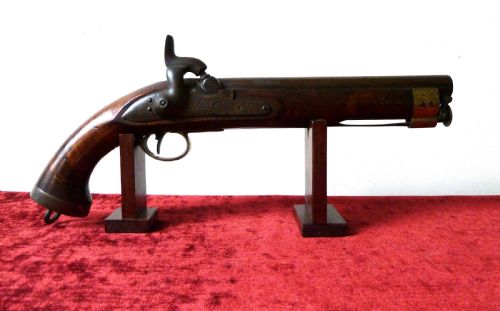
The assortment ranges from heavy dragoon and cavalry holster pistols to refined officer sidearms and boxlock pocket arms. Military examples often bear Tower markings and East India Company stamps, while civilian pieces display sophisticated private maker signatures.
How they were made
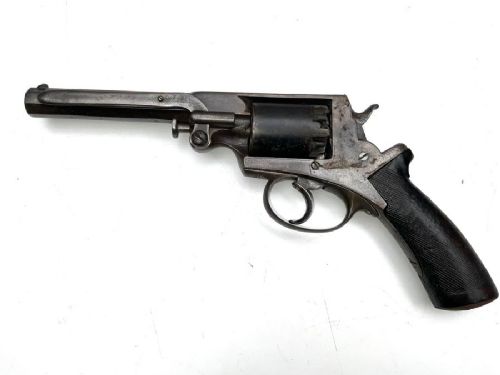
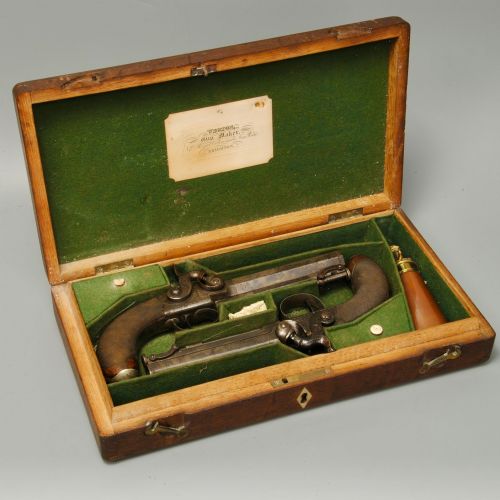
Makers utilised forged steel and iron for barrels and lock mechanisms, pairing them with robust stocks carved from walnut and other dense woods. Brass furniture frequently reinforced components on military service arms, while baize lined fitted cases for cased revolvers and multi-piece sets.
Craftsmen applied precise mechanical techniques to transition from flintlock to percussion cap ignition during the nineteenth century. Proof marks stamped into the metal signified successful testing before the finished handgun left the workshop or government armoury.
Antique British Handgun Retail Price Guide 2026
Typical asking prices for british handgun among the pieces listed under this phrase on Sellingantiques today, from the lower quarter to the upper quarter. They describe what is for sale here now, not the wider market.
Makers from London and official armouries produced these flintlock and percussion arms, including specialised pocket pistols and large-bore cavalry revolvers.
What varies in quality
The distinction between standard service issue and high-grade civilian pieces rests upon the finish of the metalwork and the crispness of the engraving. Master London makers applied finer tolerances and superior scrollwork to officer pistols compared to mass-produced military contracts.
Survival of original finish on the steel, sharpness of inspection stamps on the wood stock, and integrity of the internal lock mechanism elevate an example. Matching pairs and complete boxed sets with original accessories represent the upper echelon of the market.
Harrison of London·Mortimer·Henry Nock·Deane Adams and Deane·T Potts·Dutton·Wilson·Brasher
The Antique British Handgun Glossary
- Flintlock
- An ignition mechanism utilising a piece of flint struck against a steel frizzen to create sparks for gunpowder ignition. This system dominated military and civilian arms throughout the eighteenth and early nineteenth centuries.
- Percussion
- A later ignition method employing a hammer striking a percussion cap placed on a nipple to detonate the powder charge. It superseded the flintlock due to its reliability in wet weather.
- Tower
- A designation referring to the Tower of London, the principal ordnance facility where British government firearms were manufactured and stored. Inspector stamps and crown marks on these pieces verify official military origin.
- Bore
- The interior diameter of the barrel, historically measured by the weight of a lead ball fitting it or by decimal inches in later models. This measurement defines the calibre and intended utility of the handgun.
Antique British Handgun: Frequently Asked Questions
What do Tower marks signify on these pistols?
Tower marks indicate that the handgun was produced for or issued to British military forces under the supervision of the Board of Ordnance. These stamps typically include a crown cipher and the word Tower.
Government contract pieces bear these official inspection marks to verify standardisation and government ownership. They frequently appear on heavy dragoon and cavalry service arms from the eighteenth and nineteenth centuries.
Were these handguns used in active military service?
Many examples served directly with British cavalry, infantry officers, and colonial forces during Georgian and Victorian campaigns. Heavy dragoon and holster pistols saw deployment across various global conflicts.
Civilian counterparts, such as pocket and belt pistols, served personal defence needs for travellers and officials. The presence of military stamps or private proof marks helps distinguish service deployment from private civilian ownership.
How should I care for an antique handgun at home?
Keep the piece in a stable environment away from excessive humidity and direct sunlight to protect wooden stocks and steel surfaces. Lightly oiling metal components prevents oxidation without altering the patina.
Displaying the handgun in a secure cabinet or resting it on a suitable mount preserves its structural integrity. Avoid aggressive cleaning agents that could remove historical finish or inspection stamps.