


English Flintlock Pistol
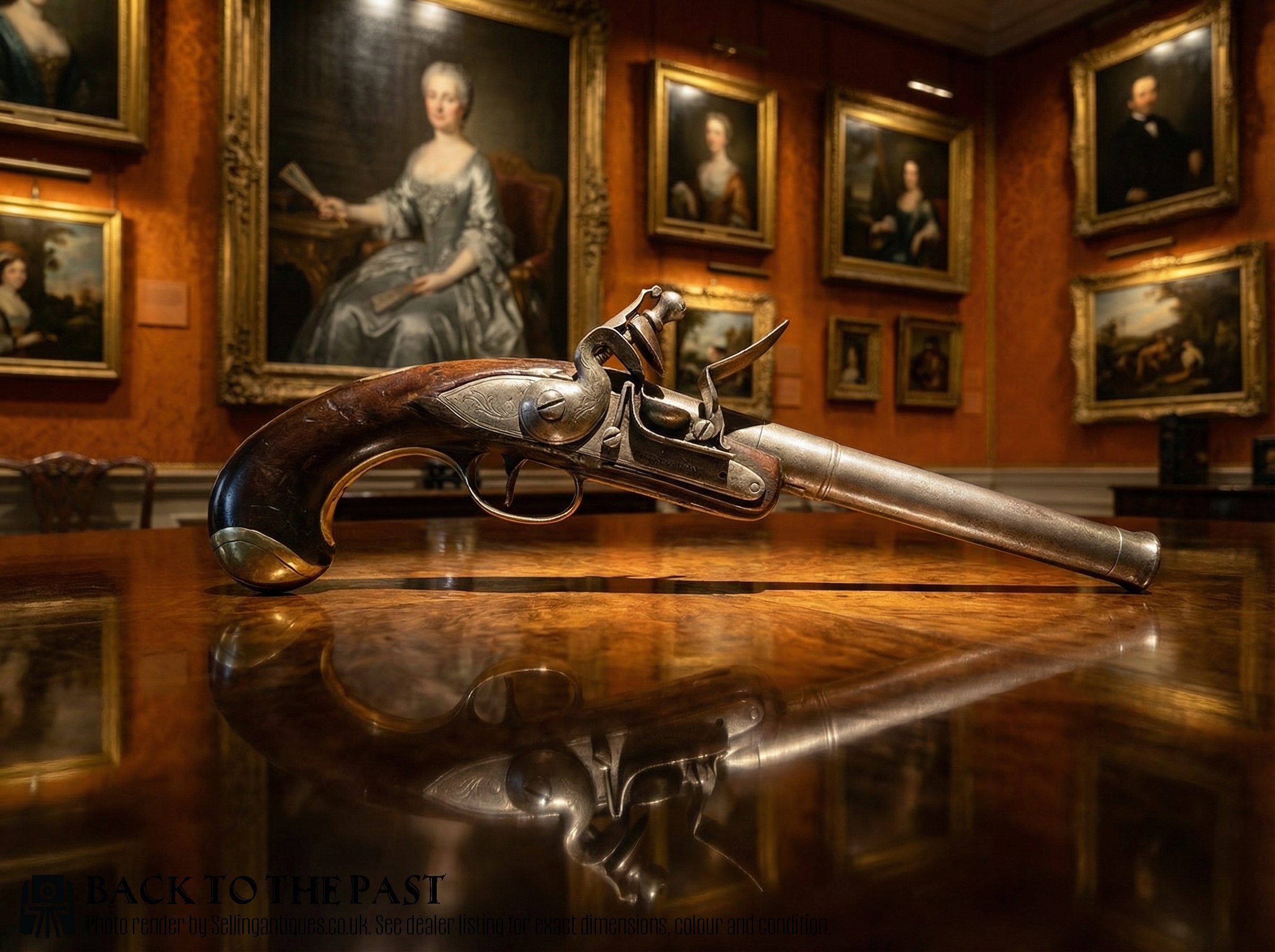
An english flintlock pistol is a tactile piece of defensive engineering, prized for its mechanical ingenuity and period craftsmanship.
English Flintlock Pistol
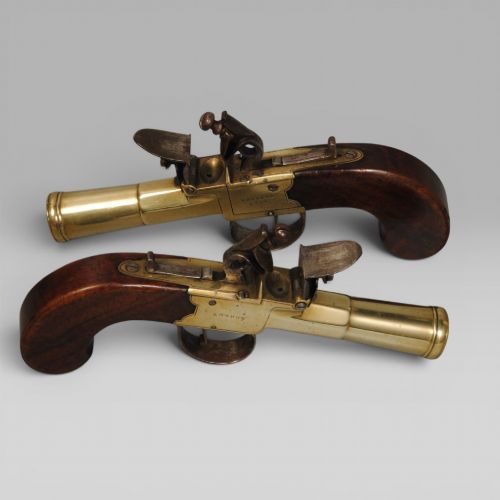
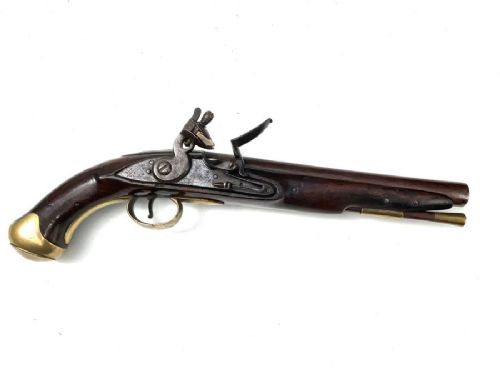
An english flintlock pistol spans from the early eighteenth century through the georgian and regency eras into the nineteenth century. These firearms include pocket pistols, blunderbuss pistols, holster pistols, and duelling pieces.
The selections here encompass forms such as the queen anne type with canon barrels, boxlock mechanisms, and cased pairs. Makers working in london, birmingham, and liverpool signed their work across these domestic production centres.
Most examples date to the eighteenth century, utilising steel, iron, and brass components fitted to wooden stocks. Collectors encounter both single specimens and matched pairs housed in fitted boxes with baize linings.
Materials and Construction
Gunsmiths shaped actions and barrels from steel and iron, pairing them with stocks carved from walnut, mahogany, and other hardwoods. Brass also appears on frames and mountings, while silver provides contrast through wire inlay and decorative butt caps.
Mechanisms rely on precise metalwork for the lockplate, frizzen, and cock to generate the spark required for ignition. Barrels often feature turn-off designs or canon profiles, machined to fit tightly onto the breech.
English Flintlock Pistol Retail Price Guide 2026
Typical asking prices for english flintlock pistol among the pieces listed under this phrase on Sellingantiques today, from the lower quarter to the upper quarter. They describe what is for sale here now, not the wider market.
Silver wire winds through walnut grips to form delicate tendrils, ensuring even an argument could look exceptionally stylish.
Assessing Quality and Execution
The distinction between tiers rests upon the crispness of the maker's signature engraving and the complexity of metal and wood integration. Superior examples display intricate silver-wire inlay across the grip and cast silver grotesque butt caps.
Signatures of notable makers from london or provincial workshops elevate the standing of a piece. The survival of original finish, matching serial numbers on pairs, and integrated accessories within fitted cases contribute to desirability.
Harrison of London·Twigg London·James Barber London·Thomas Henshaw London·H.W. Mortimer And Son·R. Willoughby Birmingham·John Rimes London·J. Robinson Bootle·Dutton London
The English Flintlock Pistol Glossary
- Flintlock
- A firearm ignition mechanism that uses a piece of flint held in a cock to strike a steel frizzen, creating sparks to ignite the powder charge. This system dominated personal firearms technology for centuries.
- Cannon Barrel
- A barrel shaped with stepped rings resembling the profile of a ship's cannon, common on eighteenth-century pocket and turn-off pistols. It screws off at the breech for easy loading.
- Boxlock
- A firearm design where the breech and lock are forged as a single unified metal housing, often seen on pocket pistols. This layout simplified internal linkages and improved reliability.
- Turn-Off
- A barrel design that unscrews from the frame to allow powder and ball to be loaded directly from the rear. This eliminates the need for a ramrod in smaller concealable pieces.
- Baize
- A woolen felt fabric used to line fitted wooden cases for cased pairs of pistols. It protects the polished metal and wood surfaces from abrasion during storage.
English Flintlock Pistol: Frequently Asked Questions
How were these pistols carried?
Owners slipped pocket pistols into deep coat pockets or saddle holsters for personal defence during travel. Larger holster pistols were secured in mounted saddle housings on horseback.
Cased duelling sets stayed at home or travelled in carriage compartments, ready for formal disputes or target practice.
What does birmingham proof mean?
Birmingham proof marks indicate that the barrel underwent official testing for strength at the designated assay office. These stamps confirm the gun met safety standards for gunpowder pressures.
Finding these marks helps verify the geographic origin and period authenticity of the piece.
How do I care for the wood and steel?
Keep these items in a stable environment away from direct sunlight and damp conditions to protect the hardwood stocks and steel mechanisms. Light applications of appropriate conservation wax or oil prevent corrosion on metal surfaces.
Avoid aggressive cleaning that might remove patination or damage delicate silver wire inlays.
Were these used in duels?
Cased pairs by makers like mortimer served specifically for gentlemen resolving disputes under strict codes of conduct. Their matched mechanics ensured equal performance for both participants.
Other styles, such as pocket and officer models, served everyday defensive needs rather than formal affairs.