
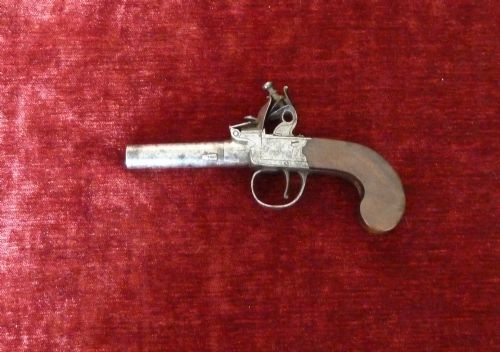


Georgian Turn Off Pistol
Georgian turn off pistol examples are ingenious pocket and coat arms defined by their screw-off barrels.
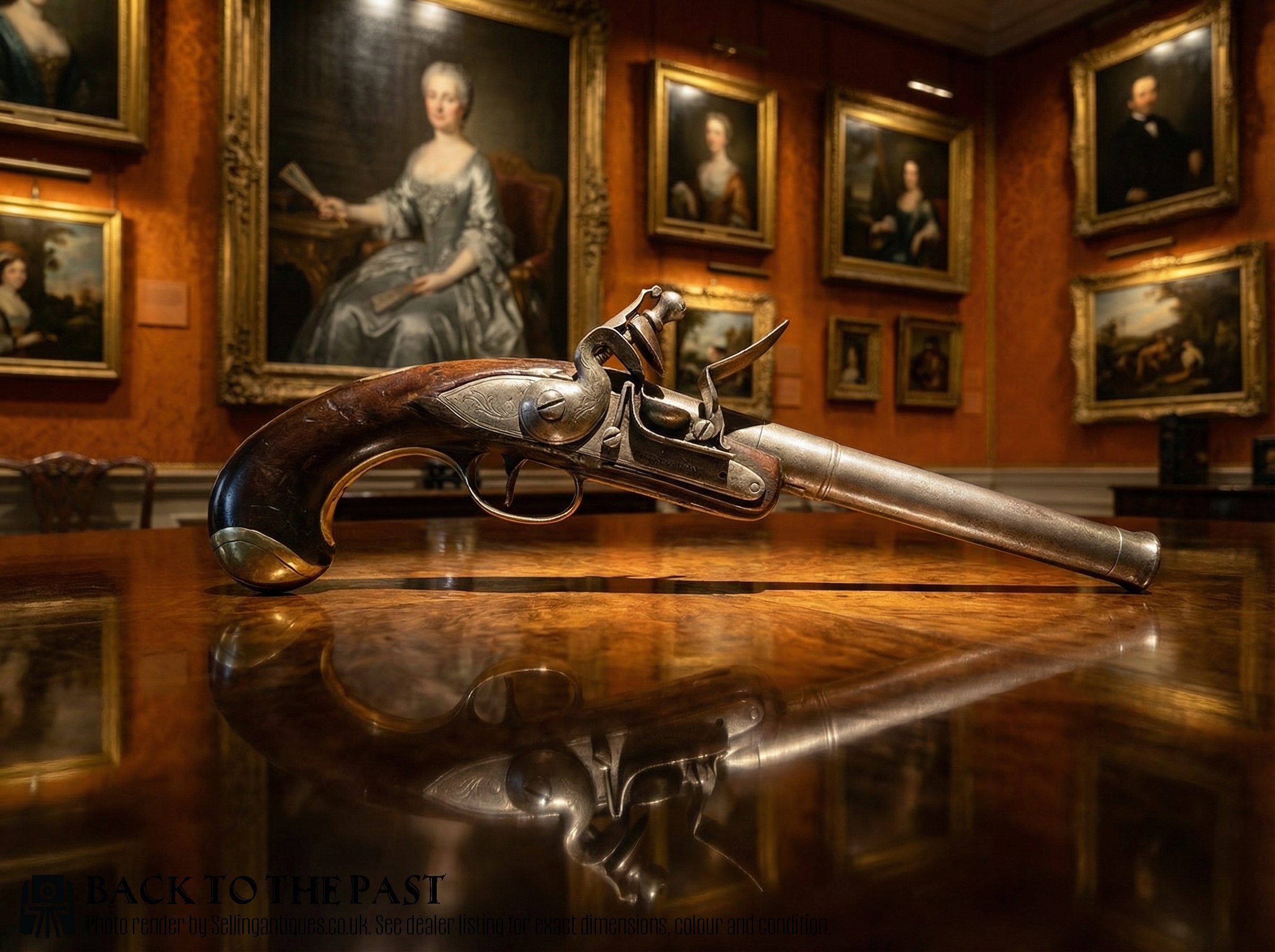
Georgian Turn Off Pistol
When you search for georgian turn off pistol, you are looking at eighteenth-century and nineteenth-century antique firearms and militaria designed for personal defence. These items span the Georgian period, with examples appearing from the early eighteenth century through to the nineteenth century, including Queen Anne types and box-lock mechanisms.
The versions most likely to meet you on this page are pocket pistols and overcoat pistols featuring cannon barrels. They frequently originate from London and provincial makers such as Birmingham, incorporating flintlock mechanisms with wood, walnut, or hardwood grips.
What varies in quality
The standard of an individual piece rests upon the crispness of the maker's signature engraving on the metal action and the finesse of any silver wire inlay across the walnut grip. Earlier London and provincial pieces often display superior relief casting on silver grotesque butt caps.
Overall proportion and the clean integration of the turn-off barrel mechanism distinguish finer examples from standard utility arms. Preservation of the original flintlock mechanism and the integrity of the hardwood stock dictate the standing of each piece.
Some eighteenth-century owners clearly trusted their pocket pistol enough to commission a tiny silver face to stare out from the butt cap.
Twigg London·James Barber·Thomas Henshaw·R Willoughby·I Parr·John Rimes·J Robinson
The Georgian Turn Off Pistol Glossary
- Turn-off pistol
- A firearm featuring a barrel that unscrews from the breech to allow front-loading of powder and ball. This design creates a tighter seal upon firing.
- Flintlock
- An ignition mechanism utilising a flint held in a cock that strikes a steel frizzen to generate sparks. It ignites the priming powder in the pan.
- Cannon barrel
- A barrel shaped with a flared muzzle resembling a small cannon. This style is frequently found on early eighteenth-century pocket and Queen Anne arms.
- Box-lock
- A firearm action where the lock mechanism is enclosed within a solid metal casing forming part of the frame. It provides a compact profile for pocket use.
- Grotesque butt cap
- An ornate metal cap fitted to the end of the pistol grip, often cast in a stylised mask or face. It typifies silver mounts on eighteenth-century holster pistols.
Georgian Turn Off Pistol: Frequently Asked Questions
What is a turn off pistol?
A turn off pistol is a firearm where the entire barrel unscrews from the frame for loading. This design eliminates the need for a ramrod.
Such arms were popular for concealed carry during the Georgian era due to their compact size and efficient breech sealing.
How do you load a flintlock pocket pistol?
Loading involves unscrewing the barrel, dropping lead shot and powder directly into the breech, and screwing the barrel back into place. Priming powder is then placed in the pan.
When the trigger is pulled, the flint strikes the frizzen to ignite the charge and fire the ball.
Where were these pistols made?
These pieces were produced primarily in major British manufacturing hubs such as London and Birmingham. Master gunsmiths signed their work directly onto the metal actions.
Provincial makers and city workshops both contributed to the output seen in eighteenth-century militaria.
How should I care for a flintlock pistol?
Care requires keeping the metal components lightly oiled to prevent corrosion and storing the piece in a stable, dry environment. Avoid aggressive cleaning of the original metal surfaces.
Wooden stocks benefit from occasional treatment with appropriate conservation wax to maintain the wood and silver wire.