
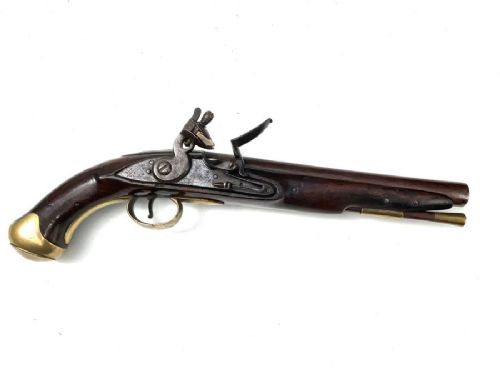
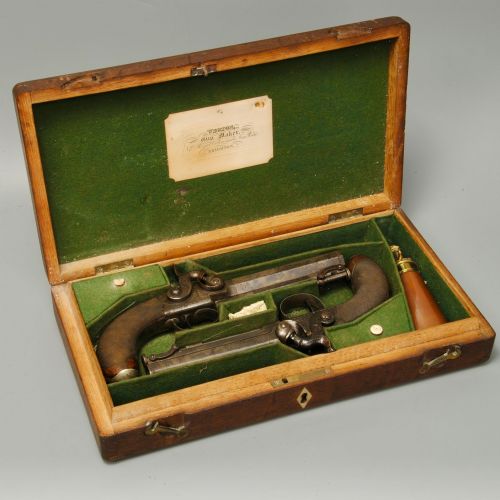


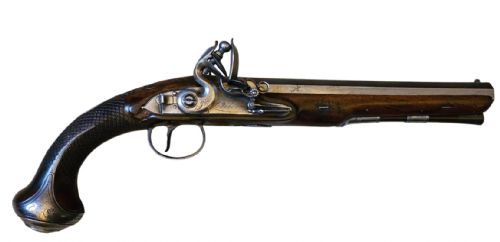


Antique Duelling Pistol
These antique duelling pistol pieces are precise historical firearms built for resolve, offering collectors a tactile piece of past centuries.
Antique Duelling Pistol
When you search for an antique duelling pistol, you are examining historical firearms originating from the seventeenth, eighteenth, and nineteenth centuries. These items embody the craftsmanship of distinct periods including the Georgian and Regency eras.
You will encounter various forms on this page, spanning flintlock pistols and percussion pistols. The selection ranges from London makers to Irish examples bearing maker marks and proof marks.
The objects presented here reflect historical use as personal sidearms and officer weapons. They bridge military history and domestic protection across multiple centuries.
How they were made
Makers utilised steel, iron, and brass for the barrel and lock mechanisms to ensure durability and function. These metals were shaped and fitted by hand within workshops.
Stocks were fashioned from walnut and figured walnut wood, carved to accommodate the metal components. Silver mounts often accented the wooden stock on higher-tier pieces.
Antique Duelling Pistol Retail Price Guide 2026
Typical asking prices for duelling pistol among the pieces listed under this phrase on Sellingantiques today, from the lower quarter to the upper quarter. They describe what is for sale here now, not the wider market.
Listings feature steel, walnut, brass, silver, and iron across eighteenth and nineteenth-century periods.
What varies in quality
The distinction between standard items and superior examples lies in the refinement of the metalwork and the selection of the wood stock. Figured walnut and intricate silver mounts elevate the character of a piece.
Attribution to named makers such as Harrison of London, Timothy Hughes of Cork, Dutton, or A.W Spires adds provenance. The presence of clear London proof marks demonstrates a higher standard of manufacture.
Harrison of London·Timothy Hughes Cork·Dutton London·A.W Spires
The Antique Duelling Pistol Glossary
- Flintlock
- An ignition mechanism utilising a flint striking a steel frizzen to create sparks that ignite the gunpowder. This system dominated firearm design for centuries before percussion caps.
- Percussion pistol
- A firearm using a percussion cap struck by a hammer to ignite the powder charge. This later technology replaced the earlier flintlock system in the nineteenth century.
- Bore
- The interior diameter of the barrel, often measured in gauge or bore size such as eighteen bore. This determines the size of the projectile the pistol fires.
- Proof mark
- An official stamp verifying that the barrel has been tested for safety under pressure. London proof marks indicate inspection in the capital.
Antique Duelling Pistol: Frequently Asked Questions
What is an antique duelling pistol?
An antique duelling pistol is a historical firearm produced during the seventeenth, eighteenth, or nineteenth centuries. These pieces were designed for personal defence or formal disputes.
They incorporate mechanisms such as flintlocks and percussion locks, mounted in stocks of walnut wood with steel or brass barrels.
How do I date an antique duelling pistol?
Dating relies on the ignition mechanism, stylistic traits of the Georgian or Regency periods, and any maker marks present on the lockplate or barrel.
Records of London makers and proof marks assist in narrowing the production era to specific decades within the eighteenth and nineteenth centuries.
What materials were used in these pistols?
Makers constructed the barrels and locks from steel, iron, and sometimes brass. Stocks were predominantly carved from walnut or figured walnut wood.
Finer examples also incorporated silver mounts and detailed metal engraving to enhance their appearance.
How should I display an antique pistol?
Displaying these firearms involves secure wall mounting or placement in specialised glass cabinets away from direct sunlight and moisture.
Maintaining a stable room temperature helps preserve the integrity of the wooden stock and the polished metal components.