




Georgian Militaria Collectable
Georgian militaria collectable pieces combine historical utility and functional mechanics, offering tangible links to eighteenth and nineteenth-century military life.
Georgian Militaria Collectable
A georgian militaria collectable piece encompasses antique firearms, arms, powder flasks, and scale models originating from the eighteenth and nineteenth centuries. These items trace the technological and aesthetic evolution of military equipment across the period.
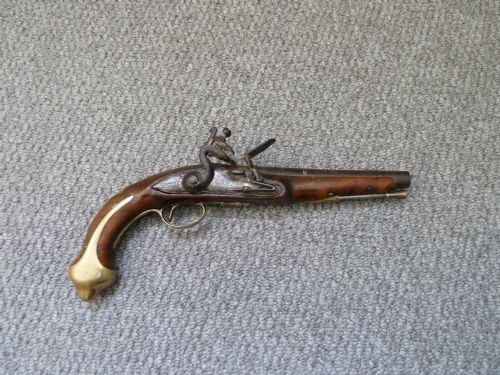
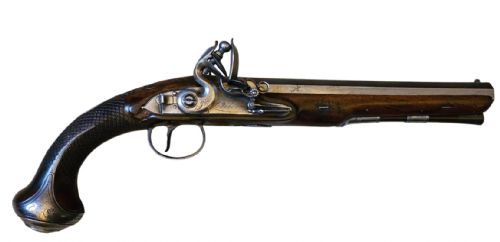
Buyers regularly encounter flintlock and percussion pistols, brass cannon barrel overcoat pistols, blunderbusses, and shot or powder flasks. Most surviving examples date from the eighteenth century through to the nineteenth century.
Objects range from regulation military examples like the 1796 pattern light cavalry flintlock pistol to civilian pocket pistols and officer sidearms. Scale models, such as field cannons with bronze barrels, also appear within the selection.
Materials and construction methods
Makers utilised robust metals including steel, iron, brass, copper, and silver to construct barrels, lock mechanisms, and mountings. These metallic components were hand-forged, cast, and engraved with proof marks and maker signatures.
Stocks and grips commonly employ timber, predominantly walnut and other seasoned woods, shaped to fit the hand and house the internal lockwork. Leather also appears in accessories such as flasks and holster gear.
Some pocket pistols feature flick bayonets, ensuring an argument was settled even after the ammunition ran out.
Evaluating craftsmanship and condition
Quality rests upon the crispness of the metal engraving, the integrity of the timber stock, and the legibility of maker signatures and London proof marks. Superior pieces retain original components and functional lock mechanisms without excessive replacement parts.
The precision of the mechanical assembly and the quality of finish on both metal and wood distinguish standard military issue from bespoke officer or duelling pieces.
Henry Nock·John Rimes·Barber of Newark·Dutton
The Georgian Militaria Collectable Glossary
- Flintlock
- An ignition system utilising a flint struck against a steel frizzen to create sparks that ignite gunpowder. This mechanism dominated firearm manufacture through the eighteenth century.
- Percussion pistol
- A firearm using a percussion cap struck by a hammer to ignite the powder charge. This later technology succeeded the flintlock system during the nineteenth century.
- Blunderbuss
- A muzzle-loading firearm with a flared barrel designed to scatter shot at close range. These weapons saw extensive use by coachmen and military officers.
- Powder flask
- A container fashioned from metal, leather, or horn used to store and dispense gunpowder safely. Flasks often feature measuring nozzles for accurate reloading.
- Turn-off pistol
- A firearm featuring a barrel that unscrews from the breech for easier loading. This design gained popularity among travellers requiring concealed personal defence.
Georgian Militaria Collectable: Frequently Asked Questions
What is a flintlock pistol?
A flintlock pistol is a muzzle-loading firearm that uses a flint and steel mechanism to ignite the gunpowder charge. These weapons represent the standard technology of the eighteenth century.
Collectors prize them for their visible mechanical action and historical association with military campaigns and civilian defence.
How do I identify an 18th century pistol?
Identification relies on examining the lockplate design, the shape of the wooden grip, and any proof marks stamped into the metal barrel. Eighteenth-century pieces typically feature curved flintlock cocks and brass or iron furniture.
Maker signatures engraved on the lockplate provide further confirmation of the period of manufacture.
Were powder flasks used with pistols?
Powder flasks served to carry measured charges of gunpowder for reloading muzzle-loading firearms in the field. They were standard equipment for soldiers and travellers carrying pistols or shotguns.
Many surviving examples feature decorative embossing or specialised spouts for precise dispensing.
How should I display militaria at home?
Displaying antique arms requires stable indoor humidity and secure mounting brackets that support the weight without damaging the timber or metal. Wall-hanging cabinets with glass panels protect pieces from dust while allowing clear visibility.
Keeping items away from direct sunlight preserves the finish of the walnut stocks and polished steel.