
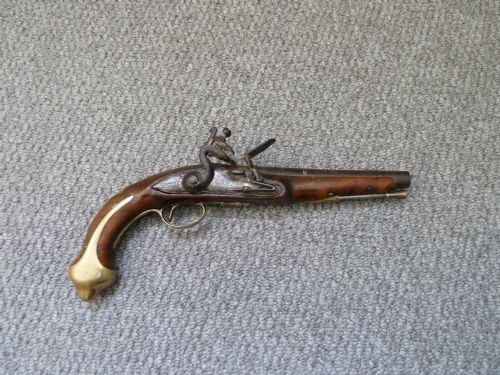
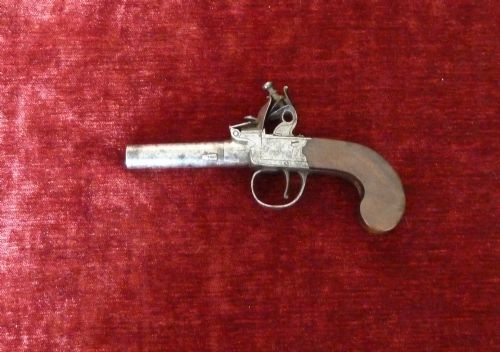


Steel Barrel Flintlock Gun
A steel barrel flintlock gun is a mechanical piece of history, prized for its forged metal work and eighteenth-century engineering.
Steel Barrel Flintlock Gun
A steel barrel flintlock gun encompasses various historical arms from the eighteenth and nineteenth centuries, including military muskets, service pistols, and pocket arms. Collectors searching for a steel barrel flintlock gun will find examples ranging from Regulation military pieces to civilian pocket pistols and travelling arms.
The selection includes pieces originating from British, French, Belgian, and Ottoman makers, spanning the Georgian and Napoleonic eras. Military service weapons and civilian pocket variations represent the primary forms encountered on this page.
How they were made
Makers constructed these arms using forged steel for barrels and locks, paired with stocks shaped from walnut or other dense woods. Brass and iron furniture strengthened the mounts, while silver wire inlay frequently decorated the finer civilian and travelling pistols.
Internal mechanisms relied on flint and steel ignition systems designed to spark gunpowder charges upon pulling the trigger. Metal components required skilled hand-filing and precise fitting to ensure the lock function operated correctly.
Listings feature steel barrel flintlock guns spanning the Georgian era, the Napoleonic wars, and the nineteenth century, incorporating walnut, brass, and silver wire.
What varies in quality
Quality separates mass-produced military regulation arms from bespoke civilian pieces made by recognised London gunmakers. Superior examples display finer metal finishing, crisp lock markings, and intricate decorative details such as silver wire inlay.
The preservation of original components and the overall integrity of the stock and action determine the standing of an individual piece. Untouched condition and legible maker stamps elevate an item above heavily restored alternatives.
Henry Nock·James Barber
The Steel Barrel Flintlock Gun Glossary
- Flintlock
- An ignition mechanism utilising a piece of flint held in a cock to strike a steel frizzen, creating sparks to ignite the priming powder. This system dominated firearms technology from the seventeenth through the early nineteenth century.
- Muzzleloader
- A firearm loaded by pouring powder and projectile down the forward end of the barrel rather than utilising a pre-made cartridge. This category includes both muskets and pistols from the Georgian and Napoleonic periods.
- Bore
- The interior diameter of the barrel, often measured by the weight of a lead ball fitting the caliber or by direct fraction of an inch. Military regulations specified exact bore sizes for uniformity in service arms.
- Queen Anne style
- A design configuration characterised by a barrel and breech forged as a single component, popular for pocket and travelling pistols during the eighteenth century.
Steel Barrel Flintlock Gun: Frequently Asked Questions
How do I care for a steel barrel flintlock gun?
Keep the metal lightly oiled to prevent oxidation and store the piece in a stable, dry environment away from excessive humidity. Avoid aggressive cleaning agents that might remove historical patina or damage original wood finishes.
Period arms require gentle handling and regular inspection of moving lock components to ensure preservation. Professional conservation is recommended for any mechanical maintenance.
Were these guns used in military service?
Many examples on this page served active duty during eighteenth and nineteenth-century conflicts, including the Revolutionary Wars and the Napoleonic era. Regulation patterns were issued to cavalry, infantry, and sea service units.
Civilian counterparts existed alongside military arms for personal defence, travel, and sporting use. These private purchases often exhibited greater decorative refinement than standard government-issue pieces.
What is the difference between a pistol and a musket?
Pistols are shorter arms designed for one-handed use by officers, cavalrymen, or civilians for personal protection during travel. Muskets are longer, heavier long guns intended to be fired from the shoulder by infantry troops.
Both systems share the same underlying flintlock ignition technology but serve entirely different tactical roles. Their dimensions and mounting furniture reflect these intended methods of deployment.