


Steel Turn Off Pistol
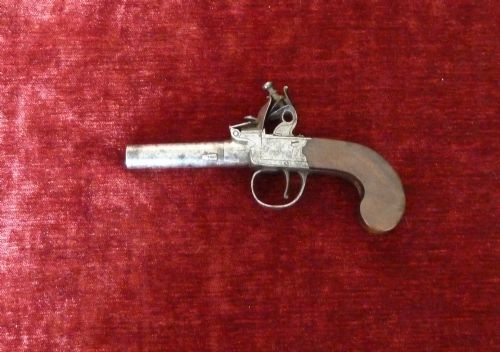
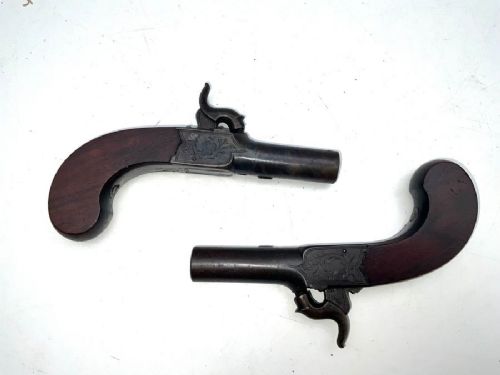
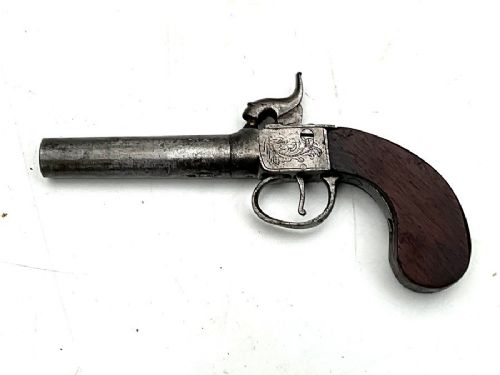
These steel turn off pistol examples are compact pocket and coat firearms combining functional mechanics with refined period finishing.
Steel Turn Off Pistol
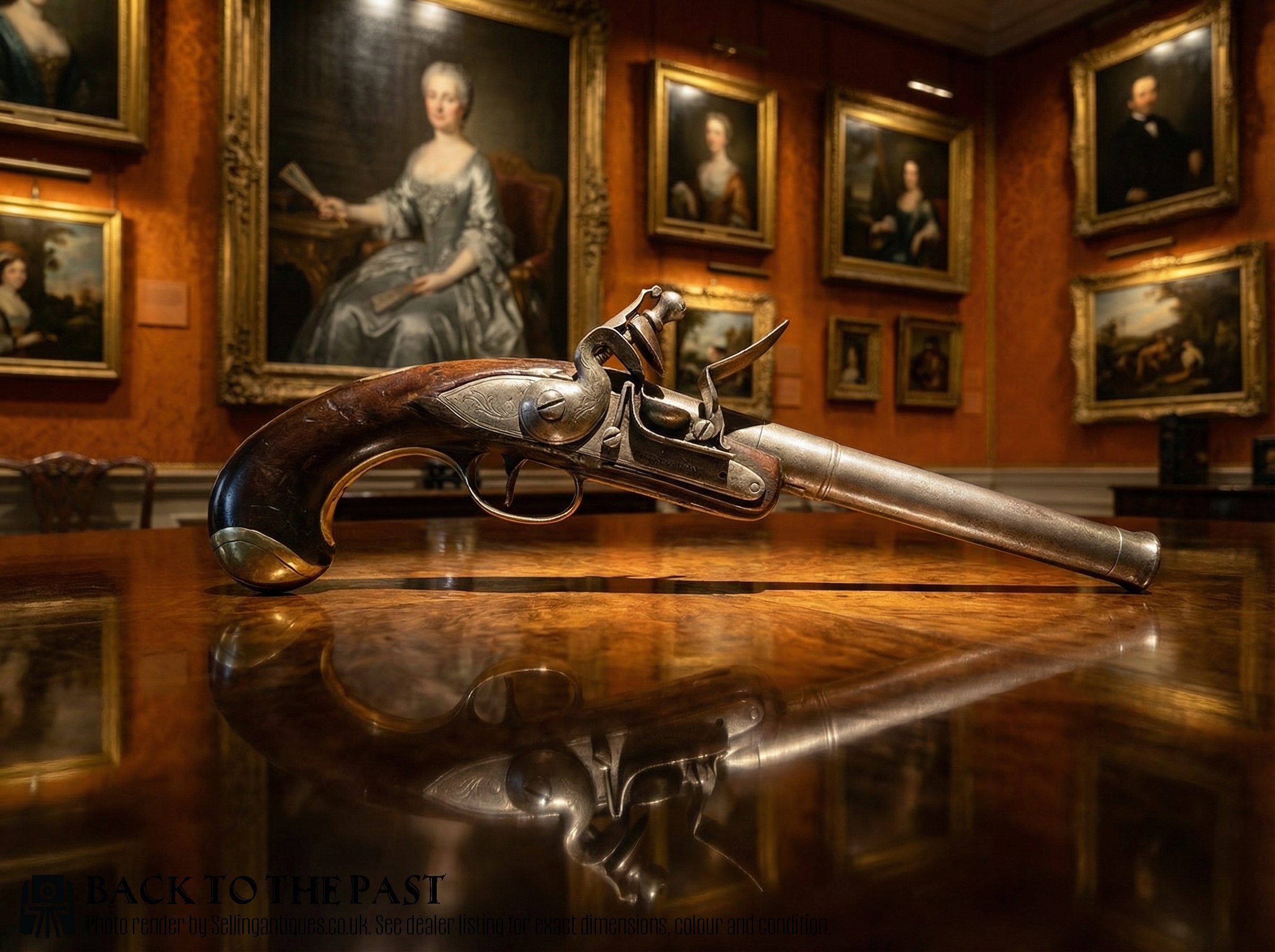
A steel turn off pistol is a pocket or coat arm designed for personal defence during the eighteenth and nineteenth centuries. You encounter specimens primarily from the eighteenth century and the mid-nineteenth century, built in forms such as flintlock and percussion pocket pistols.
The aesthetic bridges utilitarian military requirements and domestic gentility, showing styles from Queen Anne to Georgian and Victorian periods. Most examples reflect London and regional English workmanship from makers working in cities like London and Liverpool.
Materials and construction
Makers forged the barrels and actions from steel and iron, frequently employing a turn-off barrel design that unscrewed for loading from the breech. Stocks were shaped from walnut, mahogany, and other hardwoods, providing a sturdy grip scaled for concealment.
Mounts and furniture incorporated brass elements, while finer pieces displayed decorative silver wire inlay within the wooden grips. Birmingham proof marks often appear on the metal components, indicating official inspection and testing of the forged elements.
Some pocket protectors hid spring-loaded bayonets that snapped out the front at the push of a catch.
What distinguishes finer examples
The standard of execution depends on the crispness of the metal engraving on the box-lock action and the precision of the barrel threading. Superior pieces integrate complex mechanics like flick bayonets or over and under barrels without compromising the compact silhouette.
The quality of the timber stock and the delicacy of any wire inlay separate standard defensive pieces from high-status commissions. Preserved original cases and matching pairs represent the upper tier of survivals from this category.
Twigg London·James Barber London·Thomas Henshaw London·I Parr London·J Robinson Bootle Liverpool
The Steel Turn Off Pistol Glossary
- Turn-off barrel
- A barrel designed to unscrew from the breech to facilitate loading powder and ball directly into the chamber. This method eliminated the need for a ramrod under the barrel.
- Box-lock
- An action where the lock mechanism is housed within a solid metal frame enclosing the components. This design offered a clean profile and sturdy construction for pocket arms.
- Flintlock
- An ignition system utilising a piece of flint held in a cock to strike a steel frizzen, creating sparks to ignite the priming powder. It dominated personal firearms before percussion caps appeared.
- Percussion
- An ignition method using a hammer striking a small cap filled with fulminate placed on a nipple. This system replaced flintlocks during the nineteenth century for improved reliability.
- Cannon barrel
- A barrel shaped with stepped contours resembling a naval cannon, commonly found on early eighteenth-century pocket arms. The form provides extra metal thickness at the breech.
Steel Turn Off Pistol: Frequently Asked Questions
How do you load a turn off pistol?
You unscrew the barrel from the frame using a spanner or the muzzle notches, drop the lead ball directly into the breech, and pour measured gunpowder behind it before screwing the barrel back firmly.
This breech-loading method made these arms quick to charge compared to muzzle-loaders, fitting the defensive needs of travellers and gentlemen in the eighteenth century.
What is a Queen Anne style pistol?
The term describes a form featuring an integral breech and trigger plate cast as one piece, combined with a round cannon barrel and a rounded grip. It gained popularity during the reign of Queen Anne and remained a standard silhouette for decades.
Examples often display crisp metal engraving on the breech and feature walnut or hardwood stocks shaped for concealment in a pocket or greatcoat.
How do flintlock and percussion pistols differ?
Flintlocks rely on a piece of flint striking a steel frizzen to generate sparks into a priming pan, whereas percussion arms use an external hammer striking a primed detonating cap placed on a nipple.
Percussion mechanisms, appearing around the mid-nineteenth century, offered greater reliability in damp weather and simplified the loading sequence for everyday users.
Were these pistols used by civilians?
Gentlemen, merchants, and travellers carried these compact arms in pockets or greatcoat deep pockets for personal protection against highwaymen and urban footpads. Their short barrels and concealed locks made them practical for discreet daily wear.
Makers tailored them to domestic security rather than military service, resulting in refined finishes like silver wire inlay and polished brass frames.