


Engraved Flintlock Pistol
An engraved flintlock pistol is a functional piece of historical weaponry that appeals to collectors for its intricate metalwork and period character.
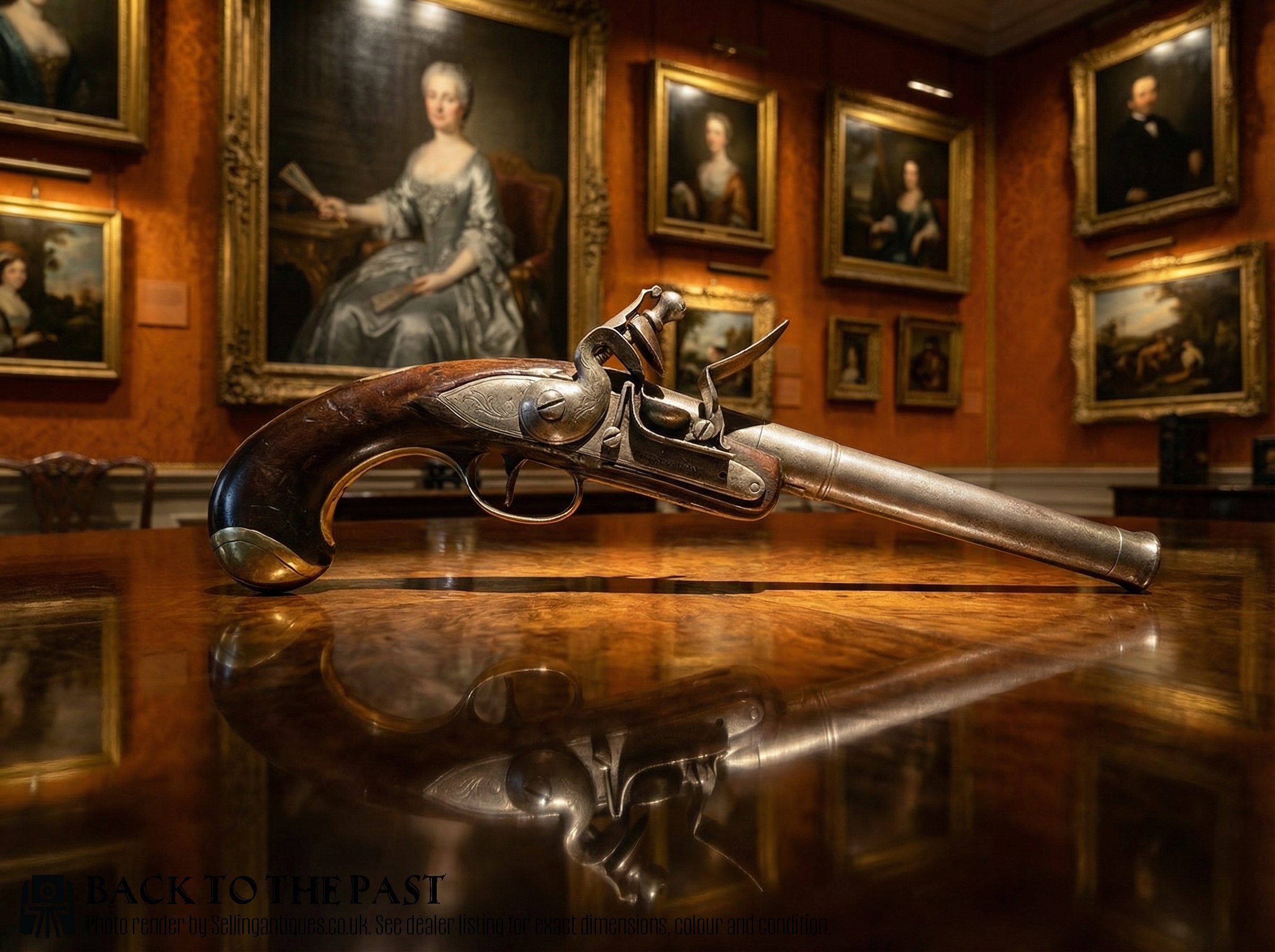
Engraved Flintlock Pistol
When searching for an engraved flintlock pistol, a buyer encounters a diverse array of historical firearms spanning the seventeenth, eighteenth, and nineteenth centuries. These pieces encompass regional variations ranging from Scottish scroll-butt designs and Balkan Ottoman holster pistols to English pocket pistols and French travelling arms. The most commonly met examples on this page date from the eighteenth century, reflecting Georgian and Ottoman aesthetics.
The selection includes specific regional forms such as the rat-tail snaphaunce and Queen Anne-type turn-off pistols alongside military officers' sidearms and duelling pieces. Makers from London, Liverpool, Newark, and Doune are represented, showing how local craftsmanship shaped these weapons. Each piece combines mechanical utility with decorative artistry particular to its origin.
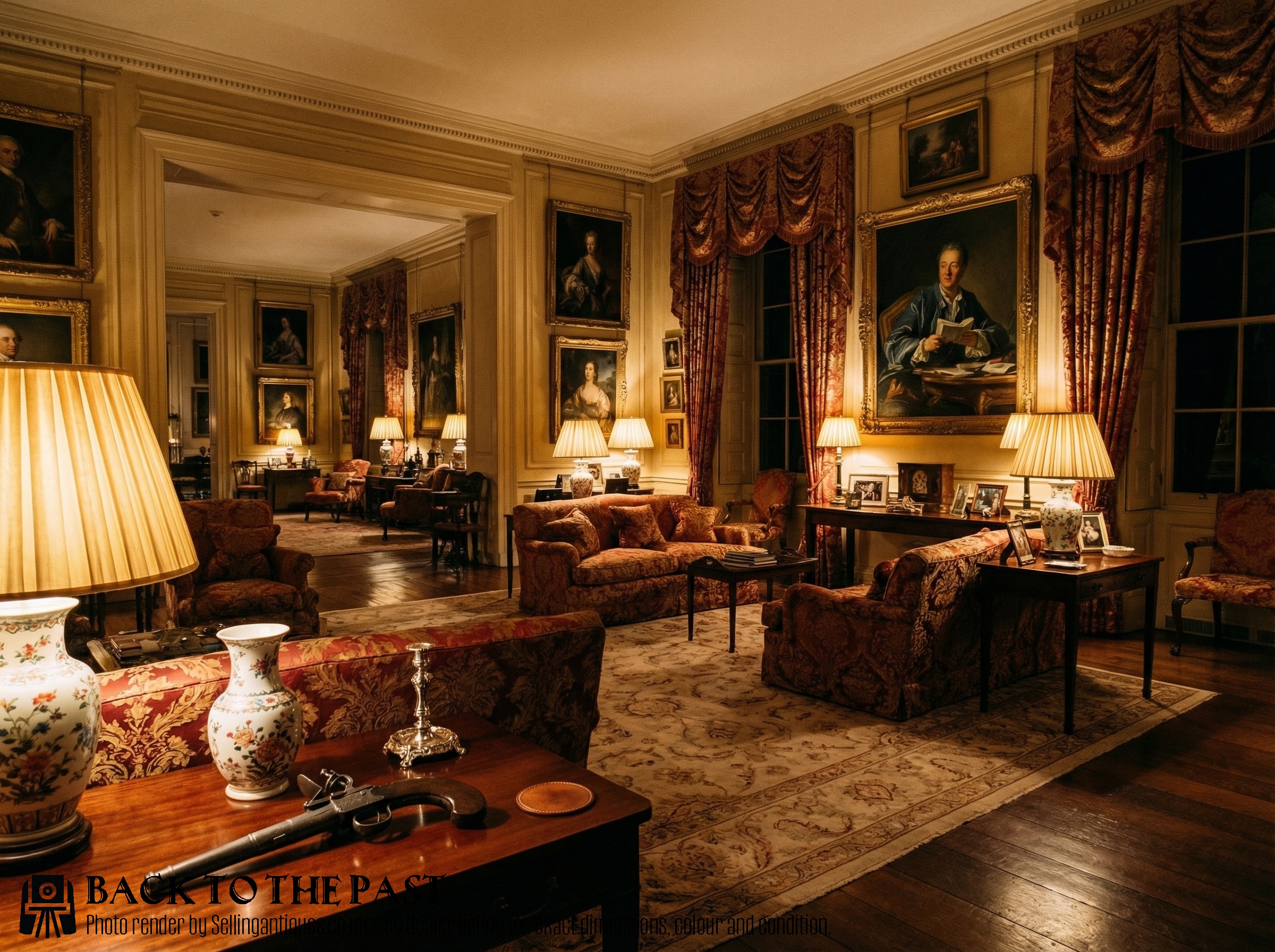
Materials and construction
Makers utilised robust metals like steel, iron, and brass for barrels and lock plates, ensuring the structural integrity of the firing mechanism. Stocks were fashioned from walnut and other hardwoods, providing durable grips that could withstand the stresses of use.
Decoration involved intricate engraving on metal mounts, alongside applied silver wire inlay and mother-of-pearl panelling. Skilled artisans combined these varied materials to achieve both ornamental appeal and functional balance.
Engraved Flintlock Pistol Retail Price Guide 2026
Typical asking prices for engraved flintlock pistol among the pieces listed under this phrase on Sellingantiques today, from the lower quarter to the upper quarter. They describe what is for sale here now, not the wider market.
Listings span the seventeenth to the nineteenth centuries, incorporating steel, brass, walnut, and mother-of-pearl across Georgian and Ottoman styles.
Assessing quality and craftsmanship
Quality in these firearms is determined by the crispness of the engraving and the finesse of the metalwork on the lock plate and mounts. Superior pieces display harmonious proportions between the hardwood stock and the metal barrel, with tightly integrated inlays of silver wire or mother-of-pearl.
The distinction between standard military issue and higher-grade civilian arms lies in the depth and detail of the ornamentation and the reputation of the maker. Signed locks and marked barrels from recognised centres like London or Doune elevate the standing of a piece.
John Campbell of Doune·Twigg London·Thomas Henshaw London·I Parr London·Meyer and Mortimer·J Robinson Bootle Liverpool·Barber of Newark·A W Spires
The Engraved Flintlock Pistol Glossary
- Flintlock
- A firearm ignition mechanism that uses a flint struck against a steel frizzen to create sparks that ignite the gunpowder charge. This system dominated personal firearms technology for centuries.
- Snaphaunce
- An early type of flintlock mechanism featuring a manually operated frizzen and pan cover. It represents an important developmental stage in firearm design.
- Turn-off barrel
- A barrel that unscrews from the breech to facilitate loading from the front with a lead ball. This design was common in pocket and coat pistols.
- Miquelet
- A form of flintlock mechanism common in the Ottoman Empire, Spain, and Italy, characterised by an external mainspring and a combined steel and frizzen.
- Bore
- The interior hollow of the firearm barrel, often measured by the weight of a lead ball that fits it. Smaller bore numbers indicate larger barrel diameters.
Engraved Flintlock Pistol: Frequently Asked Questions
How were these pistols used?
They served primarily as personal defence weapons for travellers, officers, and civilians during the seventeenth, eighteenth, and nineteenth centuries.
Pocket and muff versions were easily concealed in clothing, while larger holster and duelling pistols were carried on horseback or kept at home.
How do I care for an antique pistol?
Keep the piece in a stable environment away from excess moisture and extreme temperature fluctuations to protect the wood and metal.
Lightly oiling metal surfaces helps prevent corrosion without damaging historical finishes or engraved details.
How can I tell the period of a pistol?
Dating relies on stylistic clues such as butt shape, lock mechanism type, and the nature of the brass or silver mounts.
Signatures, town marks, and regional configurations like Balkan rat-tail designs also point to specific eras of manufacture.