
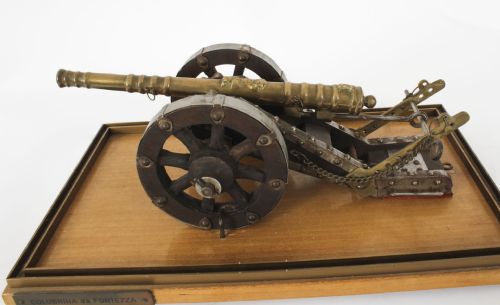


Antique Brass Cannon
An antique brass cannon brings the weight of naval engineering and maritime history directly to a desk or mantelpiece.
Antique Brass Cannon
When you search for an antique brass cannon, you encounter a specialised category encompassing everything from desk ornaments and signal pieces to detailed scale models of field guns. These objects bridge the gap between functional maritime equipment and decorative art, originating primarily from the eighteenth and nineteenth centuries.
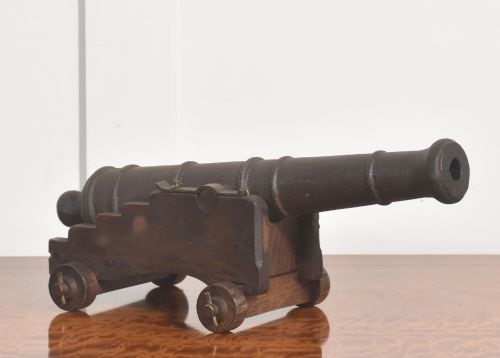
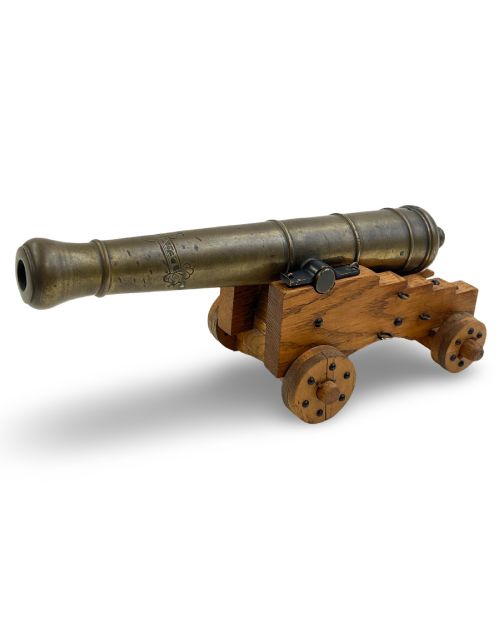
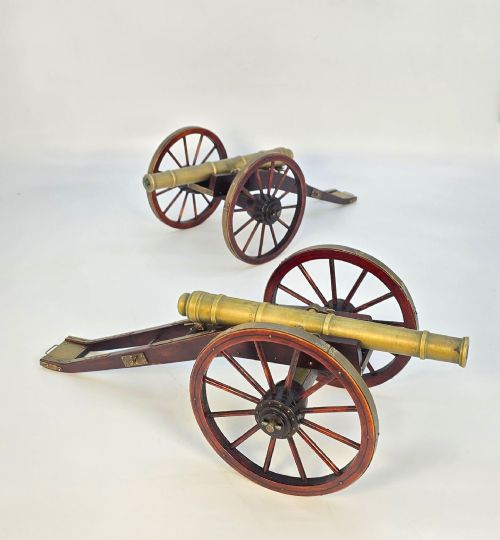
The most common examples on this page are nineteenth-century signal cannons and small desktop models cast in bronze or brass, often mounted on wooden carriages made from oak, mahogany, or walnut. Alongside these, you find related military antiques such as flintlock pistols and field gun models, reflecting the broader scope of early ordnance craftsmanship.
Materials and construction
Makers cast barrels primarily from copper-alloy metals such as brass and bronze, frequently combining them with ferrous metals like iron and steel for reinforcement and wheels. Woodwork requires sturdy native timbers, with carriages turned or joined from oak, walnut, mahogany, and general hardwoods.
Techniques range from sand casting for heavy bronze barrels to hand-built fabrication for miniature carriages and working mechanisms. Many items incorporate turned metal barrels paired with precise wooden undercarriages, reflecting traditional metalworking and joinery standards of the period.
Antique Brass Cannon Retail Price Guide 2026
Typical asking prices for brass cannon among the pieces listed under this phrase on Sellingantiques today, from the lower quarter to the upper quarter. They describe what is for sale here now, not the wider market.
Listings feature items from the 18th Century, 19th Century, and early 20th Century, alongside Victorian and Georgian styles.
Defining quality and execution
Quality rests upon the crispness of the metal casting, the fidelity of the scale proportions, and the integrity of the materials used for both barrel and carriage. Superior pieces display sharp barrel turning, clear inscriptions, and dense, well-fitted timber carriages rather than crude casting seams or loose joints.
Historical accuracy and the completeness of original components separate ordinary decorative items from desirable collector pieces. Signal cannons that retain working proof marks or commemorative inscriptions hold greater distinction than unprovenanced models.
Thomas Henshaw·I Parr·John Rimes
The Antique Brass Cannon Glossary
- Signal cannon
- A small ordnance piece designed specifically to create a loud report for signalling, starting races, or celebrating events rather than for combat. These often appear mounted on wooden carriage decks.
- Carriage
- The wooden or iron mounting structure that supports the cannon barrel. In domestic pieces, these take the form of miniature naval or field carriages.
- Colubrina da Fortezza
- A historical term describing a long-barreled fortress cannon design. Scale models of this form appear in nineteenth-century decorative work.
- Turn-off pistol
- A firearm with a barrel that unscrews from the breech for loading, commonly seen in eighteenth-century Queen Anne pocket pistols.
- Muzzle loaded
- A loading method where the projectile and propellant charge are inserted down the front opening of the barrel. This applies to both full-size historical arms and miniature models.
Antique Brass Cannon: Frequently Asked Questions
What is a signal cannon?
A signal cannon is a small-bore piece built to make a loud noise rather than fire a projectile. People utilised them on yachts, estates, and shores to mark times of day or start races.
Most examples date from the nineteenth century and feature robust brass or bronze barrels mounted on solid oak or mahogany carriages.
How old are these cannons?
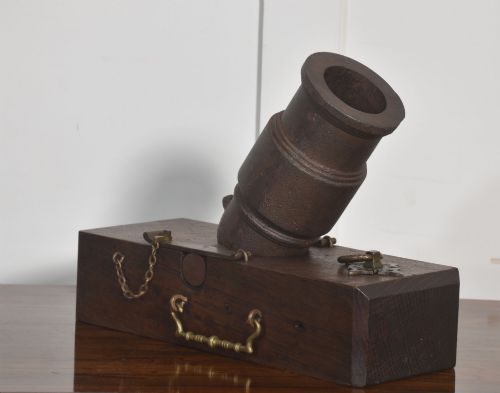
The pieces listed span from the early eighteenth century through to the early twentieth century. Eighteenth-century examples often connect to flintlock pocket pistols and early field guns, while nineteenth-century items lean toward signal mortars and desk ornaments.
Stylistic cues, metal patination, and timber types help distinguish between Georgian origins and later Victorian revivals.
Are these cannons operational?
While many metal barrels are cast with bores, their operational status depends entirely on individual condition and professional inspection. Many collectors treat them purely as display pieces and desk ornaments.
Interpreting them requires looking at whether the vent hole is drilled and if the carriage structure remains stable enough to handle stress.
What woods were used for carriages?
Makers selected dense, durable hardwoods capable of withstanding the recoil or supporting the weight of heavy metal barrels. Oak, mahogany, and walnut appear frequently across the surviving examples.
The choice of timber often reflects the period of manufacture and whether the piece was intended for maritime use or domestic display.