
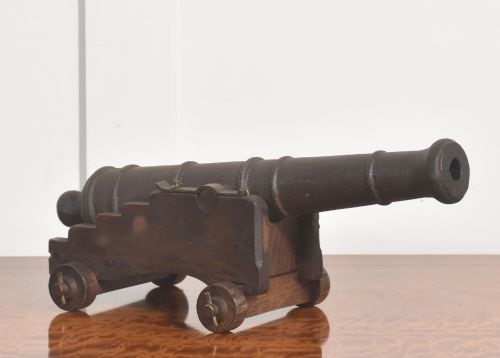
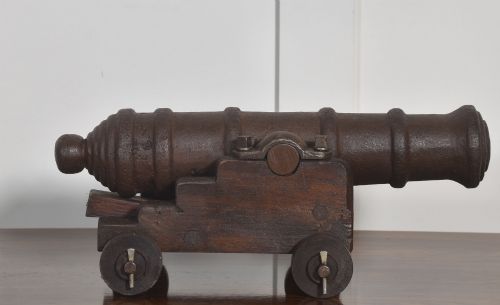
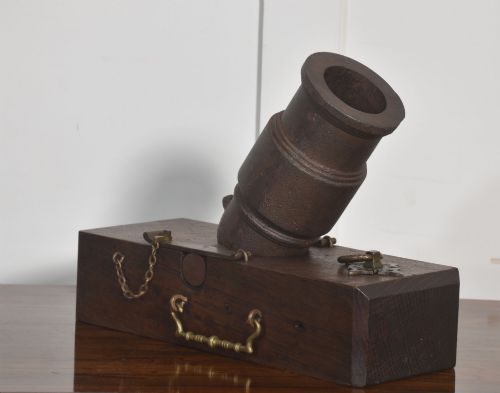
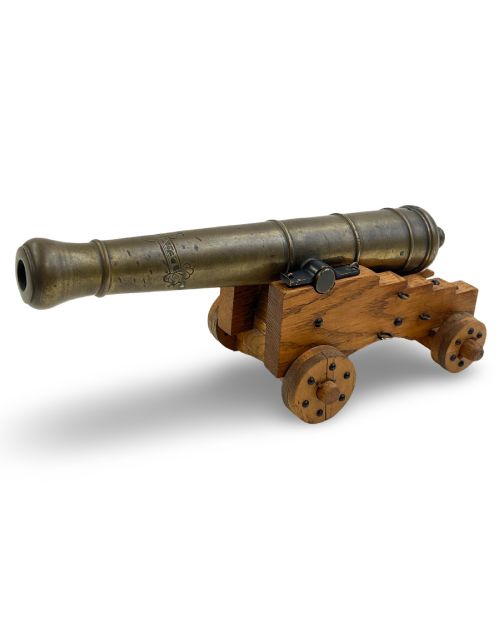
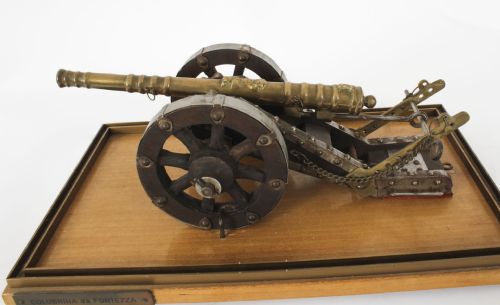


19th Century Cannon
These 19th century cannon pieces combine military history with heavy metalwork, offering striking display items for any interior.
19th Century Cannon
A 19th century cannon search brings up scale models, signal cannons, and desk ornaments spanning the Victorian and Regency periods. You will most frequently encounter cast iron or bronze pieces mounted on wooden carriages.
The objects range from French maritime models to English Victorian brass ornamental pieces and South East Asian Lantaka cannons. They functioned variously as signal guns, ceremonial pieces, or finely rendered field gun models.
Militaria and maritime antiques form the core of these listings, alongside occasional oil paintings depicting cannon scenery. Collectors find everything from heavy iron deck pieces to small brass desk models.
Materials and construction methods
Foundries cast these pieces primarily in iron, bronze, and brass, utilising durable metals suited to both functional signal guns and ornamental display models. Some items incorporate steel components alongside the primary metal barrel.
Carriages and mounts rely on dense hardwoods such as oak or treen, providing a sturdy foundation for the heavy metal barrels. Paint finishes and fitted mounts complete the construction of these maritime and military antiques.
Materials recorded across the inventory include cast iron, oak, brass, bronze, steel, oil on canvas, and painted wood.
Quality factors in metal and wood
The refinement of the casting work dictates the distinction between standard production items and superior models. Crisp detail on the bronze or iron barrel and well-joined wooden carriages denote higher craftsmanship.
Proportion and material combination also define the piece, particularly where brass fittings meet cast iron or oak. Complete pairs and original matching carriages elevate the standing of a model.
The 19th Century Cannon Glossary
- Signal cannon
- A small cannon used to fire blank charges for signaling, saluting, or starting races. These function differently from full-scale artillery pieces.
- Carriage
- The mounting structure that holds the cannon barrel. These are typically constructed from oak or other sturdy woods.
- Colubrina da Fortezza
- A historical term describing fortress culverin models. These represent specific historical artillery designs reproduced in miniature.
- Militaria
- Antiques and collectibles relating to military history and warfare. This category encompasses both functional signal pieces and ornamental models.
- Treen
- Small wooden domestic objects and models. In this context, it refers to items carved entirely from wood.
19th Century Cannon: Frequently Asked Questions
Were these cannons actually fired?
Many examples classed as signal or saluting cannons were designed to be fired with gunpowder to create noise for maritime signals or celebrations.
Other smaller pieces served purely as desk ornaments or static scale models without any functional bore.
What is a Lantaka cannon?
A Lantaka is a type of portable swivel gun mounted on trading vessels and fortifications across Southeast Asia during the period.
These pieces often feature distinctive bronze casting work and local stylistic details distinct from European field guns.
How do I display a cannon model?
These heavy metal and wood pieces suit placement on desks, mantelpieces, or dedicated display cabinets where their weight is supported safely.
Keep them away from damp environments to protect the iron, steel, and wooden carriage components from deterioration.
Are these pieces French or English?
The listings include specific origins such as French maritime pieces, French Gribeauval field gun models, and English Victorian brass items.
Stylistic markers and foundry inscriptions often help identify the regional origin of the metalwork.