


Miniature Naval Cannon
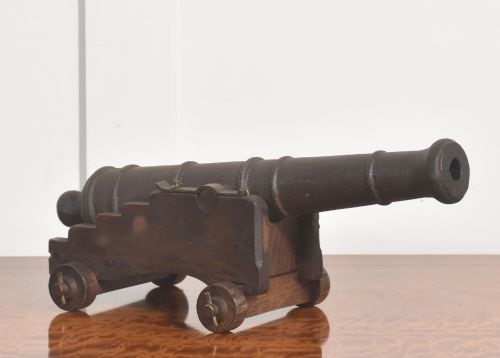
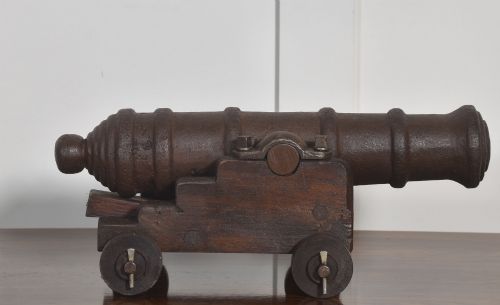
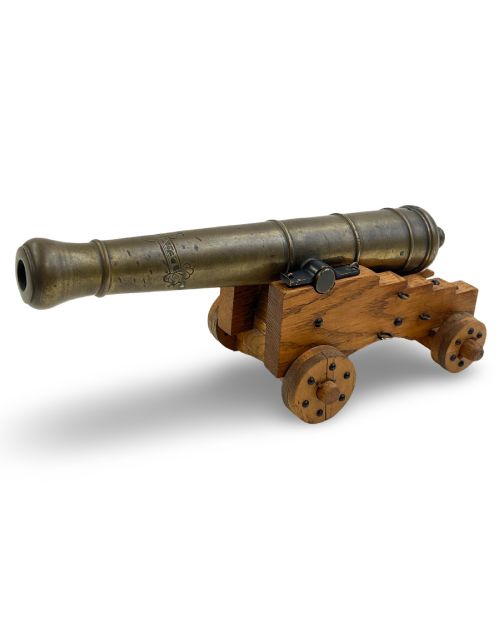
These miniature naval cannon models are small-scale artillery pieces cast in bronze, brass, iron and steel, built for signalling and desk display.
Miniature Naval Cannon
A miniature naval cannon is a small-scale model of historical artillery, often built as a signal cannon or decorative desk ornament. When you search for miniature naval cannon, you encounter pieces originating from the eighteenth, nineteenth and early twentieth centuries.
The selections on this page typically feature materials such as brass, cast iron, bronze, steel, oak and mahogany. Many examples take the form of signal cannons mounted on wooden carriages, reflecting nineteenth-century military and maritime styles.
Makers produced these models both as functional signal devices and as ornamental objects for desks and cabinets. French and English pieces appear frequently, spanning simple brass models to hand-built seventeenth-century style reproductions.
How they were made
Foundries cast barrels in metals including bronze, brass, cast iron and polished steel, utilising traditional techniques to achieve rigid durability. Metal components often received a polished finish to highlight the hard surfaces.
Carriages and undercarriages utilise woods such as oak, mahogany and general hardwood. Craftsmen joined these wooden elements to support heavy metal barrels, sometimes incorporating hand-built details to replicate historical artillery mounts.
Current listings feature pieces spanning the eighteenth, nineteenth and early twentieth centuries, constructed from brass, cast iron, bronze, steel, oak and mahogany.
What varies in quality
Quality rests in the precision of the metal casting and the fidelity of the carriage construction. Heavy bronze or cast-iron barrels paired with well-fitted hardwood undercarriages represent a higher standard than lighter, simpler assemblies.
Inscriptions, historical markings and commemorative details elevate specific pieces above standard decorative models. The integration of durable materials like steel and bronze alongside carefully shaped timber dictates the overall standard of the surviving pieces.
The Miniature Naval Cannon Glossary
- Signal cannon
- A small cannon utilised to fire blank charges for starting races, marking time or celebrating events. These pieces usually feature robust metal barrels capable of handling repeated charges.
- Desk ornament
- A decorative small-scale model designed for display on a table or desktop. They often substitute functional weight for solid bronze or brass casting.
- Undercarriage
- The lower wooden support or base upon which the cannon carriage rests. Mahogany and oak serve as common timbers for these foundations.
Miniature Naval Cannon: Frequently Asked Questions
What is a miniature naval cannon?
A miniature naval cannon is a small-scale metal model of a historical warship or fortress gun. These pieces were built for display or functional signalling.
Most examples date from the eighteenth to the early twentieth century and sit upon wooden carriages made of oak or mahogany.
Were these cannons actually fired?
Many models classified as signal cannons were designed to fire blank charges. They served practical purposes such as starting yacht races or marking official occasions.
Other examples were strictly created as decorative desk ornaments or scale models without functional touchholes.
How do I care for a brass or bronze cannon?
Keep the metal surfaces clean using a dry cloth to prevent dust accumulation. Avoid harsh chemical cleaners that can strip historical patination from antique bronze and brass.
Protect the wooden carriages, such as oak and mahogany, by placing the cannon away from direct heat sources and strong sunlight.