



Vintage Brass Bell
These vintage brass bell examples range from handbells to tabletop gongs, offering resonant tone and period character for the home.
Vintage Brass Bell
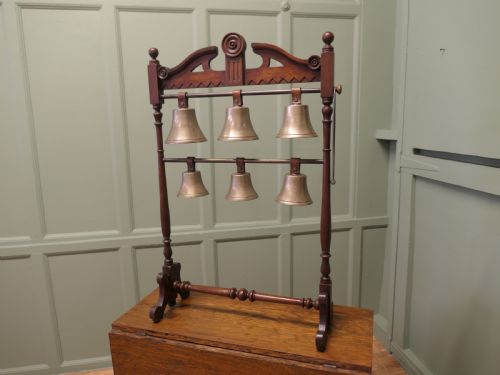
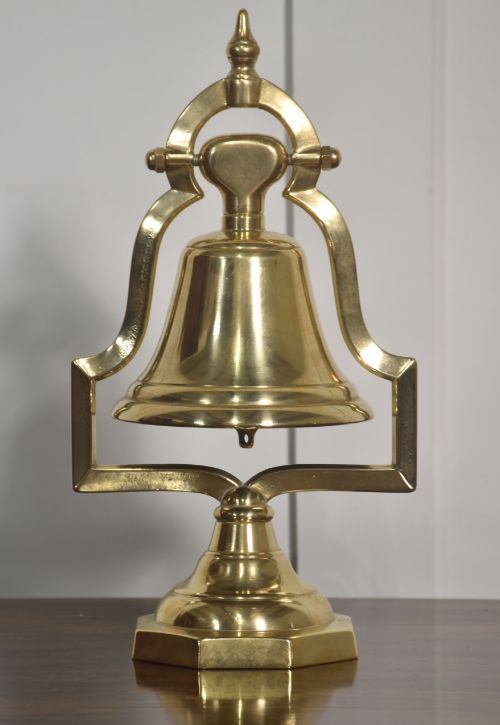
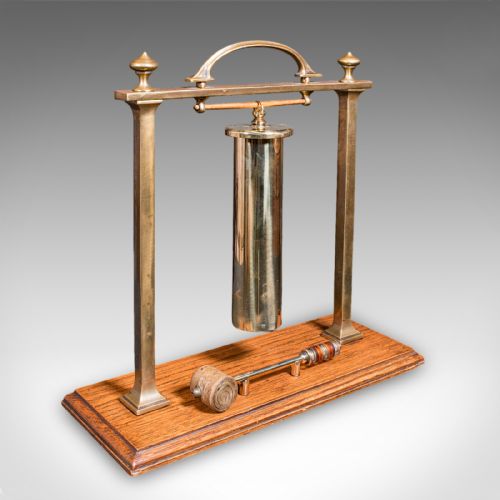
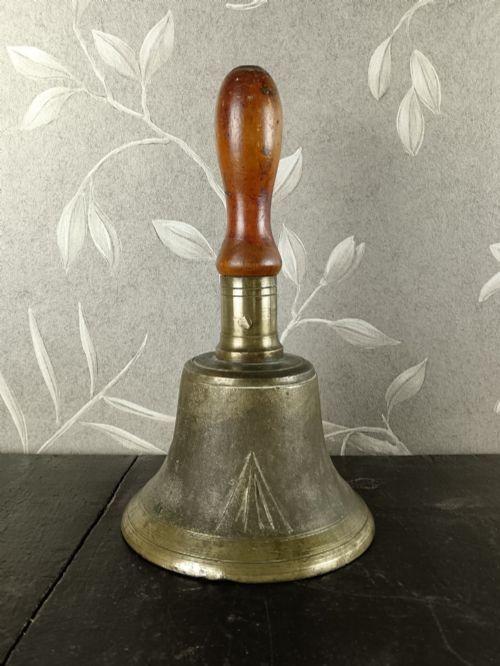
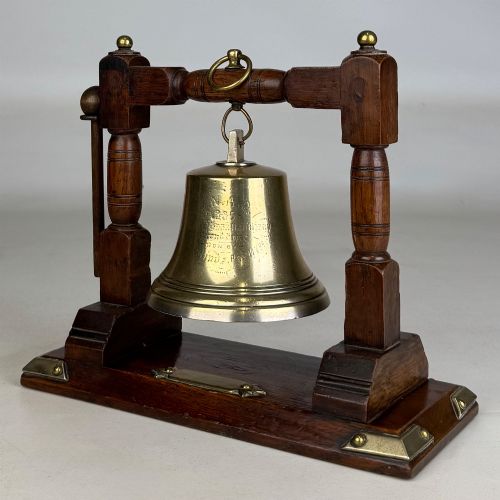
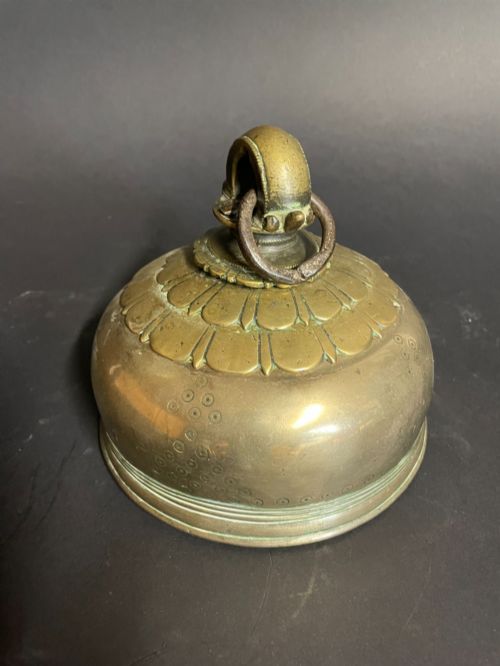
A vintage brass bell covers functional instruments such as handbells, school bells, and tavern pieces alongside decorative dinner gongs mounted on timber stands. These items emerge from periods spanning the Victorian and Edwardian eras up to the mid-twentieth century.
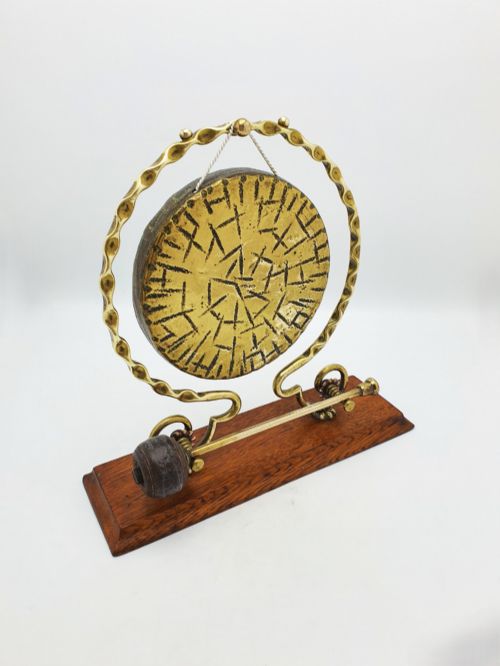
The selection here frequently centres on table-top gongs complete with wooden strikers and wall-mounted warning or dinner chimes. Simpler hand-held variants also appear, designed for domestic service or public summons.
Originating across British and continental workshops, these objects reflect utilitarian roots in schools, households, and maritime settings. Collectors encounter both plain working models and highly ornamented examples styled in the Victorian or Art Nouveau manner.
Assessing quality and craftsmanship
Quality rests in the clarity and sustain of the tone produced when struck, which depends upon the purity of the metal alloy and the precision of the casting. Heavier castings generally yield a richer, more resonant acoustic profile.
The sophistication of the mounting framework distinguishes standard pieces from finer examples. Elaborate carved oak or walnut stands, complete with matched handheld strikers, elevate the presentation of table gongs.
Listings feature items dated across the nineteenth and twentieth centuries, incorporating oak, glass, bronze, and iron alongside solid brass.
Thomas Langley·William Barrow·Grey of Edinburgh·Elliott
The Vintage Brass Bell Glossary
- Dinner Gong
- A suspended metal plate or bowl struck with a mallet to announce meals. These are frequently mounted in decorative wooden frames.
- Hand Bell
- A portable bell featuring a handle, traditionally rung by hand for service or signalling. They are often cast in solid brass or bronze.
- Verge Escapement
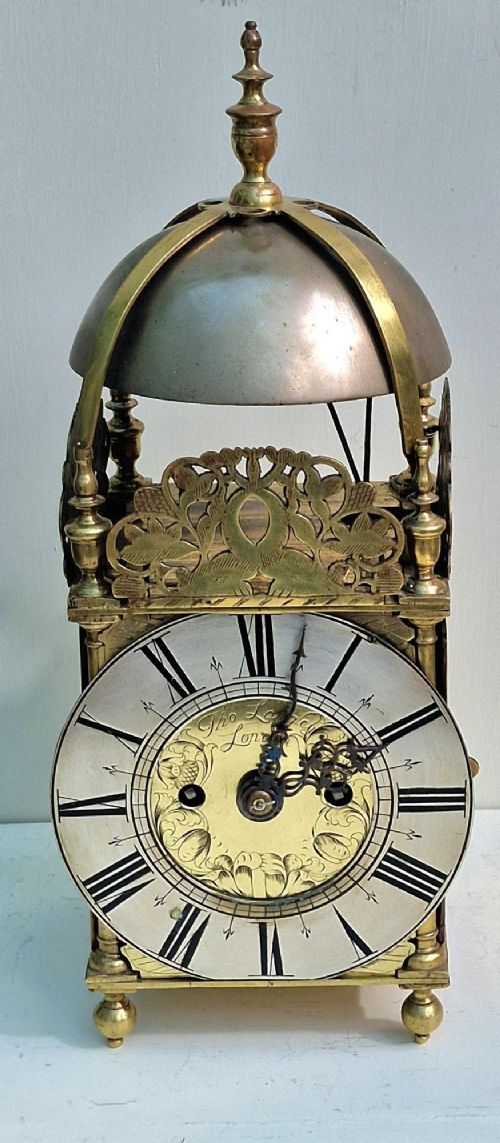
- An early clock mechanism regulating timekeeping through a crown wheel and pallet. It appears in older clock-related bell pieces.
- Cast Brass
- Molten alloy poured into a mould to shape the bell body. This technique produces rigid walls necessary for a clear ring.
Vintage Brass Bell: Frequently Asked Questions
How do I clean an antique brass bell?
Dust the surface regularly with a soft, dry cloth to prevent grime accumulation. Avoid harsh chemical polishes that strip away the aged patina accumulated over decades.
For stubborn residue, apply a mild soap solution with a damp cloth, drying the metal immediately afterwards to prevent spotting.
Were these bells used exclusively in homes?
Many examples served utilitarian roles in schools, town squares, and military installations rather than domestic spaces. Larger gongs were primarily stationed in substantial country houses for summoning residents to meals.
Handheld variants also fulfilled roles in maritime environments and public service before electronic alarms replaced them.
How can I date an Edwardian bell?
Edwardian pieces typically date between nineteen hundred and nineteen ten, reflecting the reign of Edward VII. Look for design cues such as softer floral motifs or Art Nouveau influences on the mounting stands.
Construction methods also help, as machine-tooled elements became more prevalent during this period compared to earlier Victorian casting techniques.
What makes a gong sound better?
The acoustic quality depends heavily on the thickness of the metal wall and the purity of the brass alloy. A uniform casting without internal micro-fractures allows the sound waves to travel freely and sustain longer.
Matching the original striker material, such as a wooden mallet with a soft head, also ensures the intended resonance.