
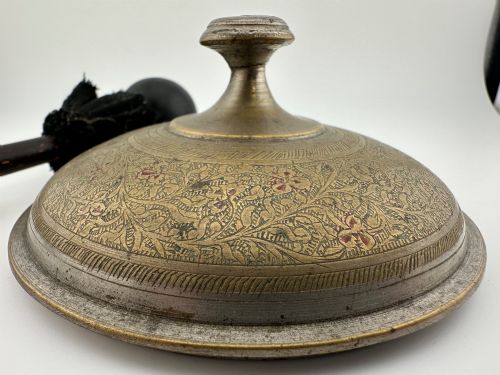
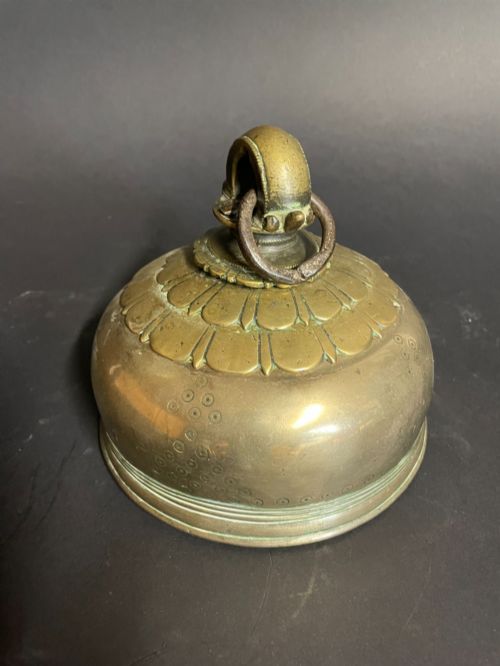


Brass Hand Bell
A brass hand bell carries the resonant chime of Victorian schoolrooms and country houses, bringing tactile history and bright metalwork directly to your mantel.

Brass Hand Bell
A brass hand bell is a traditional signaling device designed to be held and rung by hand, appearing frequently in Victorian and Edwardian styles. These pieces serve practical functions from classroom management to dinner service, utilising durable cast metal construction.
The selection on this page focuses heavily on domestic and institutional bells, often paired with turned wooden handles in hardwoods like lignum vitae or rosewood. Alongside standard school and town crier models, collectors encounter related items like temple bells and dinner gongs.
How they were made
The construction relies on cast brass or bronze for the bell body, shaped to project a clear and sustained tone when struck by the internal clapper. Metal founders utilised traditional casting methods to achieve resonant wall thicknesses and clean exterior surfaces.
Handles were frequently turned separately from dense timbers such as mahogany, oak, or exotic hardwoods, then secured through the top of the bell. This combination of cast metal and turned wood provided both acoustic clarity and a comfortable grip for daily use.
Town criers needed lungs of leather and a bell loud enough to wake the entire parish from the market cross.
What varies in quality
Quality in a brass hand bell rests primarily on the purity of the metal casting and the resonance of the resulting tone. Finer examples maintain an even wall thickness and precise internal geometry that produces a clear, lingering note rather than a dull thud.
The secondary material also dictates the standard of the piece, where finely turned hardwood handles show superior lathe work and careful attachment compared to plain replacements. Well-preserved patination on the brass and crisp turning on the timber indicate better original manufacture and careful preservation.
The Brass Hand Bell Glossary
- Clapper
- The internal metal ball or tongue suspended inside the bell that strikes the outer wall to produce sound. Its weight and material directly influence the volume and timbre of the ring.
- Turned wood
- Timber shaped on a lathe to form handles or decorative mounts. This technique creates symmetrical profiles found on many nineteenth-century domestic bells.
- Patina
- The natural surface oxidation and darkening that accumulates on brass and bronze over decades of handling and exposure to air. It serves as an indicator of age and genuine use.
- Cast brass
- Molten alloy poured into a mould to form the complex curved shape of the bell. This process allows for decorative banding and structural rigidity.
Brass Hand Bell: Frequently Asked Questions
How do I date a brass hand bell?
Dating relies on the style of the handle turning, the casting method, and any associated maker marks or institutional engravings. Victorian and Edwardian examples often display specific timber choices and mounting techniques typical of their decade.
Examining the wear patterns on the striking rim and the interior loop for the clapper also helps determine the age and intensity of its historical use.
What were brass hand bells used for?
These bells served practical signaling roles in schools, town squares, grand houses, and ships to gather people or announce meals. Schoolmasters and town criers relied on their sharp projection to cut through ambient noise.
In domestic settings, smaller versions summoned servants from various rooms, while temple or ritual bells held spiritual significance in Eastern traditions.
Are wooden handles original to the bell?
Many bells retain their original turned wooden handles made from hardwoods like rosewood or mahogany, secured via an internal threaded rod or pin. Replacement handles do occur due to the heavy stress placed on the joint during ringing.
Matching the wood type and wear level to the brass body helps confirm whether the handle has remained with the piece since its manufacture.
How should I clean my brass hand bell?
Regular dusting with a soft cloth preserves the existing surface without removing the historical oxidation that collectors value. Aggressive chemical polishing strips away the accumulated patina and can damage soft timber handles if applied carelessly.
If cleaning is necessary for hygiene or display, use a mild, non-abrasive metal cleaner strictly on the brass components while keeping substances away from the wood.