


Antique Hand Bell
An antique hand bell brings a bright, resonant ring to a room, cast in solid brass, bronze or bright glass.

Antique Hand Bell
When you search for an antique hand bell, you encounter objects designed for domestic summons, schoolrooms, and public announcements. The pieces gathered here span from the eighteenth century through the Edwardian period, taking forms ranging from simple brass school bells to ornate sterling silver table pieces. Domestic service and formal dining created the primary need for these instruments across large houses and town halls.
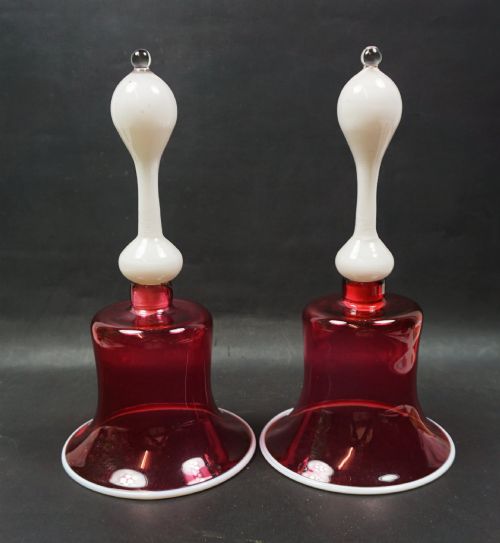
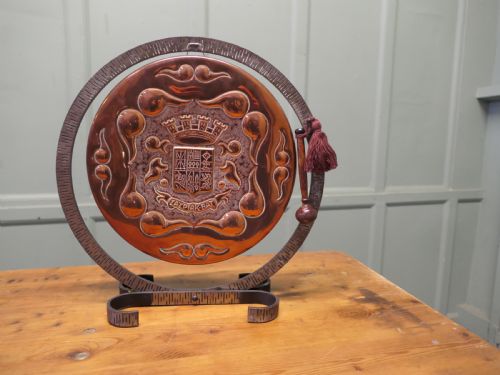
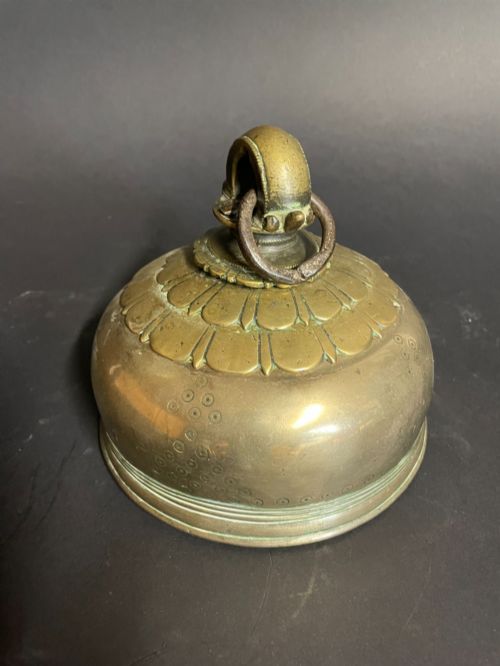
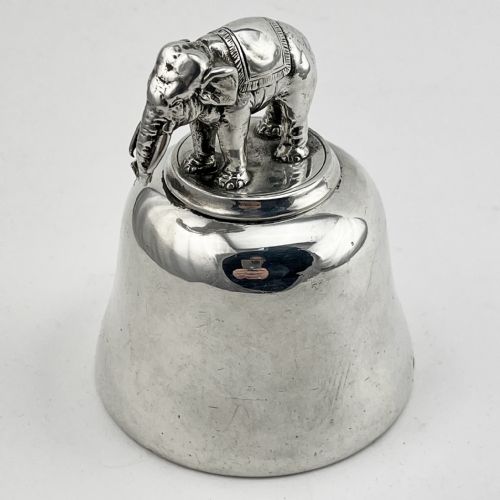
The most common examples you meet on this page are nineteenth-century brass or bronze hand bells fitted with turned wooden handles. Alongside these sit glass table bells in ruby and cranberry tones, often paired with clear or white glass handles. Less frequent finds include cast iron gongs, temple bells, and heavy silver specimens with figural handles.
Origins stretch from English country houses and continental glassworks to Tibetan workshops and Basque smithies. Each region employed distinct materials, yielding heavy cast metals in European schools and delicate blown glass in Victorian parlours. This variety ensures that every surviving bell carries the distinct working methods of its maker and era.
How they were made
Metal bells relied upon casting techniques where molten brass, bronze, or sterling silver poured into sand or loam moulds. Workers then turned the cooled metal on lathes to smooth the exterior and tuned the inner surface by hand to achieve a clear, sustained tone. Iron components received hand-hammered shaping, while silver pieces often incorporated chased or repoussé decoration on the handle and skirt.
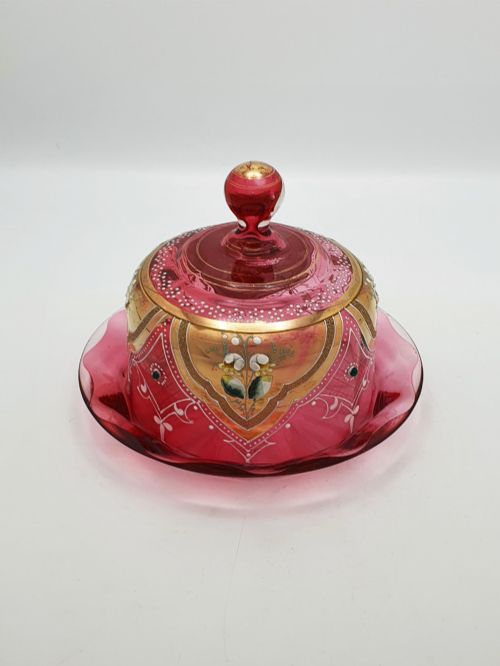
Glass bells and cloches started at the furnace, where artisans blew molten metal into moulds or gathered metal freehand on a blowpipe. Hand-pulled handles in contrasting white or clear glass attached while hot, followed by careful annealing in a kiln to relieve thermal stress. Gilded details and ruby stains applied to the surface required a secondary firing to bond the colour permanently.
Wooden elements on these pieces, such as handles and frames, took shape on foot-powered lathes using native timbers like lignum vitae, walnut, and elm. Smiths forged internal clappers from iron or brass, suspending them by wire loops or leather thongs inside the dome. Every stage relied on manual dexterity, leaving subtle tool marks that distinguish hand production from later mass-manufacture.
The listings here incorporate brass, bronze, sterling silver, iron, and cranberry glass across Victorian, Edwardian, and eighteenth-century periods.
What varies in quality
The resonance and purity of the tone separate standard utility items from superior examples. A bell cast with precise metal alloys and uniform wall thickness produces a clean, lingering ring, whereas poor distribution of material yields a dull, flat thud. The weight of the metal and the secure seating of the internal clapper dictate how well the sound carries across a room.
Surface finish and decoration mark the distinction between everyday workshop production and fine craftsmanship. Crisp chasing on silver handles, clean facets on cut glass, and smooth turning on wooden grips indicate higher labour investment. Wear patterns tell a story of use, but crisp casting detail remains intact on superior specimens regardless of age.
Material selection dictates the upper tier of the market, where solid sterling silver, heavy bronze, and flashed cranberry glass take precedence over plated metals. The integrity of applied decoration, such as fire-gilding or enamel work, dictates whether an object retains its visual impact after centuries of handling.
The Antique Hand Bell Glossary
- Clapper
- The ball or striker suspended inside a bell that hits the inner wall to produce sound. Its weight and material directly influence the volume and pitch of the ring.
- Cranberry glass
- Transparent glass coloured with gold chloride, producing a rich pinkish-red hue popular in Victorian tableware. It frequently appears on glass bells and matching dishes.
- Bronze
- An alloy of copper and tin known for its strength and acoustic properties. It resists corrosion and yields a deep, resonant tone favoured in temple and town bells.
- Repoussé
- A metalworking technique where the artisan hammers the design from the reverse side to raise relief ornamentation on the surface. This method appears on ornate silver table bells.
- Annealing
- The controlled cooling process used in glassmaking and metal casting to prevent internal stress and cracking. Proper annealing ensures the structural stability of delicate blown glass items.
Antique Hand Bell: Frequently Asked Questions
How do I clean an antique brass bell?
Dust the surface gently with a soft dry cloth to remove loose particles. Avoid harsh chemical polishes that strip away the aged surface patina.
If cleaning is necessary, use a mild soap solution and dry the metal thoroughly immediately afterwards.
Why do some hand bells lack a clapper?
Many bells lost their original iron or brass strikers over centuries of active use or storage. Replacements can be fitted carefully if the suspension loop inside remains intact.
Some collectors prefer to display them silent rather than alter the internal structure.
How can I tell Victorian brass from modern brass?
Nineteenth-century pieces display minor casting irregularities, file marks, and a deep, mellow surface colour accumulated through handling. Modern reproductions often feel lighter, show machine uniformity, and lack natural oxidation.
Examine the construction of the handle attachment and the wear on the striking rim for clues.
Were these bells used only for dining?
While many served in grand houses to summon servants for dinner, others filled roles in schools, shops, and town squares. Town criers, schoolmasters, and shopkeepers all relied on hand-held ringers to gather attention.
The size, handle type, and metal composition usually indicate the intended working environment.
Is cranberry glass fragile for daily use?
Glass bells from the Victorian era require careful handling due to their age and delicate construction. They serve best as display pieces rather than frequently rung instruments.
Keep them away from edge placements where accidental knocks might chip the rim or handle.