



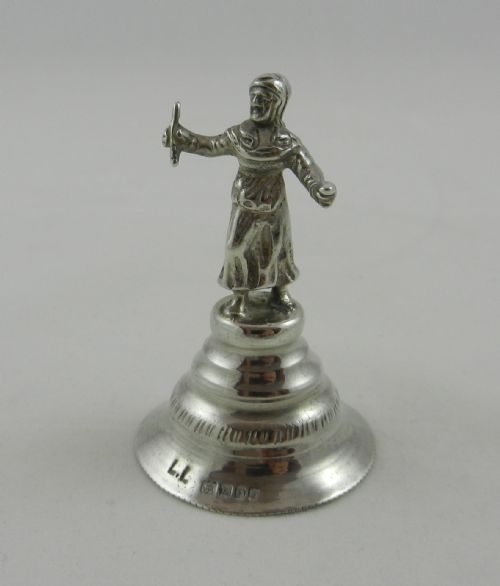

Silver Desk Bell
A silver desk bell sits ready to summon service, combining practical utility with the gleam of sterling, silver plate, and glass.
Silver Desk Bell
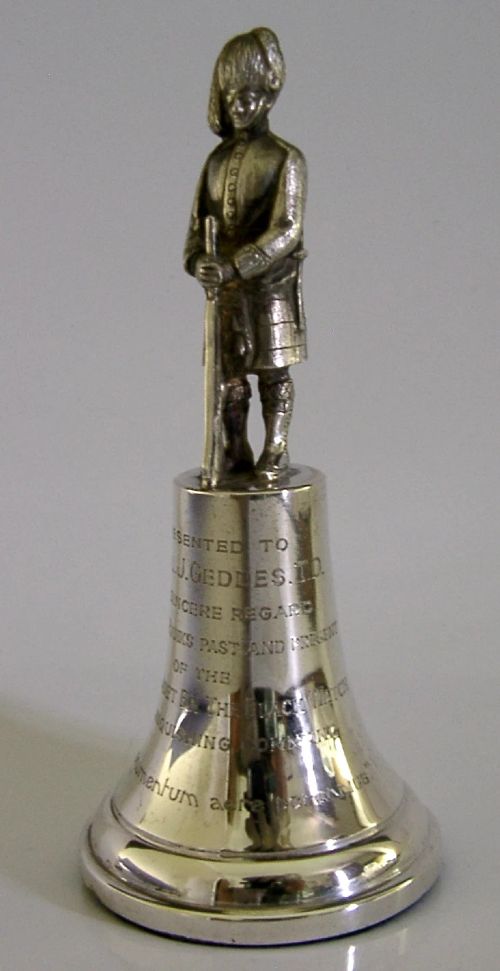
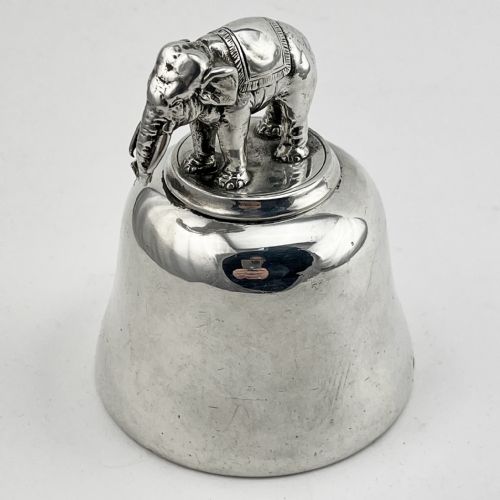
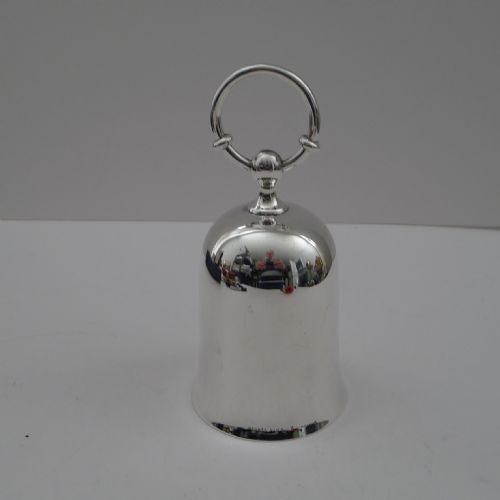
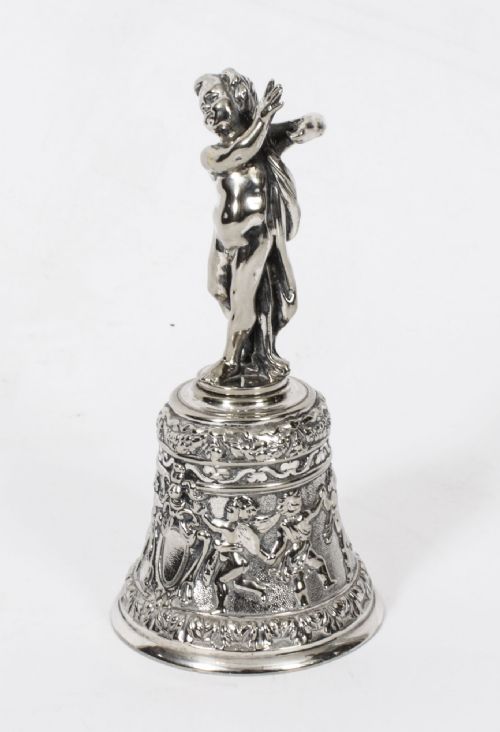
A silver desk bell serves as both a functional call instrument and a refined accessory for a writing surface. The pieces grouped under this phrase range from simple Victorian reception bells to elaborate Edwardian novelty designs and mid-century examples.
Most pieces encountered on this page date from the late nineteenth century through the mid-twentieth century, spanning Victorian, Edwardian, and George V periods. Forms include standard table bells, combination inkstands, and mechanical desk pieces.
Origin points vary widely, covering English, Swedish, French, Chinese export, American, Dutch, and German workshops. Buyers often find domestic reception models alongside animal novelties and figural handles.
How They Were Made
Makers formed these items primarily from sterling silver and silver plate, frequently mounting them on bases of brass, glass, wood, bone, or horn. The construction often pairs a precious metal dome with an internal metal clapper suspended from a spring or lever mechanism.
Many examples incorporate cast figural elements or pierced decoration, requiring skilled silversmithing and assembly. Mechanical versions utilise hidden springs and plungers to strike the interior bell when a top button or lever is pressed.
Silver Desk Bell Retail Price Guide 2026
Typical asking prices for silver desk bell among the pieces listed under this phrase on Sellingantiques today, from the lower quarter to the upper quarter. They describe what is for sale here now, not the wider market.
Periods represented across the inventory include the Victorian, Edwardian, George V, and Mid-Century Modern eras.
What Varies in Quality
Quality rests in the weight of the metal and the crispness of the casting, distinguishing solid sterling pieces from lighter silver-plated items. Substantial gauge silver and heavy bases provide a resonant tone and a stable foundation for daily use.
The complexity of the design also separates standard pieces from desirable works. Elaborate figural handles, animal forms, and combined inkwells or music box mechanisms demonstrate superior craftsmanship by notable makers.
Hermes Paris·Jaeger Le Atmos·George Unite·William Comyns·Le Coultre·WMF
The Silver Desk Bell Glossary
- Sterling Silver
- An alloy comprising a high proportion of pure silver combined with other metals to ensure durability. This standard is frequently marked with hallmarks indicating purity and origin.
- Novelty Silver
- Pieces shaped as animals, figures, or everyday objects designed to amuse the user while serving a practical purpose. These items are collected for their whimsical forms.
- Inkwell
- A small container for holding liquid ink, often incorporated into the base of a desk bell for convenience. Such combined desk accessories were staples of Edwardian and Victorian writing furniture.
- Hallmark
- A stamp or series of marks applied to precious metals indicating the maker, assay office, and year of production. These symbols provide the primary documentation for dating antique silver.
Silver Desk Bell: Frequently Asked Questions
How do mechanical desk bells work?
Mechanical desk bells operate through an internal spring and hammer mechanism concealed beneath the dome. Pushing a top button or lever causes the internal hammer to strike the metal wall instantly.
This design replaced the traditional swinging hand bell by allowing the user to produce a clear ring simply by pressing down on the top fixture.
What is a novelty bell?
A novelty bell is a desk accessory shaped to resemble an animal, human figure, or object rather than a standard dome. Popular nineteenth-century examples include pigs, tortoises, and figural heads.
These pieces were produced by silversmiths to add humour and conversation value to an executive desk or reception counter.
How do I date an antique bell?
Dating relies heavily upon the metal hallmarks stamped into the silver surface, which reveal the assay office and year of manufacture. Stylistic clues such as Victorian ornate casting or mid-century clean lines also help narrow the period.
Makers' marks combined with registration numbers provide further historical context for pieces produced around the turn of the twentieth century.
Were desk bells used in homes?
Desk bells served primarily in offices, hotels, and large Victorian households to summon servants or assistants from another room. Wealthy households placed them on writing desks, reception counters, and dining tables.
Their presence indicated a formal domestic or commercial setting where prompt service was required throughout the day.