





Victorian Silver Table Bell
These Victorian silver table bell examples offer tactile service tools that bring character and period craftsmanship to any desktop or reception counter.
Victorian Silver Table Bell
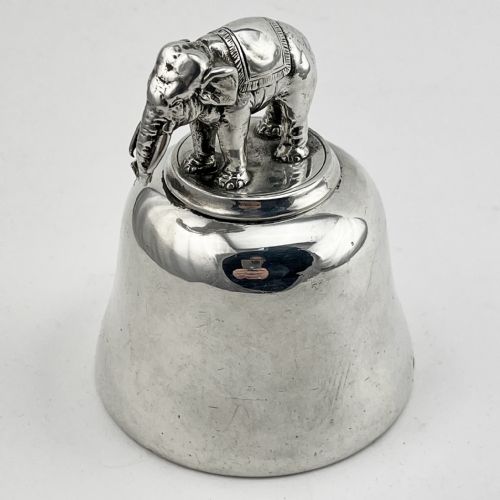
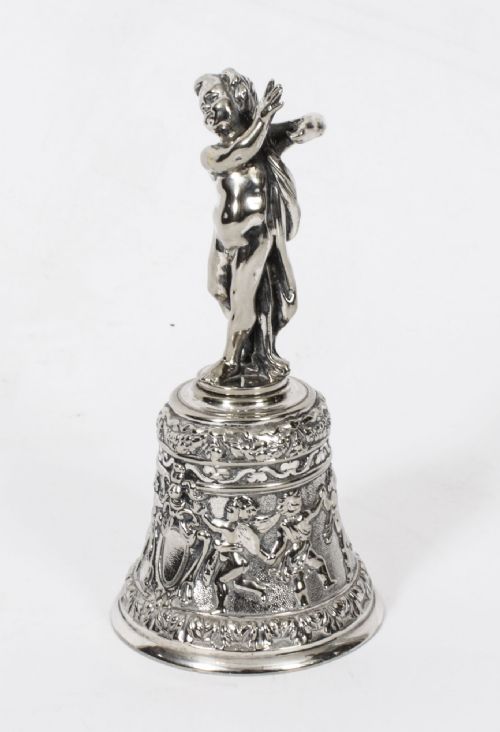
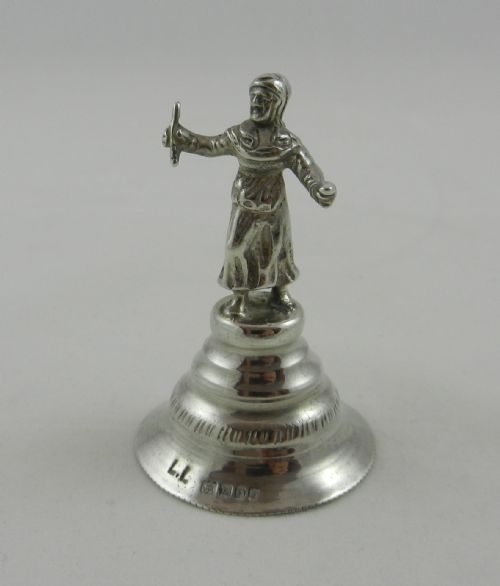
When you search for a victorian silver table bell, you are looking at functional desk accessories and reception calls designed to summon servants or signal attention. These objects range from simple polished domes to ornate figural designs featuring animals, human figures, and mechanical elements.
The versions you are most likely to meet on this page span the nineteenth century into the early twentieth century, incorporating sterling silver, silver plate, brass, and glass. Many pieces integrate diverse materials such as oak, ebonised wood, bone, and horn to create stable bases and contrasting handles.
The forms extend beyond standard desk bells into novelty table gongs, inkstands, and hand bells. Stylistic influences vary from classic Victorian and Victorian Revival to Renaissance Revival and Edwardian interpretations.
Materials and construction
Silversmiths utilised solid sterling silver and durable silver plate over base metals to form the ringing domes and polished bodies. The underlying metal structure often combined with brass for stability or cast figural handles.
Makers integrated glass reservoirs, wooden plinths, and organic elements like bone and horn to add weight and tactile contrast. Mechanical components within novelty items required precise metalworking to ensure a clear ring upon actuation.
Victorian Silver Table Bell Retail Price Guide 2026
Typical asking prices for victorian silver table bell among the pieces listed under this phrase on Sellingantiques today, from the lower quarter to the upper quarter. They describe what is for sale here now, not the wider market.
Listings feature items spanning from the nineteenth century into the twentieth century, utilising sterling silver, silver plate, brass, glass, bone, horn, and wood.
Assessing quality and craftsmanship
The integrity of the construction, from the secure mounting of the bell to wooden or ebonised bases to the smooth action of mechanical strikers, determines the enduring value of the piece.
The Victorian Silver Table Bell Glossary
- Sterling silver
- A silver alloy containing 92.5 percent pure silver by mass and 7.5 percent other metals, usually copper. This standard ensures durability while maintaining a bright metallic lustre.
- Silver plate
- A layer of silver applied to a base metal such as brass or copper. This technique offered an accessible alternative to solid silver items during the period.
- Renaissance Revival
- A nineteenth-century architectural and decorative art style that drew inspiration from fifteenth- and sixteenth-century Italian forms. It appears on bells through classical motifs and heavy relief ornamentation.
- Table gong
- A larger percussion instrument suspended from a frame, used in dining settings to signal meals. These often incorporated materials like oak and silver-plated hardware.
Victorian Silver Table Bell: Frequently Asked Questions
What is a victorian silver table bell used for?
These bells served primarily as domestic or commercial call instruments in the nineteenth century. Households utilised them in dining rooms and parlours to summon domestic staff.
Businesses placed them on reception counters and desks to signal customer arrival. Today they function as decorative objects and working desk accessories.
How do I clean silver plate safely?
Cleaning requires a soft microfibre cloth and a specialist silver polish formulated to protect thin metal coatings. Avoid harsh abrasive compounds that can wear away the silver layer.
Gentle wiping preserves the underlying base metal and any patination accumulated over the decades.
What materials are combined with the silver?
Makers frequently paired silver and silver plate with glass, brass, and wood. Bases often consist of oak or ebonised wood to provide weight and acoustic balance.
Handles sometimes incorporate bone, horn, or detailed figural metal castings depicting animals and human figures.
How can I tell the period?
Dating relies on hallmarks stamped into sterling silver pieces, which indicate the assay office, date letter, and maker's mark. Stylistic cues such as Renaissance Revival motifs or specific figural designs also provide chronological context.
Construction methods and base materials help separate nineteenth-century originals from later revival pieces.