



Sterling Silver Bell
A sterling silver bell brings tactile utility and distinct presence to a desk or table, drawing on centuries of craftsmanship.
Sterling Silver Bell
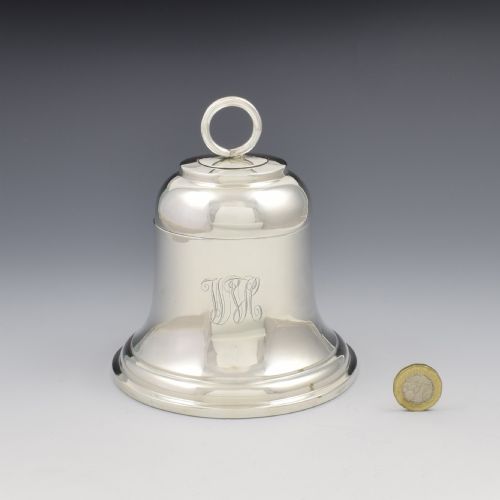
A sterling silver bell encompasses functional table and desk accessories, reception counter bells, novelty inkwells, and infant rattles spanning the Georgian, Victorian, and later periods.
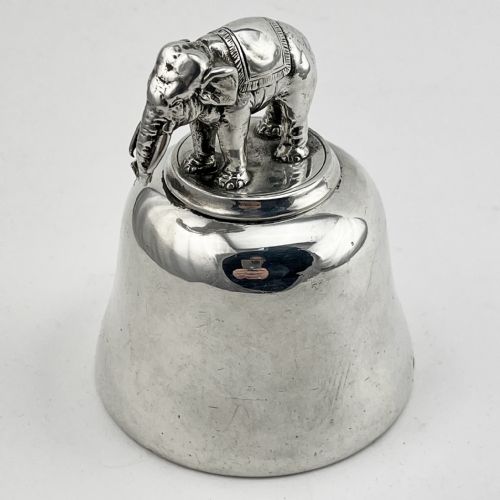
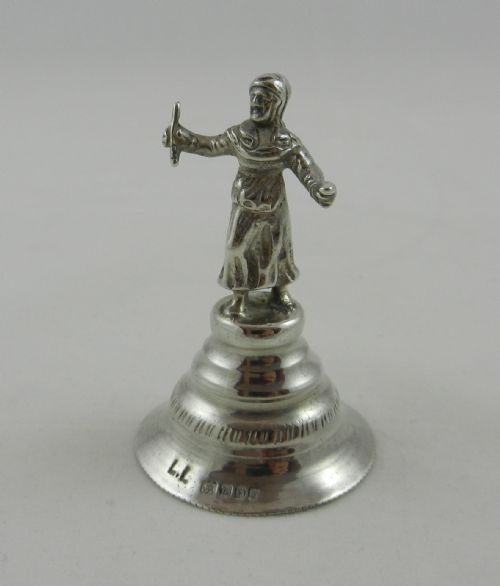
Table bells and desk bells dominate the selection, often appearing alongside novelty pieces shaped as figures or animals from the nineteenth and twentieth centuries.
Rattles incorporating small bells also emerge from the Georgian and Victorian eras, frequently paired with bone, coral, or mother of pearl.
Materials and Construction
Objects are forged primarily from sterling silver, sometimes combined with glass bodies, brass mechanisms, or organic elements like mother of pearl and bone.
Makers utilised casting and mechanical assembly for novelty desk bells and reception pieces, while rattles often combined chased silver with coral handles.
Materials appearing across these items include sterling silver, glass, bone, mother of pearl, and brass.
Distinctions in Quality
Quality rests upon the crispness of the casting, the weight of the metal, and the complexity of figural handles or mechanical actions.
Pieces bearing distinct maker marks and intact original components distinguish the upper tiers of surviving examples.
George Unite·Joseph Taylor·Bateman London·William Comyns·John Zimmerman
The Sterling Silver Bell Glossary
- Sterling silver
- An alloy containing 92.5 percent silver by mass, forming the standard material for these items.
- Novelty silver
- Pieces shaped into amusing or unusual forms, such as animals or figures, popular during the Victorian and Edwardian eras.
- Desk accessory
- Functional items designed for writing desks, including inkwells, bell inkstands, and reception bells.
- Baby rattle
- An infant toy combining silver bells with a handle of bone, coral, or mother of pearl, often including an integrated whistle.
Sterling Silver Bell: Frequently Asked Questions
How were desk bells used?
Reception and desk bells served in homes and shops to summon staff or service. They sat on counters or tables, ready to be struck or pressed.
Mechanical versions often utilised an internal hammer mechanism activated by pushing a plunger or lever rather than swinging a traditional clapper.
What are baby rattles with bells?
Infant rattles combined small silver bells with a teething handle made from materials like coral, bone, or mother of pearl. Many included whistles at one end.
These objects functioned as both comforting toys and decorative keepsakes during the Georgian and Victorian periods.
How do I identify a novelty bell?
Novelty examples take unexpected shapes, such as figural animals, human characters, or inkwell combinations. Makers in the late nineteenth and early twentieth centuries favoured these playful designs.
Such pieces often conceal inkwells or mechanical push buttons beneath their decorative exteriors.
What periods do these pieces date from?
The selection includes examples from the 18th century, the Georgian era, the Victorian period, and twentieth-century decades up to the 1960s.
Marks and hallmarks stamped on the silver help determine the precise decade and origin of manufacture.