
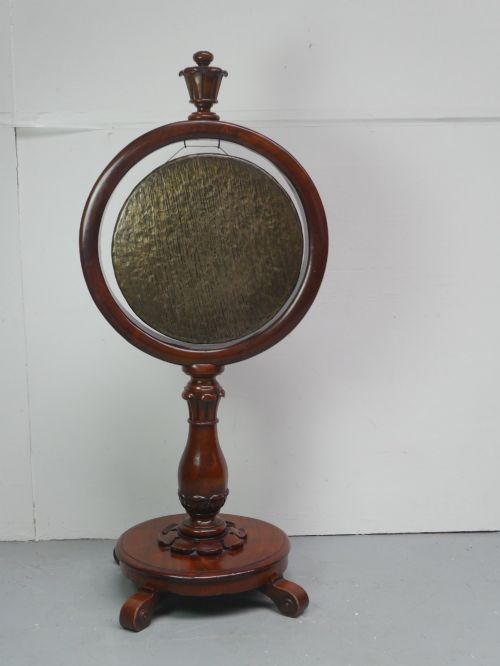
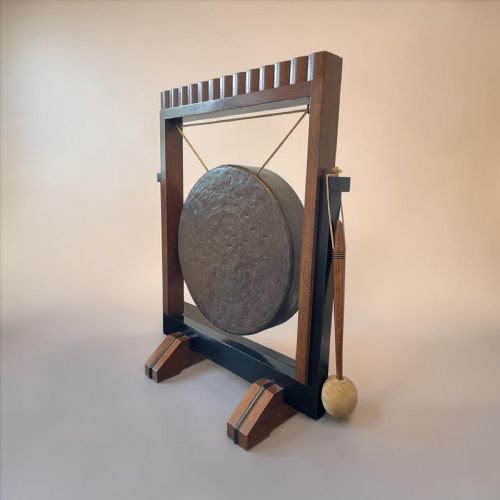


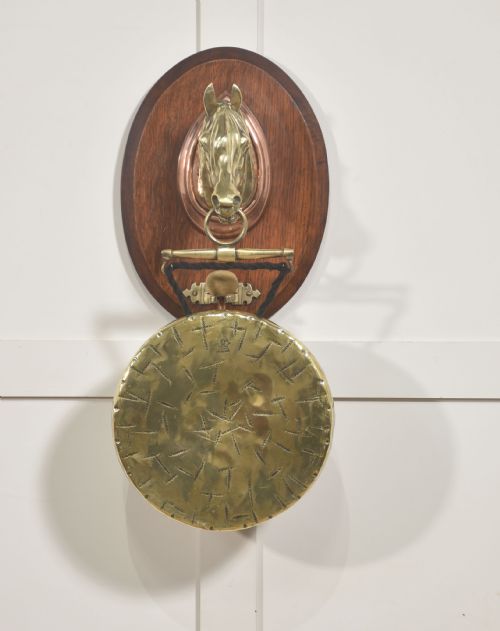


Brass Dinner Chime
A brass dinner chime summons household or guests with a resounding strike, pairing resonant metal with fitted wooden frames.
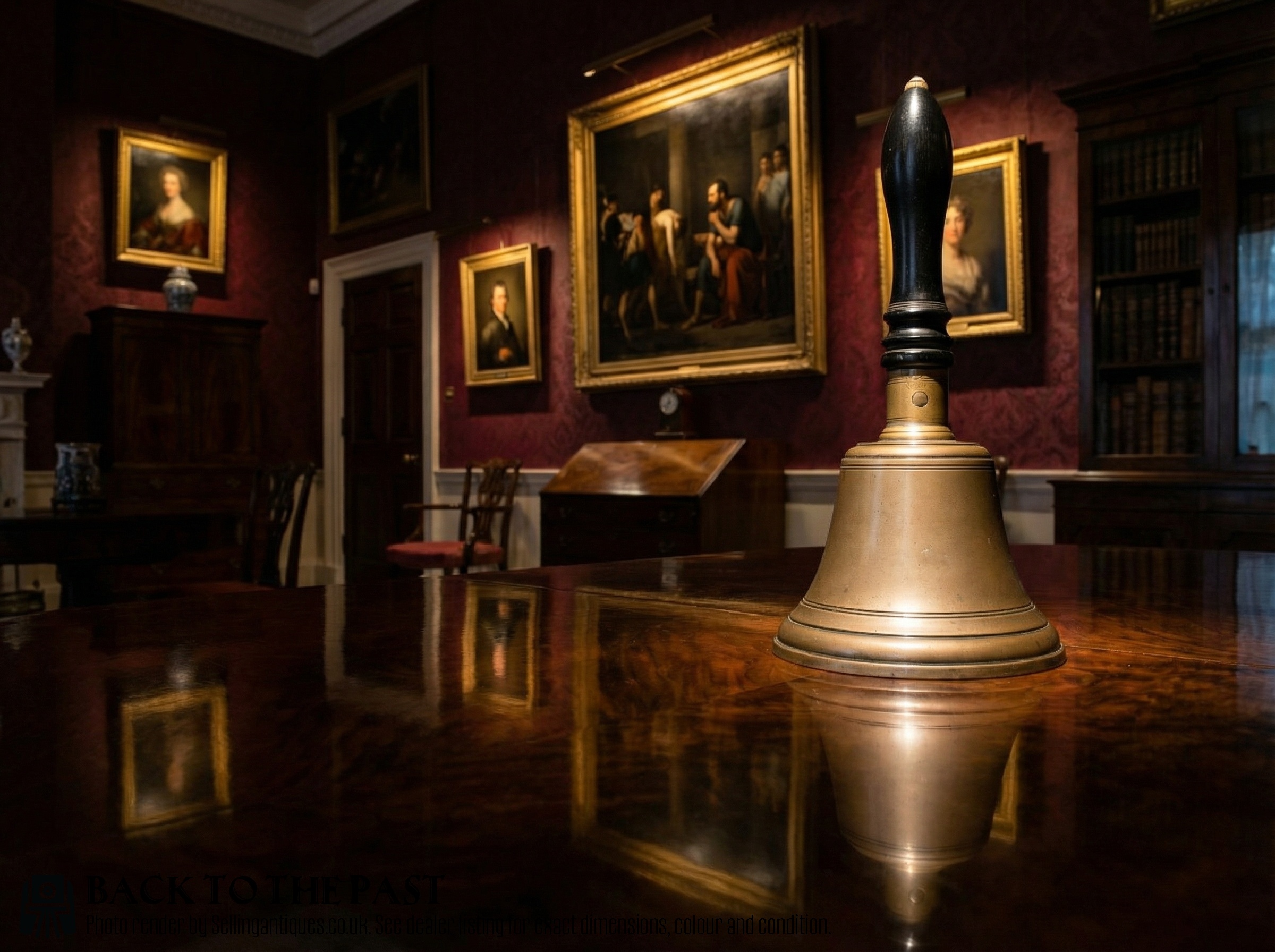
Brass Dinner Chime
A brass dinner chime gathers the household with a resonant note, appearing in forms ranging from small tabletop strikers to monumental wall-hanging gongs. The pieces meeting this search phrase are predominantly Victorian and Edwardian examples, spanning the nineteenth and early twentieth centuries.
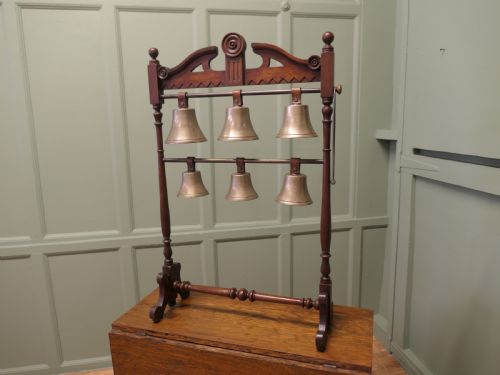
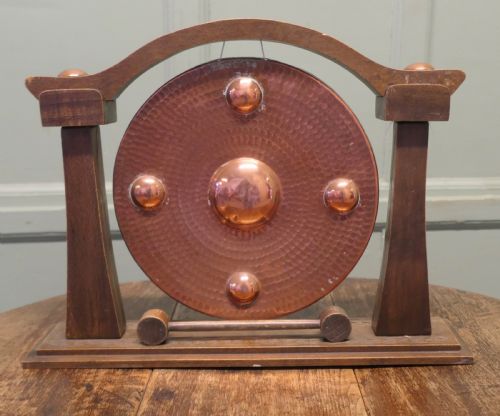
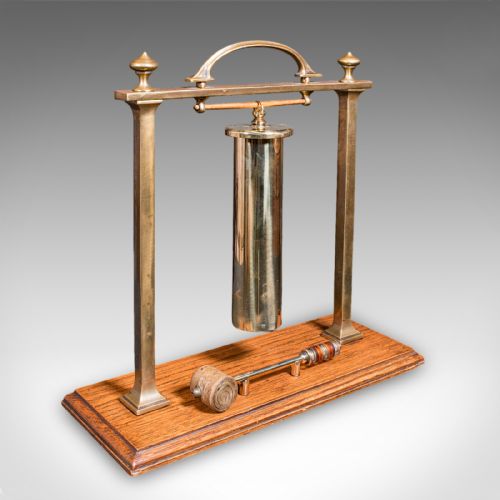
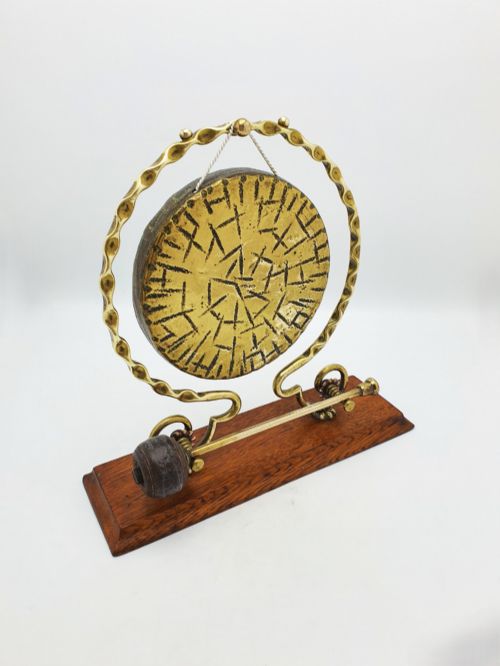
The standard format pairs a cast brass bell, disc or tuned chime with a sturdy wooden mount or frame, often supplied with a matching handheld striker. Oak and walnut appear frequently as the framing materials, supporting hanging bells or gongs designed for dining rooms, hallways and country house reception areas.
Beyond standard domestic frames, variations incorporate stylistic flourishes from Gothic Revival and Arts and Crafts movements alongside Japanese, Chinese and Burmese influences. Tabletop models sit alongside floor-standing versions and wall-mounted chimes, offering different scales for domestic spaces.
How they were made
Makers utilised cast brass, bronze and silver plate for the striking elements, relying on metal compositions that produced a clear, sustained tone when hit. Frames combined native hardwoods like oak and walnut with exotic materials including bamboo, cattle horn and carved foreign timbers.
Joinery and metalworking techniques reflected the prevailing styles of the period, from hand-carved Gothic tracery and dragon motifs to the cleaner lines favoured by Arts and Crafts artisans. Cord and wrought iron fittings secured the suspended gongs within their standing or wall-mounted structures.
Brass Dinner Chime Retail Price Guide 2026
Typical asking prices for brass dinner chime among the pieces listed under this phrase on Sellingantiques today, from the lower quarter to the upper quarter. They describe what is for sale here now, not the wider market.
Listings demonstrate a strong preference for oak and walnut frames paired with brass or bronze striking elements across the Victorian and Edwardian eras.
What varies in quality
Quality rests in the resonance of the metal and the integrity of the joinery supporting it, distinguishing sturdy architectural pieces from lighter decorative items. Heavier cast brass components and dense, well-figured oak or walnut frames hold up better to repeated strikes.
Artisanal detail in the carving and the cohesion of stylistic elements separate standard production items from ambitious Gothic Revival, Aesthetic Movement or Chinese export examples. The harmony between the hanging chime, its striker and the supporting frame dictates the overall coherence of the object.
The Brass Dinner Chime Glossary
- Dinner Gong
- A suspended metal disc or bowl struck with a mallet to announce meals. They range from small tabletop versions to large floor-standing models.
- Gothic Revival
- A nineteenth-century design style drawing on medieval architectural motifs. Pieces in this style often feature pointed arches, heavy tracery and dark carved oak.
- Arts and Crafts
- A design movement valuing manual skill and simple construction. Work from this tradition prioritises honest materials and visible craftsmanship.
- Aesthetic Movement
- A late nineteenth-century movement emphasising visual beauty above narrative or moral function. Items in this style often incorporate artistic brasswork and refined detailing.
- Striker
- The handheld mallet or hammer used to hit the gong or bell. These often feature matching wooden handles and padded or rounded striking heads.
Brass Dinner Chime: Frequently Asked Questions
How were dinner chimes used?
These pieces sat in halls, dining rooms or verandas to signal the evening meal or afternoon tea to the household. A strike from the handheld mallet produced a resonant tone that carried through the rooms.
They functioned both as practical timekeeping signals and as decorative furnishings for country houses and domestic interiors.
Where should I place a dinner gong?
Tabletop versions suit sideboards, entrance tables or desks where the striker remains close at hand. Wall-hanging and floor-standing models require secure fixings and adequate clearance around the suspended metal.
Positioning them away from heavy foot traffic protects the hanging cord and frame from accidental knocks while preserving their acoustic properties.
How do I date a brass dinner chime?
Dating relies on the combination of framing materials, mounting styles and the aesthetic movement reflected in the carved woodwork. Victorian and Edwardian examples often feature distinct Gothic Revival, Arts and Crafts or Orientalist motifs.
The presence of specific hardware, construction methods and timber choices helps narrow the period of manufacture between the nineteenth and early twentieth centuries.
What is the difference between a gong and a bell?
A gong typically consists of a suspended metal disc or plate that produces a deep, reverberating tone when struck. Bells are usually cup-shaped or tubular, yielding a higher and more direct chime.
Both forms appear within frames of oak, walnut or bamboo, paired with matching strikers for domestic use.