


Vintage Call Bell
A vintage call bell summons attention with a crisp ring, uniting utilitarian brass or silver plate with period craftsmanship from the Victorian and Edwardian eras.
Vintage Call Bell
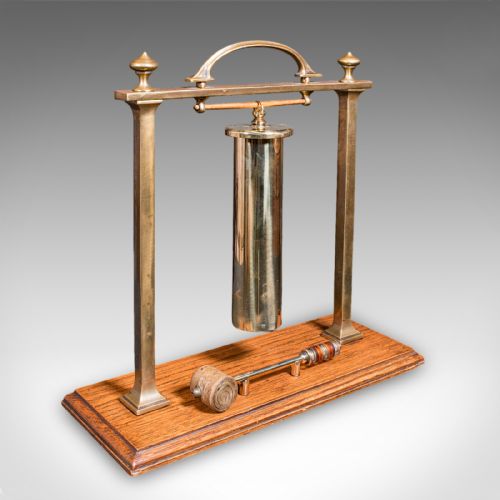
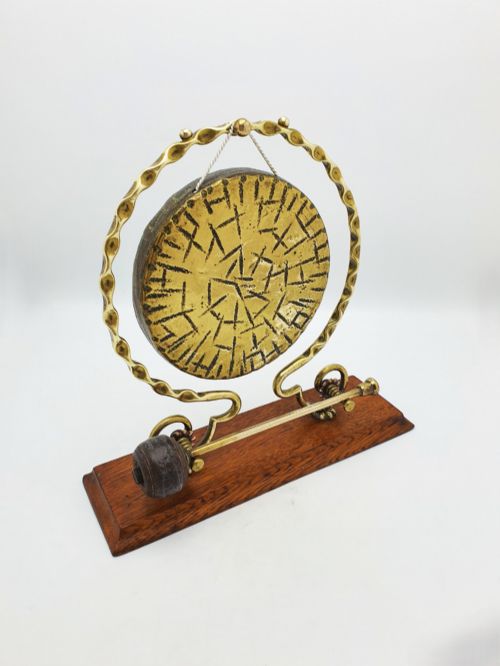
A vintage call bell functions as a mechanical signal for service, taking forms such as desk bells, counter bells, hand bells, and dinner gongs mounted on wooden bases. These objects emerge from periods spanning the Georgian era, the 19th Century, the Victorian and Edwardian decades, and mid-century modern design.
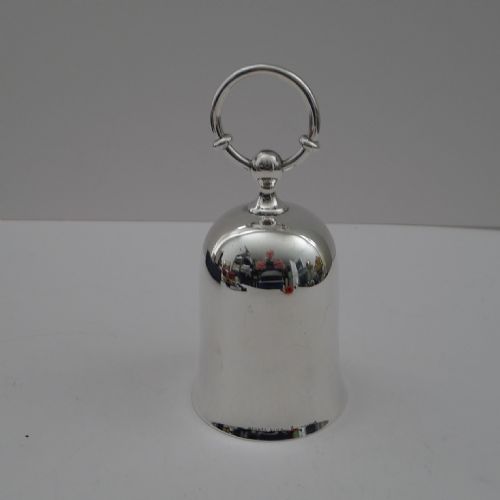
The pieces appearing on this page range from heavy brass shop counter bells and bronze schoolbells to silver-plated table bells and oak-backed dinner gongs. Stylistic influences include Art Nouveau, Renaissance Revival, and Equestrian motifs.
Domestic and commercial spaces utilised these items for summoning servants, greeting customers in shops, or chiming for dinner. The selection balances utilitarian hotel hardware with decorative table accessories.
How they were made
Metalworking dominates production, utilising cast brass, bronze, cast iron, and sterling silver or silver plating for the bells and strikes. Sound relies on the alloy composition and the thickness of the metal dome.
Wooden bases and mounts employ oak and other turned timbers, sometimes paired with horn or integrated with metal gongs and strikers. Mechanical versions incorporate internal springs and plungers to activate the hammer without a traditional swing.
Among the functional metalwork hide playful novelties shaped like mechanical pigs and elephants.
What varies in quality
Quality rests in the weight of the metal casting and the clarity of the resulting tone when struck. Heavy brass and bronze display sharper detail in ornamentation than lighter stamped metals.
The integration of materials determines refinement, such as fitted oak backplates, silver plating thickness, and the complexity of mechanical actions like horse-bit handles or novelty figural designs.
Hermes Paris·Gunton Hall
The Vintage Call Bell Glossary
- Dinner gong
- A large suspended metal disc struck with a handheld mallet to announce meals in country houses. They frequently feature oak support frames.
- Counter bell
- A spring-loaded bell designed for shops and hotels where pressing a plunger strikes the interior mechanism. These saw heavy commercial use in the Victorian period.
- Hand bell
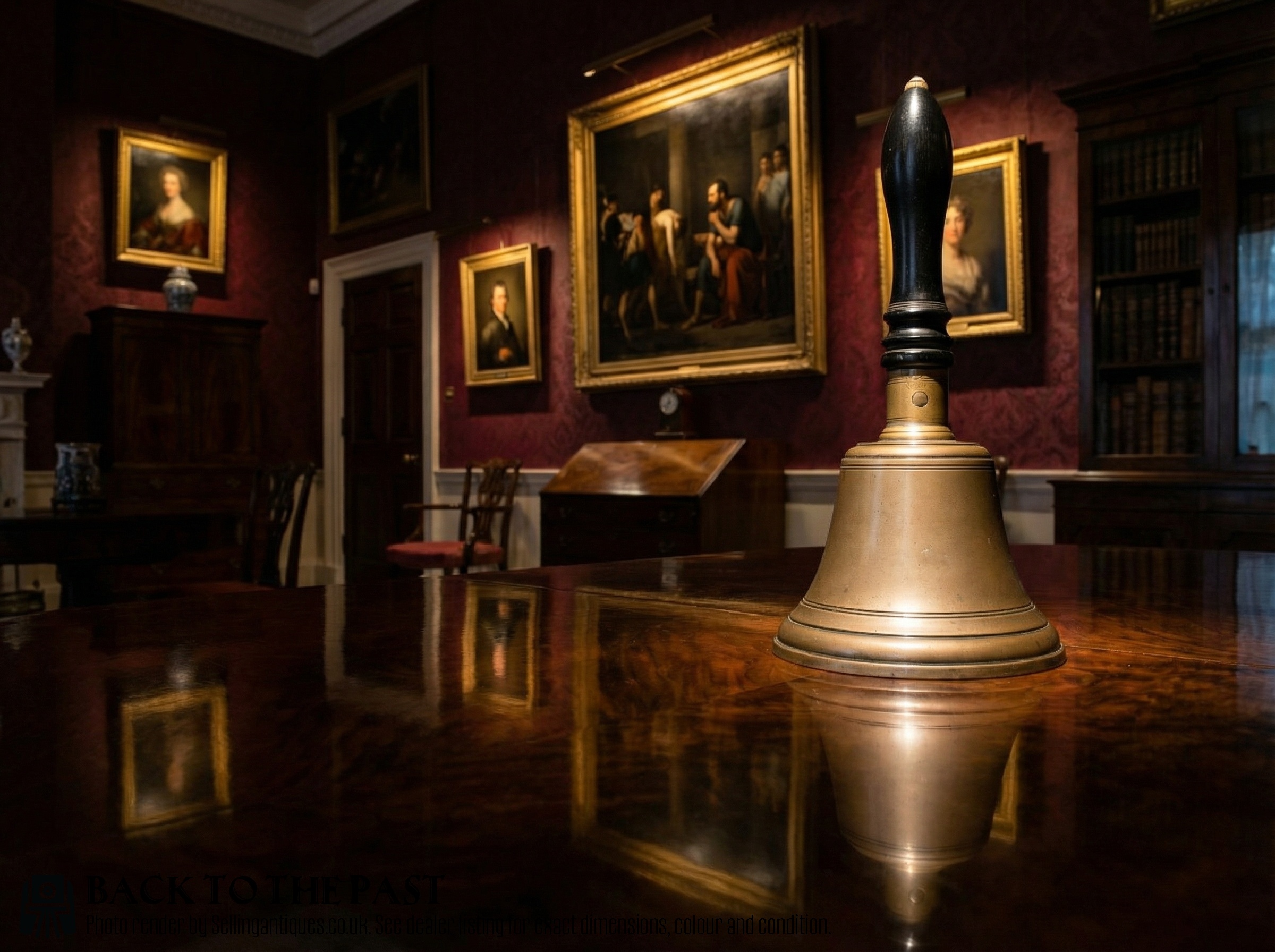
- A portable bell with a turned handle swung manually to project sound. Examples include schoolmaster and town crier variants.
- Silver plate
- A thin layer of silver fused to a base metal such as copper or brass. It offers the appearance of solid silver at a lower manufacturing cost.
Vintage Call Bell: Frequently Asked Questions
How do desk bells work?
Desk and counter bells generally operate via an internal spring mechanism connected to a plunger. Pressing the top depresses a hidden hammer against the interior wall of the bell dome.
This internal strike allows the bell to ring clearly without needing to lift the object from the counter surface.
Were these used in homes?
Domestic spaces utilised hand bells and dinner gongs extensively for daily routines. Servants responded to room bells, whilst gongs signalled the household for dinner.
Smaller table bells also sat in reception rooms and hallways for general use.
How do I date a brass bell?
Dating relies on stylistic clues, mounting materials, and manufacturing techniques visible on the piece. Victorian and Edwardian examples often feature specific aesthetic movements like Art Nouveau.
Patina, screw types, and base construction help narrow the decade of production.
What metals are most common?
Brass and bronze appear most frequently due to their resonant acoustic properties and durability. Cast iron also serves for heavier gong frames and industrial counter models.
Silver plate and sterling silver denote finer table models made for formal settings.