




Antique Dinner Bell
An antique dinner bell brings historic service into the home with clear, resonant calls for meals.
What an antique dinner bell is
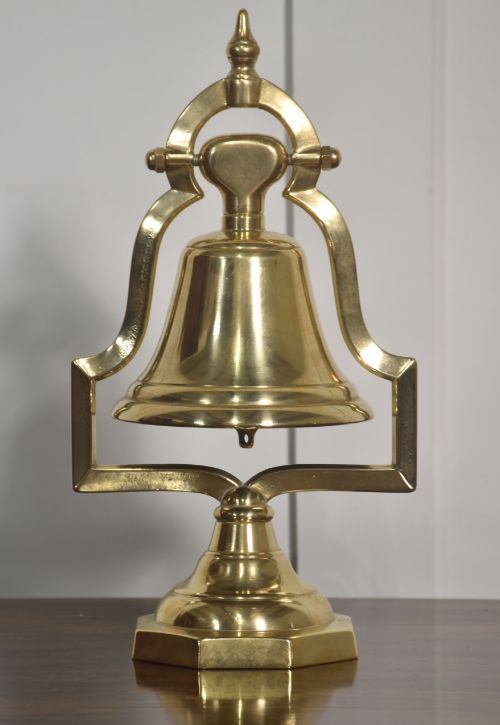
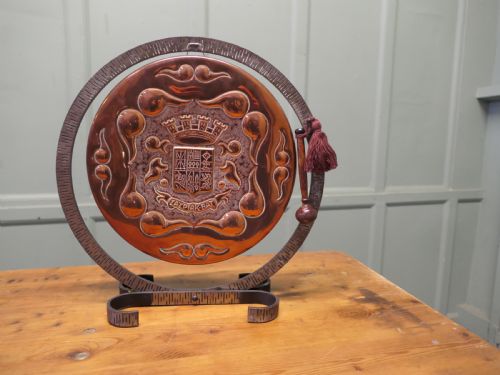
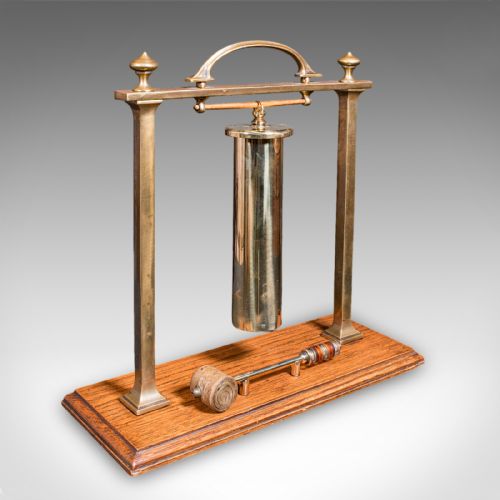
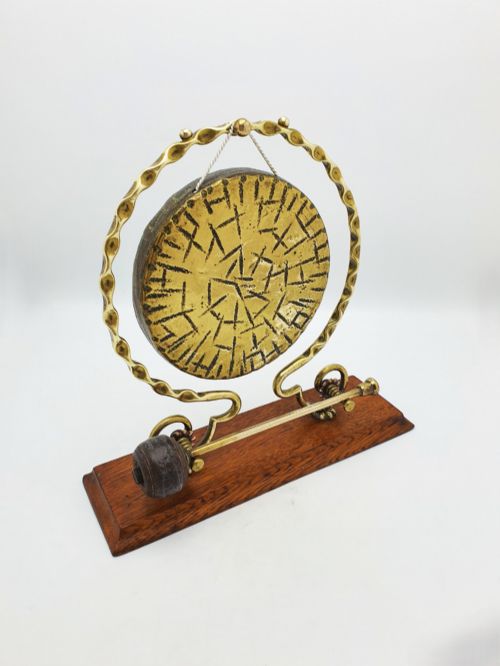
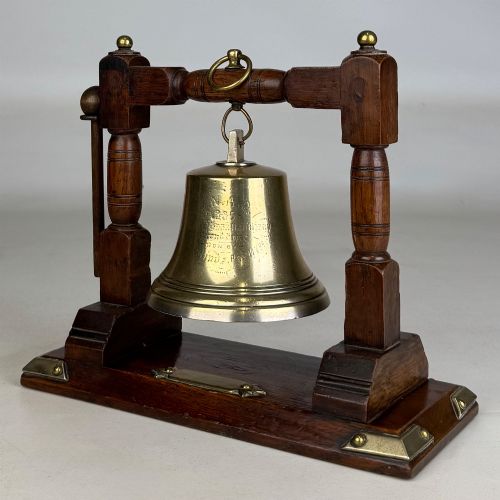
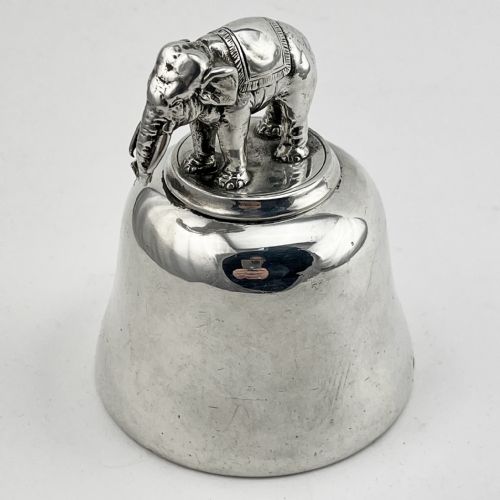
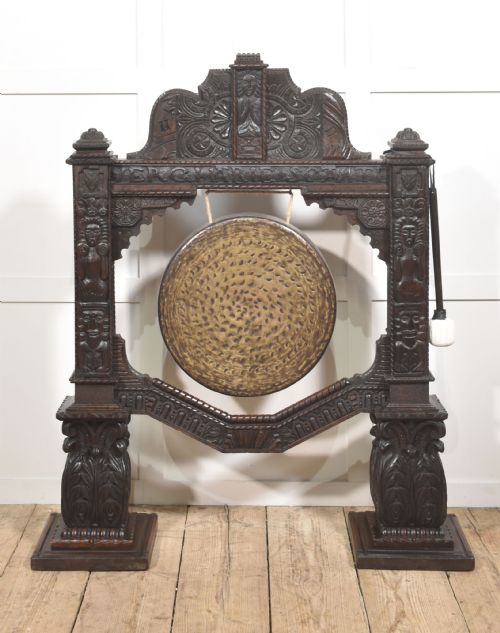
When you search for an antique dinner bell, you find sound-producing objects designed to gather household occupants for meals. These pieces span the nineteenth century and the Edwardian period, appearing in forms such as table bells, hand bells, wall-mounted chimes, and larger dinner gongs.
The versions you are most likely to meet on this page include sterling silver and glass table bells, schoolmaster's hand bells in bronze, and silver-plated models mounted on oak or paired with cow horn. Styles range from Victorian and Gothic Revival to Edwardian designs.
Origin points visible in the evidence include English and French workshops, utilising domestic and imported materials shaped for both utility and display.
Materials and construction
The construction relies on metals such as brass, bronze, sterling silver, and silver plating, often cast or shaped to produce a distinct tone. Handles incorporate bone, glass, and carved hardwood.
Many examples mount metal bells and chimes onto wooden bases made of oak, sometimes incorporating organic elements like cow horn and hanging ropes to complete the design.
Retail Price Guide 2026
Typical UK retail prices for dinner bell, calculated from the Sellingantiques database of over a million retail prices indexed since 2003. This retail price guide relies exclusively on Sellingantiques data; no external sources or auction records are used, so the figures do not describe the wider market.
Listings feature items spanning the 1880s, the 1890s, the Victorian era, and the Edwardian period.
What separates the best pieces
Quality rests in the purity of the ring and the weight of the metal used in the bell or gong. Heavier bronze and thick brass castings project sound further and cleaner than thinner plated metals.
The fineness of the carving on wooden mounts and the detail in figural handles elevate certain pieces. Materials like sterling silver and glass combined with ornate work place examples at the upper end of the range.
The Antique Dinner Bell Glossary
- Dinner Gong
- A suspended metal disc or bar struck with a mallet to produce a deep, resonant tone. These larger forms are designed to carry sound across large houses.
- Table Bell
- A small hand-held or mounted bell placed on dining surfaces for summoning servants or service. They often feature decorative handles of silver, glass, or carved bone.
- Schoolmaster's Hand Bell
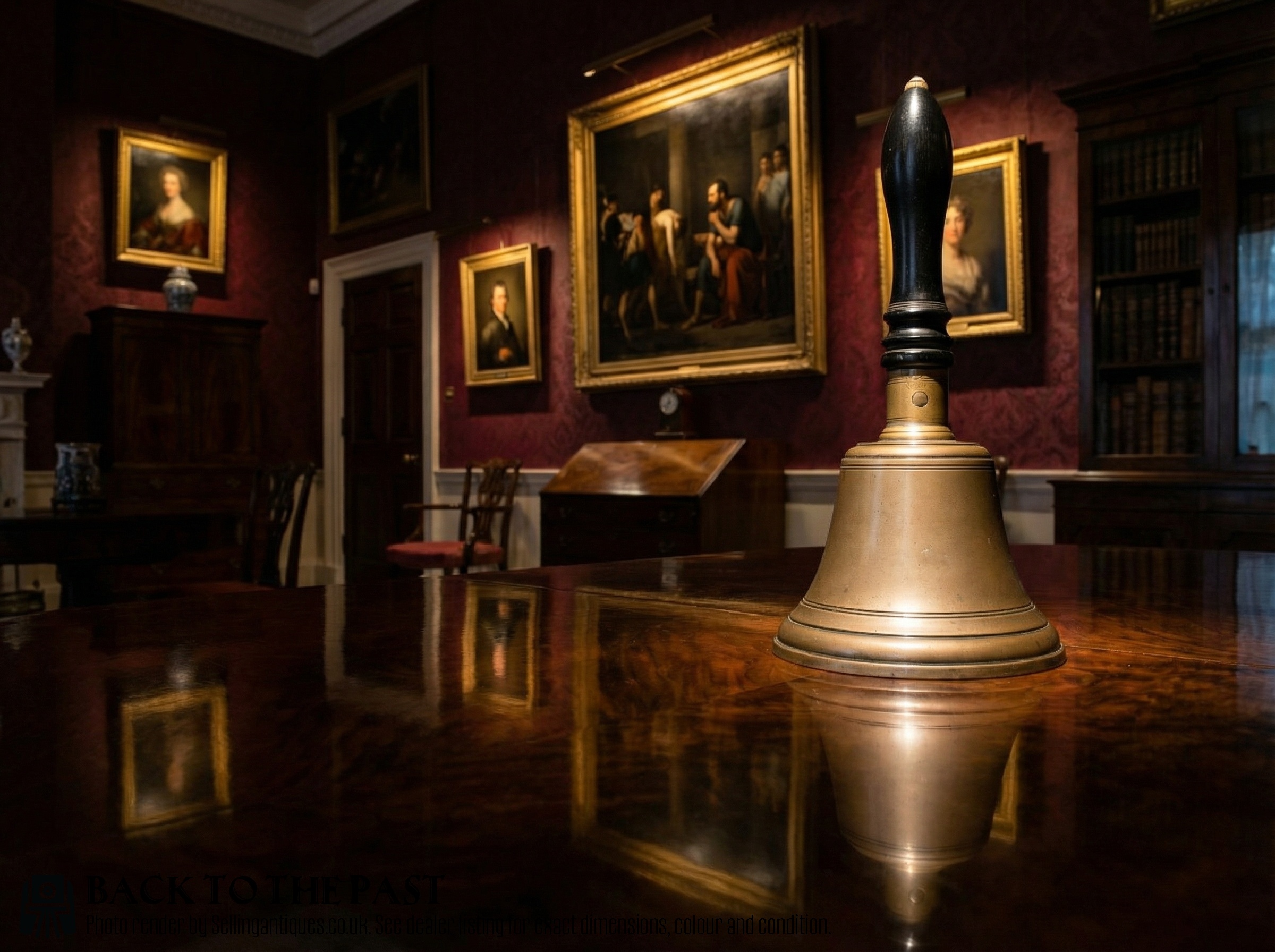
- A portable bell fitted with a wooden handle, historically used in classrooms but frequently employed domestically. These typically utilise cast bronze for maximum volume.
- Gothic Revival
- An architectural and decorative style popular during the nineteenth century characterised by pointed arches and medieval ornamentation. This aesthetic often appears on the heavy oak mounts of the period.
Frequently Asked Questions
How do you clean an antique dinner bell?
Clean metal components gently using a soft cloth to preserve any historic finish or silver plating. Avoid harsh abrasive polishes that can wear away thin plating on nineteenth-century surfaces.
Keep wooden bases like oak free from excessive moisture by dusting them with a dry cloth. Natural materials such as bone and horn benefit from occasional light conditioning.
Were these bells used only for meals?
While primarily designed to summon household members or staff to the dining room, similar hand-held and wall-mounted bells served multiple domestic and institutional duties. School rooms and large country houses utilised them interchangeably for transitions and announcements.
The inclusion of wall-mounted variants and schoolmaster designs in the evidence shows how adaptable these sound-producing instruments were across daily life.
How can you tell an Edwardian bell from a Victorian one?
Edwardian pieces often display lighter decorative touches and refined proportions compared to the heavier, ornate styles of the mid-nineteenth century. Gothic Revival influences and massive carved oak mounts tend to sit firmly in the earlier Victorian decades.
Dates stamped or engraved on silver and plated components help anchor specific pieces to the 1880s, 1890s, or the Edwardian decade of 1910.
What metals are commonly found in these bells?
Brass and bronze provide the primary ringing bodies for hand bells and gongs due to their resonant acoustic properties. Silver plating over base metals and solid sterling silver frequently appear on table models designed for display.
Combined materials such as glass, bone, and cow horn are often integrated with these metals to form distinctive handles and striking bases.