

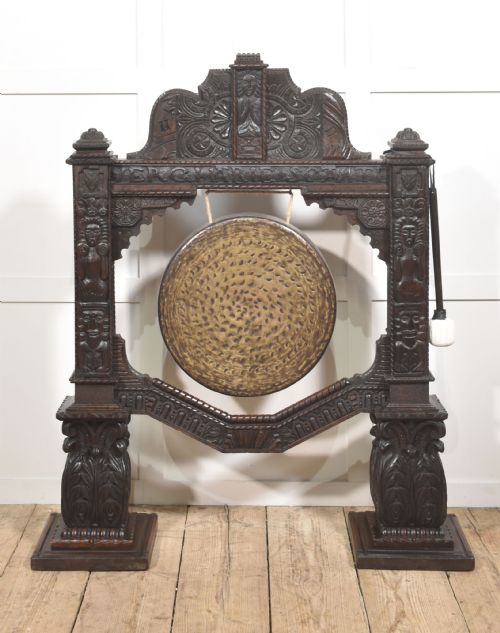


Antique Gong Stand
An antique gong stand brings rich timber frames and resonant bronze or brass bells into a room, serving both as a striking focal point and a functional summons.
Antique Gong Stand
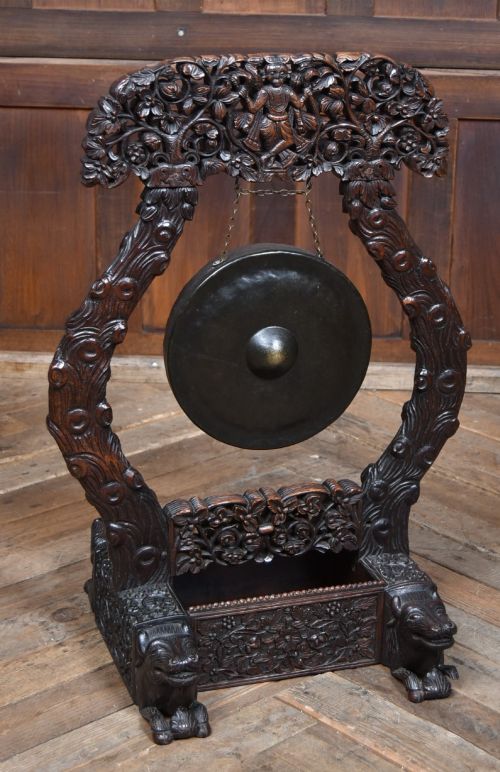
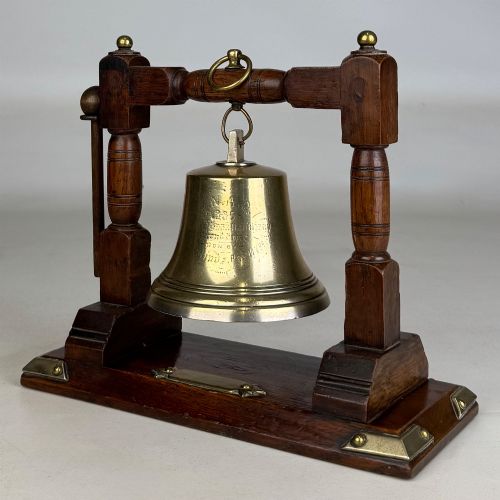
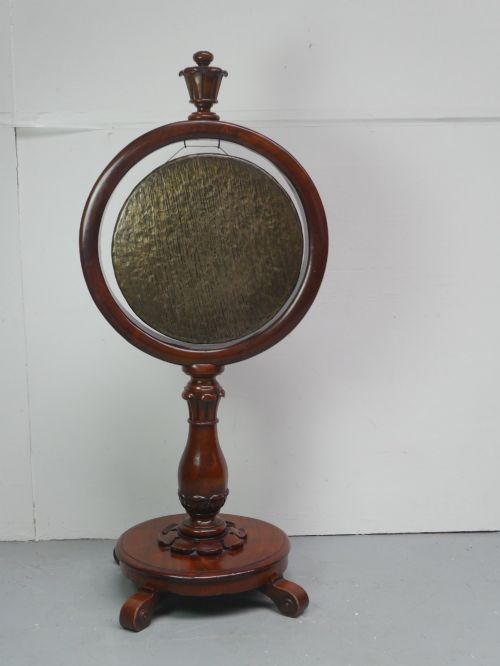
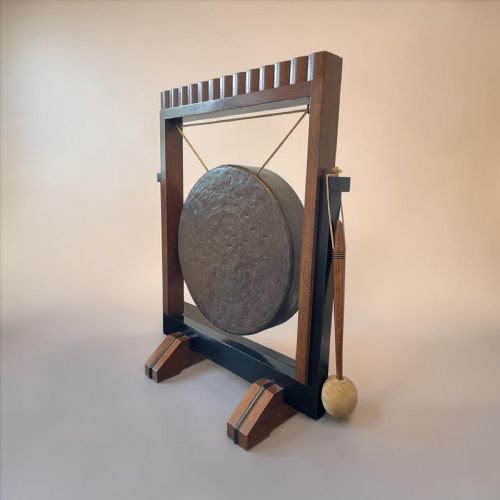
When you search for an antique gong stand, you encounter a specialised piece of furniture designed to suspend a resonant metal disc or bell for domestic or ceremonial use. These objects range from compact table models to substantial floor-standing pieces intended to call household members to meals.
The versions most common on this page date from the Victorian and Edwardian eras, with significant representation from the nineteenth century and the early twentieth century. They frequently combine timber frames with metal gongs, bridging utilitarian housewares and decorative arts.
What varies in quality
The caliber of carving and joinery defines the upper tier of these pieces, distinguishing mass-produced items from those executed by skilled hands. Crisp detailing on wooden frames and dragon motifs indicates superior craftsmanship.
Acoustic resonance and metal composition also set finer examples apart. The purity of the alloy in the bell or disc determines the sustaining tone, elevating a purely decorative object to one with genuine musical presence.
Listings feature periods spanning the nineteenth century through to the 1930s, incorporating oak, walnut, brass, and bronze.
The Antique Gong Stand Glossary
- Dinner gong
- A suspended metal disc or bell struck with a mallet to announce meals in large country houses.
- Gothic Revival
- A nineteenth-century design style drawing on medieval architectural motifs, frequently featuring pointed arches and heavy timber carving.
- Arts and Crafts
- A movement prioritising traditional craftsmanship, visible construction, and simple forms over industrial ornament.
- Table gong
- A smaller version designed to sit on a surface rather than stand upon the floor.
- Chinoiserie
- European artistic styles reflecting Chinese motifs and techniques, often applied to furniture and stands.
Antique Gong Stand: Frequently Asked Questions
Are antique gong stands difficult to care for?
Maintaining these pieces requires standard care for antique timber and metal. Regular dusting of the carved wooden frame preserves the finish without stripping natural oils from woods like oak and walnut.
Metal components such as brass or bronze bells benefit from minimal intervention, as cleaning agents can remove desirable patinas accumulated over decades of existence.
How do I date a gong stand?
Dating relies on stylistic clues and construction methods evident in the wooden frame. Gothic Revival and heavy oak pieces typically point towards the nineteenth century, while lighter forms often align with Edwardian production.
Material choices, such as silver plate or specific casting marks on the metal bells, also provide reliable chronological anchors for the overall assembly.
Can I still strike the gong?
Most gongs remain fully functional and retain their original acoustic properties. Striking them gently with an appropriate mallet produces the intended resonant tone.
Care should be taken to inspect the suspension cord or hooks before use, ensuring the heavy metal disc remains securely hung within the wooden frame.