




Dark Oak Gong Stand
A dark oak gong stand brings a striking architectural presence and a resonant metallic chime to a hallway or reception room.
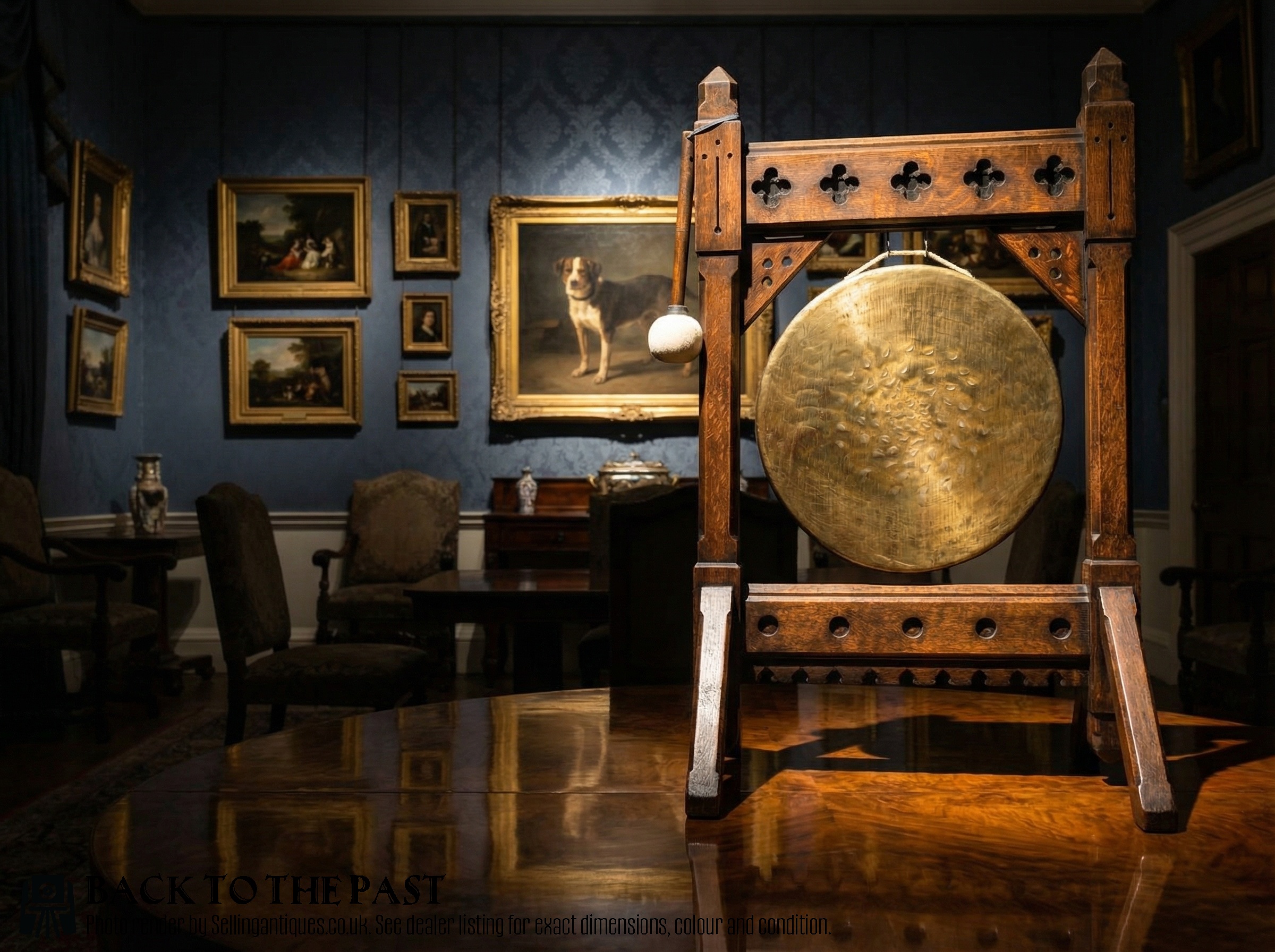
Dark Oak Gong Stand
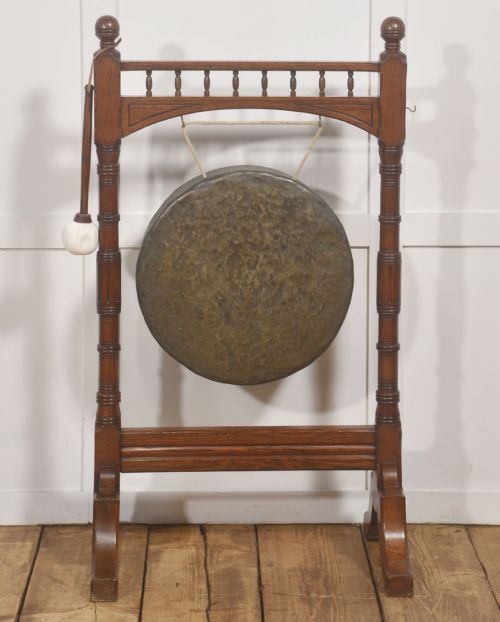
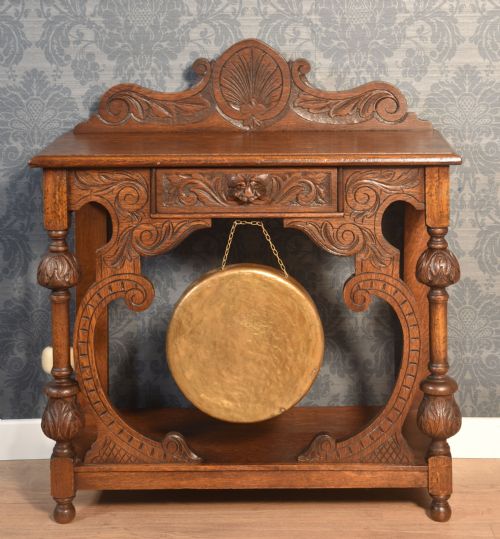
A dark oak gong stand is a purposeful piece of furniture designed to suspend a heavy brass or bronze disc, struck with a padded mallet to announce meals or greet visitors in grand homes. When you search for a dark oak gong stand, you encounter sturdy vertical supports, overhead framing, and occasionally associated table forms that incorporate the hanging apparatus into their design.
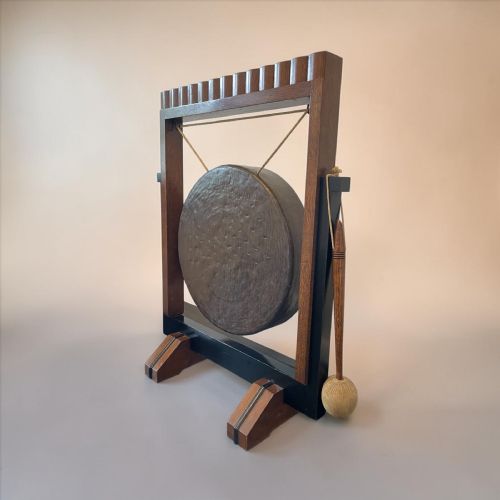
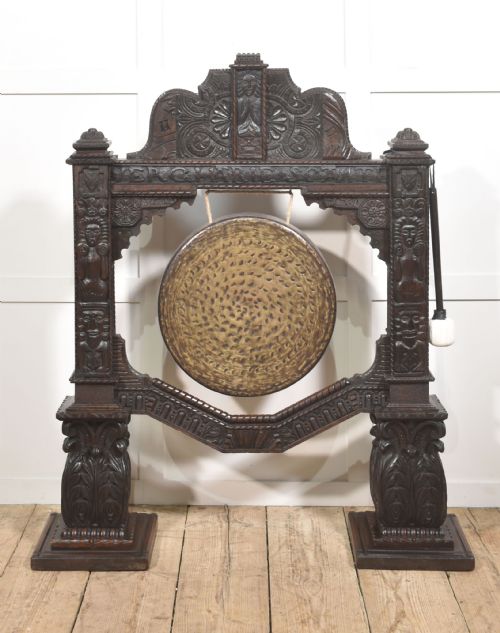
The examples on this page span the nineteenth century, the Edwardian era, and the nineteen-thirties, showing how the form evolved from heavy revivalist carving into streamlined geometric shapes. You will find floor-standing models alongside smaller table versions, reflecting the different scales demanded by period interiors.
The dominant material signature across these listings is dark oak, paired with resonant brass or bronze gongs suspended by cord, rope, or leather straps. While most items function as dedicated dinner gongs, the selection also includes related furniture such as hall tables that share the same period vocabulary.
How they were made
Cabinetmakers constructed these frames using solid oak, often darkened to achieve the sombre, rich tones favoured during the Victorian and Edwardian periods. Joinery was robust and built to withstand the kinetic impact and vibration of a heavy metal disc struck repeatedly with force.
The hanging mechanisms rely on durable materials such as brass, bronze, cord, rope, and leather to suspend the metal disc securely within the wooden frame. Carving appears on selected examples, particularly those adhering to Gothic revival or Arts and Crafts principles, where hand-tooled detail emphasises the organic qualities of the timber.
Dark Oak Gong Stand Retail Price Guide 2026
Typical asking prices for dark oak gong stand among the pieces listed under this phrase on Sellingantiques today, from the lower quarter to the upper quarter. They describe what is for sale here now, not the wider market.
Current listings feature pieces spanning the nineteenth century through to nineteen-thirty, uniting oak, brass, bronze, and leather in various revival and modernist styles.
What varies in quality
Quality in a dark oak gong stand rests upon the architectural proportion of the frame and the resonance of the metal disc it holds. Better examples display considered carving and balanced joinery that prevent the structure from feeling clumsy or top-heavy.
The acoustic properties of the brass or bronze gong itself dictate much of the piece's success, alongside the integrity of the original suspension ties, whether formed from cord, rope, or leather. Finer pieces integrate the hanging points harmoniously into the timber design rather than treating them as an afterthought.
The Dark Oak Gong Stand Glossary
- Gong stand
- The wooden framework designed to support a suspended metal percussion instrument. It anchors the piece structurally while displaying the disc.
- Gothic revival
- An architectural and decorative style drawing inspiration from medieval forms. Pieces often feature pointed arches, tracery, and heavy mouldings.
- Arts and Crafts
- A design movement valuing handcraftsmanship and simple vernacular forms. It rejects excessive machine-made ornamentation in favour of honest construction.
- Art Deco
- A modernist style emerging in the early twentieth century. It prioritises clean geometric lines, stylised motifs, and streamlined silhouettes.
- Edwardian
- A period spanning the early twentieth century known for lighter domestic interiors. Furniture from this era often reinterprets earlier historic styles with refined proportions.
Dark Oak Gong Stand: Frequently Asked Questions
How do I care for dark oak?
Dust the timber regularly with a dry, soft cloth to prevent the accumulation of grit in the carved recesses. Feed the wood occasionally with a traditional beeswax to maintain the deep lustre of the dark finish without creating a sticky buildup.
Avoid placing the stand near direct heat sources or in strong sunlight, which can dry out the historic oak and cause the timber to split or warp over time.
Where were these placed originally?
Gong stands traditionally stood in entrance halls, large reception rooms, or near dining spaces where their resonant sound could carry through the household. They served a practical domestic function, summoning residents and guests to meals or announcing callers at the door.
Today, they function well in substantial hallways or living areas as statement furniture pieces that retain their acoustic capabilities.
How do I date an oak stand?
Dating relies on stylistic clues, timber preparation methods, and the hardware integrated into the design. Heavy carved ornamentation and dark finishes often point to nineteenth-century revival periods, while cleaner lines suggest Edwardian or nineteen-thirties production.
Examine the construction joints and the materials used for the suspension straps, such as original leather or twisted cord, which help place the piece within its historical era.
What metal is the gong made from?
The hanging discs are typically cast from brass or bronze, chosen for their acoustic resonance and ability to sustain a deep, echoing tone when struck. These metals develop a dark, rich patina over decades of exposure to the atmosphere.
Original mallets often featured padded heads to produce a warm tone rather than a sharp, metallic clatter.