
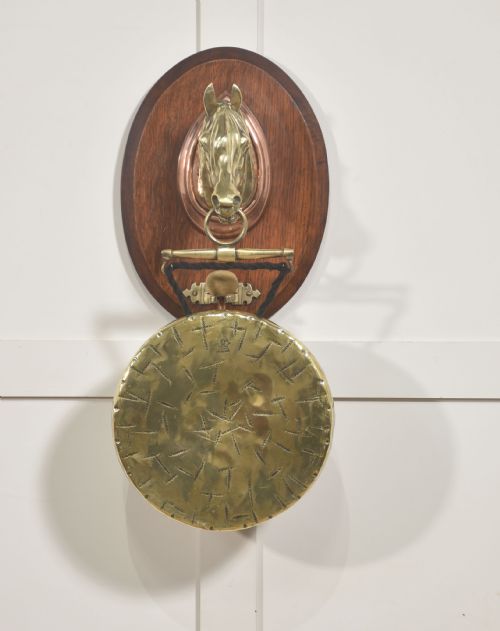


Antique Call Gong
These antique call gong pieces bring rich historic resonance into modern spaces, offering a tactile way to summon guests or mark the passage of time.
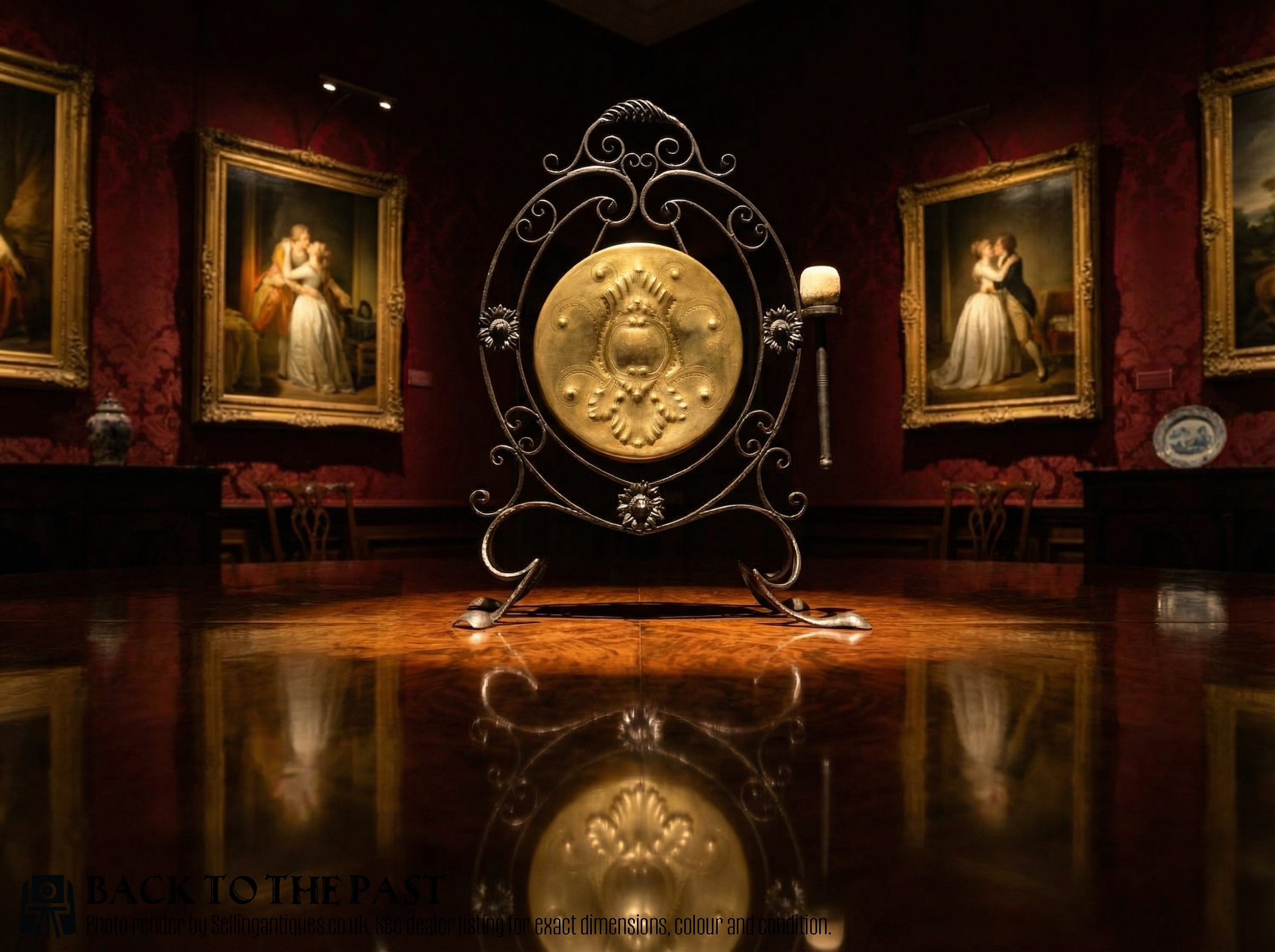
Antique Call Gong
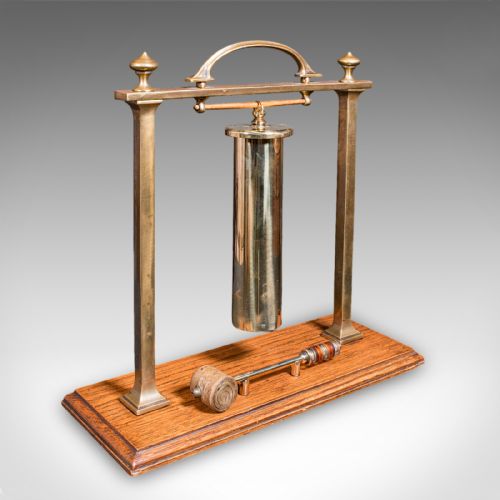
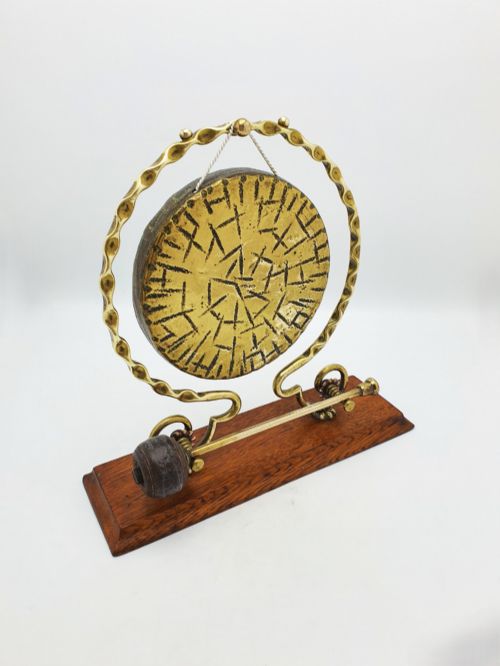
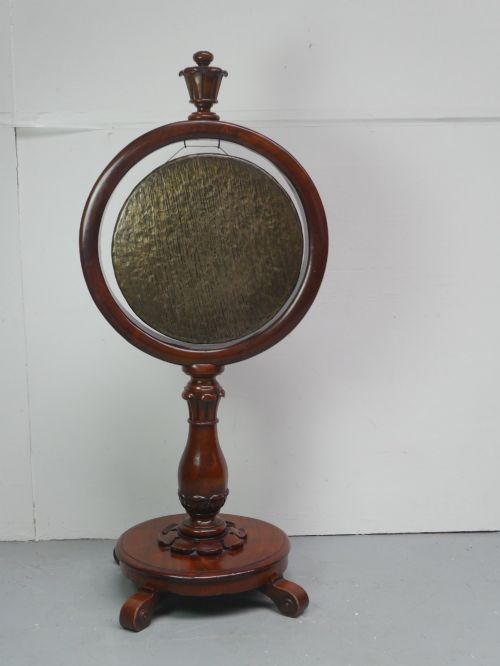
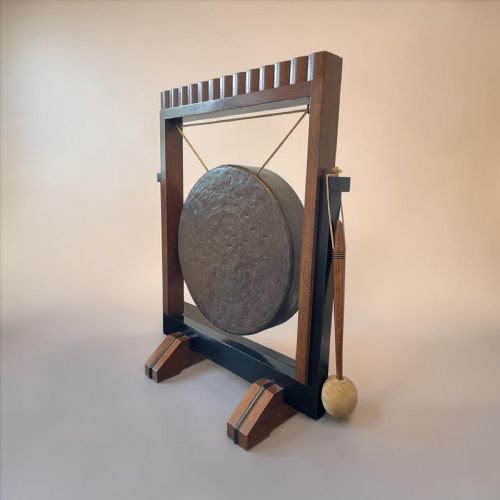
When you search for an antique call gong, you enter a domain of striking domestic signal instruments spanning the Victorian, Edwardian, and Art Deco eras. The pieces on this page range from compact tabletop gongs to substantial floor standing versions and wall-hanging designs.
Most examples you will encounter pair a resonant metal gong or bell with a sturdy wooden or iron support structure. Common forms include dinner gongs, supper bells, and wall chimes designed to project a clear tone across a room.
The materials and styles reflect their origins, drawing on Victorian Gothic Revival, Arts and Crafts, Art Nouveau, and Anglo-Indian aesthetics. Oak and brass predominate, often accompanied by handheld strikers or mallets.
Materials and construction
Metalworking techniques dictate the acoustic quality of each piece, utilising cast bronze, brass, copper, and wrought iron for the bells and gongs. These metals are shaped and tuned to produce a lasting resonance when struck.
Supporting frames rely on traditional carpentry and joinery, utilising solid oak and mahogany to bear the weight of the suspended metal. Natural elements such as cattle horn appear in select pieces alongside textile cords for hanging.
Antique Call Gong Retail Price Guide 2026
Typical asking prices for call gong among the pieces listed under this phrase on Sellingantiques today, from the lower quarter to the upper quarter. They describe what is for sale here now, not the wider market.
Listings feature brass and oak most frequently, alongside bronze, copper, and wrought iron across the Victorian and Edwardian periods.
Assessing quality and craftsmanship
Quality in these pieces rests upon the harmony between the acoustic properties of the metal and the structural integrity of the frame. Heavier bronze and brass castings yield a purer, more sustained tone than lighter stamped metals.
Detailing on the mounts distinguishes standard production from finer work, seen in decorative brass animal heads, cast iron embellishments, and well-finished hardwood bases. Original hanging cords and matching strikers also elevate the integrity of a piece.
The Antique Call Gong Glossary
- Dinner Gong
- A suspended metal disc or bowl struck with a mallet to announce meals in large country houses.
- Striker
- The handheld mallet or hammer used to hit the gong and produce sound.
- Table Gong
- A smaller instrument mounted on a base designed to sit on a sideboard or table.
- Wall Chime
- A gong or bell fixture secured directly to a wall rather than resting on a floor or table stand.
- Arts and Crafts
- A design movement valuing handcraftsmanship and simple, honest construction using materials like oak and brass.
Antique Call Gong: Frequently Asked Questions
How were dinner gongs used?
Dinner gongs were struck to signal the household that a meal was served, often summoning residents and guests from different rooms in large houses.
They functioned as a loud, musical alternative to hand bells, utilising the acoustic properties of bronze and brass to carry sound across long distances.
Where should I place a table gong?
Table gongs sit comfortably on sideboards, entrance hall tables, or desks where their visual and acoustic qualities can be appreciated.
Ensure the base rests on a stable surface with enough clearance around the suspended bell for the striker to be used easily.
How do I date an antique gong?
Dating relies on stylistic clues, such as the geometric lines of Art Deco pieces or the ornate casting of Victorian Gothic Revival models.
Materials and construction methods, including the type of wood and fixings used in the frame, also provide clear indicators of period origin.
Do all gongs come with strikers?
Many listings include original or period-appropriate handheld strikers, though some pieces may require a matching mallet to be sourced separately.
Check the individual listing details to see if the striker is present with the oak or brass base.