


Vintage Brass Call Bell
These vintage brass call bell pieces combine period utility and warm metal tones, offering a tactile piece of history for any desk or hall.
Vintage Brass Call Bell
A vintage brass call bell serves practical communication roles from domestic and commercial settings, appearing in forms such as counter bells, school bells, and tabletop gongs. Buyers searching this phrase encounter items spanning the Victorian, Edwardian, and early twentieth-century periods.
Materials and construction
Makers utilised cast brass, bronze, and polished brass for the main dome and bell components, ensuring a clear and resonant tone when struck. Oak and other woods provide sturdy mounting platforms for dinner gongs and desk installations.
Assembly often incorporates steel springs and mechanical plungers within the base mechanism for counter and desk models. Hand bells rely on turned wooden handles or cast metal grips attached securely to the sound bow.
Some bronze bells feature sculptural elephants at the base, bringing an unexpected menagerie to the traditional desk accessory.
Assessing quality
Quality rests in the weight of the metal and the clarity of the ring, where thicker bronze and brass castings produce a sustained tone. Superior examples retain crisp detail in ornamentation, particularly on French Rococo Revival or Art Nouveau surfaces.
The integrity of the internal spring mechanism and the original mounting base determine the functional merit of counter bells. Period patination and minimal wear to the striking points separate well-preserved specimens from heavily altered pieces.
The Vintage Brass Call Bell Glossary
- Sound bow
- The thickest part of a bell where the striker hits to produce the primary tone. This area shows the most impact wear on frequently used pieces.
- Plunger
- The vertical spring-loaded button on a desk or counter bell that activates the internal internal clapper. Pressing it compresses the spring to strike the dome.
- Clapper
- The suspended ball or hammer inside a hand bell that swings to hit the inner wall. Its weight dictates the volume and resonance of the ring.
- Gong
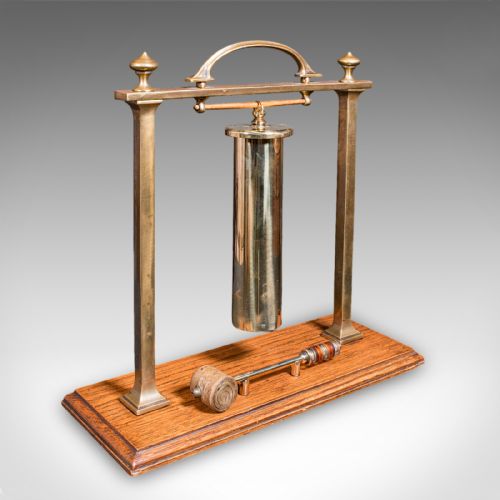
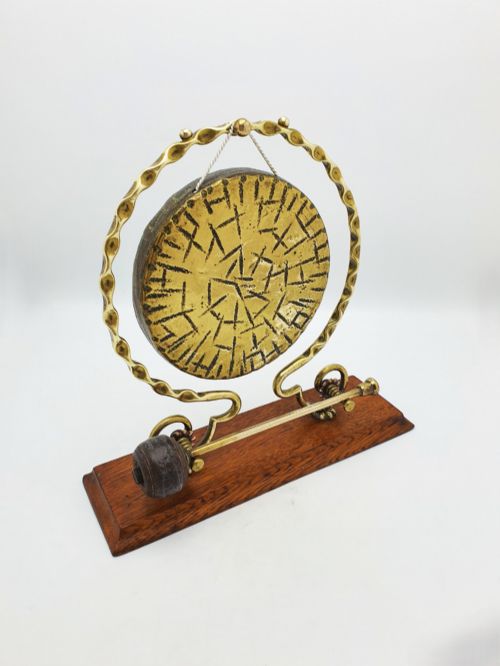
- A suspended metal disc or bowl struck with a handheld mallet rather than an internal clapper. These often hang from carved oak or brass frames.
- Patina
- The surface sheen and oxidation acquired by brass and bronze over decades of handling and exposure. Original patination adds character to period pieces.
Vintage Brass Call Bell: Frequently Asked Questions
How do I clean a brass bell?
Use a soft cloth to remove dust and gentle soapy water for grime, avoiding harsh chemical dips that strip historic patination.
Dry the metal thoroughly after cleaning to prevent spotting and preserve the polished finish.
What is the difference between a counter bell and a hand bell?
Counter bells sit on a fixed wooden or metal base and operate via a vertical spring plunger pushed down by hand.
Hand bells feature a handle at the top and are lifted and shaken to swing the internal clapper.
How can I tell a Victorian bell from an Edwardian one?
Victorian examples often display heavier ornamentation, dark patination, and robust cast iron or oak mounts.
Edwardian pieces tend toward simpler lines or specific stylistic revivals, reflecting changing domestic interiors around nineteen ten.
Were these bells used in homes or businesses?
Household staff answered summons from counter and table bells in country house dining rooms and hallways.
Shops, hotels, and schools utilised desk and hand-held models to manage service counters and classrooms.