
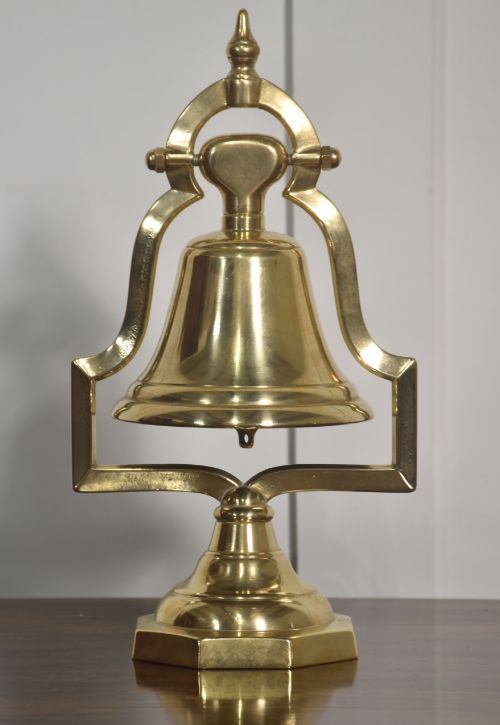


Victorian Brass Counter Bell
A victorian brass counter bell is a sturdy mechanical call piece built for shops and hotels, offering a sharp ring that still commands attention today.
Victorian Brass Counter Bell
Buyers seeking a victorian brass counter bell examine robust mechanical objects designed for service work in shops, hotels, and country houses. These pieces typically sit on turned wooden bases or heavy cast metal mounts, ready to be struck or pressed.
The most common examples on this page date from the nineteenth century, spanning periods like the late Victorian era up to around nineteen hundred. They take the form of desk bells, reception bells, and counter bells intended for daily commercial use.
Materials and construction
Makers fashioned these bells primarily from cast brass, often polishing the metal to a bright finish or combining it with bronze elements. Many pieces pair the bright metal dome with sturdy bases made from oak or ebonised wood.
Internal spring mechanisms and plungers allowed the dome to ring clearly when pressed by a customer or clerk. Cast iron occasionally provided extra weight to the base to keep the bell steady during use.
Some counter bells share desk space history with butcher advertising scales promoting sausages.
Assessing quality and finish
Quality rests upon the crispness of the casting and the resonance of the metal dome. Finer examples display heavier brass walls and well-turned wooden bases that show careful hand-finishing.
Simpler versions lack the refined proportions and solid weight found in country house and hotel reception pieces. The clarity of the tone when struck marks the difference between standard production and superior work.
The Victorian Brass Counter Bell Glossary
- Counter bell
- A bell designed to sit on a shop counter or reception desk to summon service. These pieces usually feature a plunger mechanism or a clapper operated by a push button.
- Ebonised wood
- Timber stained or painted black to imitate ebony. This dark finish provides a sharp contrast against polished brass fittings.
- Bronze
- An alloy of copper and tin often used alongside brass in these bells. It adds weight and a deeper tonal quality to the metalwork.
Victorian Brass Counter Bell: Frequently Asked Questions
How do these counter bells work?
Most models use an internal spring mechanism connected to a plunger on top. Pressing the plunger strikes the inner clapper against the dome.
This simple mechanical action produces a sharp, clear ring designed to carry across a busy shop or hotel lobby.
Where were these bells used?
They stood on the counters of Victorian shops, hotel reception desks, and country house reception areas. Clerks and staff relied on them to know when customers arrived.
Today they function well on modern desks or as decorative items in domestic spaces.
How do I date a brass bell?
Dating relies on the style of the base, the manufacturing marks, and the patina of the brass. Pieces from the nineteenth century often feature hand-turned wooden mounts and heavier cast components.
Later Victorian and Edwardian examples show subtle shifts in proportion and finishing techniques.
Are these bells still functional?
Many surviving examples retain their original internal springs and hammers, allowing them to ring clearly. Proper maintenance of the moving parts keeps the mechanism working smoothly.
Buyers should test the action to ensure the spring responds correctly without sticking.