


Brass Service Bell
A brass service bell brings a crisp, traditional ring to a desk or counter, offering both practical use and period charm.
Brass Service Bell
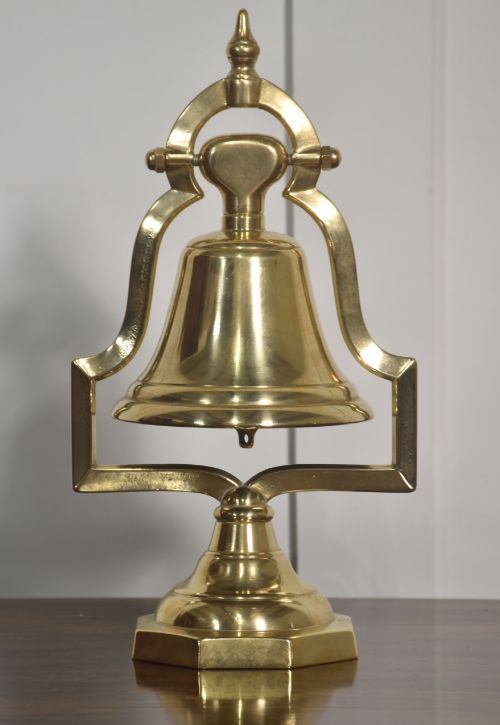
When you search for a brass service bell, you are looking at functional signaling devices designed for country houses, schools, and commercial counters during the Victorian and Edwardian eras. These domestic and commercial objects range from simple hand bells to elaborate spring-loaded desk bells mounted on wooden stands.
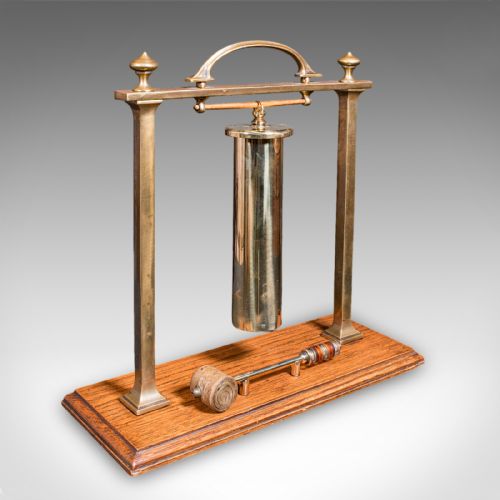
The versions you are most likely to meet on this page span from the late nineteenth century through to the Edwardian period and the early twentieth century. They appear in forms such as counter bells, table bells, desk bells, and veranda supper gongs.
Makers constructed these pieces primarily to serve a clear utilitarian purpose in hotels, large households, and reception areas. Their survival reflects the enduring appeal of mechanical metalwork from the nineteenth and early twentieth centuries.
How they were made
Makers cast these bells predominantly in brass and bronze, often pairing the metal components with wooden bases made from oak, ebonised wood, or other hardwoods. Some examples incorporate steel mechanisms, bone details, or silver plate.
Production techniques relied on traditional foundry casting and metal turning, followed by hand polishing to achieve a bright finish. Wooden mounts were turned on a lathe and joined to the metal bells with screws or pins.
Listings on this site show brass service bells spanning the Victorian and Edwardian eras, incorporating oak, ebonised wood, and silver plate.
What varies in quality
The distinction between ordinary and superior pieces rests on the weight of the metal casting and the complexity of the mechanism. Heavier brass and bronze elements produce a clearer, more resonant tone when struck.
Finishes also separate standard items from finer examples, with well-turned hardwood bases and ornate silver plating indicating higher production standards during the Victorian and Edwardian periods.
The Brass Service Bell Glossary
- Counter bell
- A bell designed to sit on a shop counter or hotel reception desk, usually featuring a plunger or push mechanism. These were essential for summoning staff in busy commercial environments.
- Veranda supper bell
- A hanging gong or bell arrangement used in large homes for afternoon tea or informal meals. They often incorporate oak stands and small strikers.
- Ebonised wood
- Timber treated to resemble ebony, frequently used for the turned bases of desk bells. This dark finish provided a sharp contrast to polished brass.
- Schoolmaster's hand bell
- A portable bell fitted with a wooden handle, historically used by teachers to gather pupils. They produce a loud, penetrating tone.
Brass Service Bell: Frequently Asked Questions
How do counter bells work?
Counter bells generally operate via an internal spring mechanism housed beneath the dome. Pressing the plunger depresses a small internal hammer against the interior of the brass bell.
This simple mechanical action produces an immediate and sharp ring designed to carry across a busy room or reception area.
Where were these bells used?
These bells served various roles across domestic, educational, and commercial settings during the nineteenth and early twentieth centuries. Households used them in dining rooms, halls, and verandas to call servants.
Shops, hotels, and schools utilised desk and hand models to manage customer service and announce timetable changes.
How do I date a brass bell?
Dating relies on examining the manufacturing style, materials, and mechanical assembly of the piece. Victorian examples often feature heavy brass castings and turned oak or ebonised bases.
Later Edwardian and 1920s pieces may introduce silver plating or different base configurations that reflect changing interior aesthetics.
How should I clean brass?
Maintenance depends on whether you prefer a bright polished look or a dark patinated surface accumulated over decades. Gentle cleaning with a soft cloth removes dust without disturbing the historic metal.
Harsh metal polishes can wear away fine details on older castings, so use them sparingly if at all.