


Cast Brass Bell
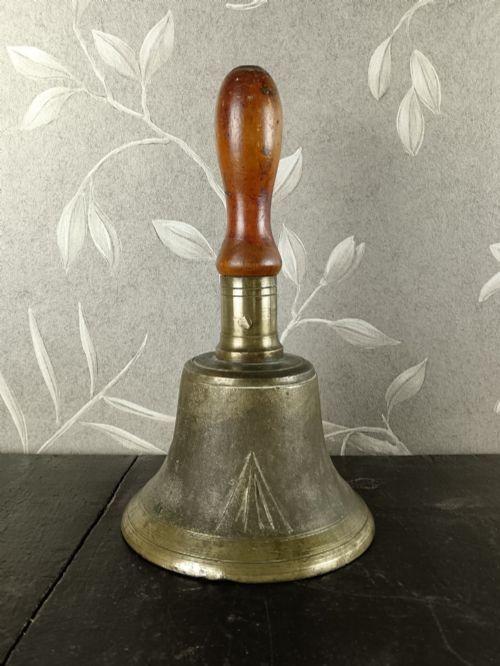
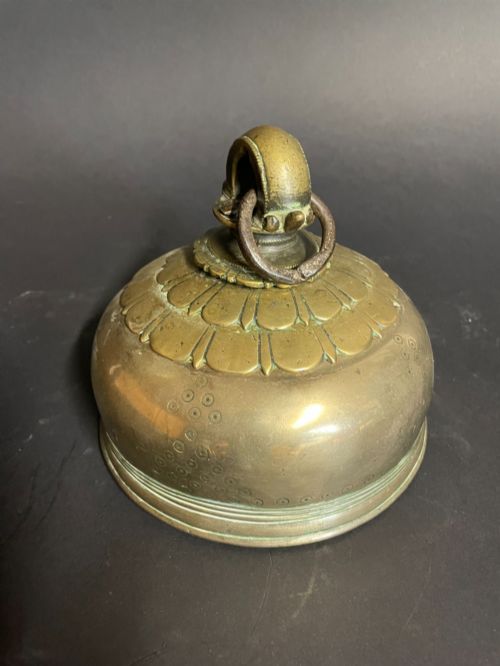
These heavy cast brass bell examples range from utility desk ringers to military warnings, prized for their resonant tone and solid weight.
Cast Brass Bell
A cast brass bell serves various functional purposes across domestic, military, and institutional settings, appearing in forms such as school handbells, counter ringers, and door pulls. Buyers seeking a cast brass bell most frequently encounter Victorian desk models, school handbells, and structural door hardware.
The historical record spans from the eighteenth century through to the mid-twentieth century, encompassing Georgian, Victorian, and later periods. Objects range from simple hanging bells to complex mechanical desk pieces and coordinated sets.
Origins include British military units, French workshops, and domestic commercial counters, showing how these objects integrated into daily life. Alongside traditional bells, the material family extends into mortar and pestles, inkstands, and dinner gongs.
Casting and metalwork
Makers utilised traditional foundry methods, pouring molten brass, bronze, or bell metal into sand or lost-wax moulds to achieve solid, thick-walled bodies. This metal composition typically combined copper and zinc to ensure durability and a clear acoustic resonance.
Secondary operations involved hand-finishing, turning on lathes, and polishing the exterior surfaces while leaving the inner sound-bow tuned for projection. Iron brackets, wooden handles, and horn elements were added where utility required structural support or insulated handling.
Listings feature cast brass, bronze, and bell metal objects spanning the eighteenth to the twentieth centuries, alongside iron brackets and wooden mounts.
Evaluating the casting
Quality rests in the crispness of the cast detail, particularly around ornate friezes, animal motifs, and lettering, where finer moulds capture sharper relief. Heavy, uniform wall thickness ensures a sustained, clear tone when struck.
The integrity of the original linkages, clappers, and mounting brackets separates standard utility pieces from exceptional examples. Patina and surface finish develop through age, where untouched historical surfaces command greater interest than overly polished metal.
Biron PARIS·Palethorpes
The Cast Brass Bell Glossary
- Bell metal
- An alloy of copper and tin traditionally used for casting bells to produce a resonant and sustained tone. This mixture contains a higher proportion of copper than standard brass.
- Sound-bow
- The thickest part of a bell body where the clapper strikes to produce the primary note. The profile of this zone determines the volume and pitch.
- Clapper
- The internal tongue or ball suspended inside a bell that strikes the sound-bow when the body moves. Its weight and material directly influence the acoustic output.
- Mortar and pestle
- A heavy vessel and grinding tool cast in bronze or brass, often found alongside bells from similar foundry traditions. They served pharmaceutical and culinary crushing tasks.
- Door pull
- A mechanical linkage hardware piece incorporating a lever or handle connected to a remote bell. These enabled servants or shopkeepers to be summoned from another room.
Cast Brass Bell: Frequently Asked Questions
How do I date an old bell?
Dating relies on stylistic clues, fixing methods, and casting techniques characteristic of periods like the Georgian or Victorian eras. Examining screw threads, mounting ironwork, and wear patterns helps narrow the decade.
Makers' marks or foundry stamps, where present, provide direct attribution to specific workshops or active periods.
What is bell metal?
Bell metal is a specific bronze alloy containing roughly four parts copper to one part tin, formulated specifically to maximise acoustic resonance. It produces a brighter, longer-lasting ring than standard yellow brass.
Over time, this alloy develops a deep, dark oxidation rather than the golden shine associated with modern brass.
How were desk bells used?
Desk and counter bells served in shops, hotels, and large Victorian households to summon service without shouting. A plunger or push-lever mechanism struck an internal bell or rotated a clapper against the outer dome.
Many incorporated novelty designs, such as animals or figural bases, to blend domestic ornament with utility.
Are door pulls difficult to install?
Antique door pulls connect through mechanical rods or wires to a bell mounted elsewhere in the building. Restoring functionality requires matching the original iron cranks and guides.
Many buyers choose to mount them purely as decorative hardware due to the complexity of routing the internal wall linkage.