

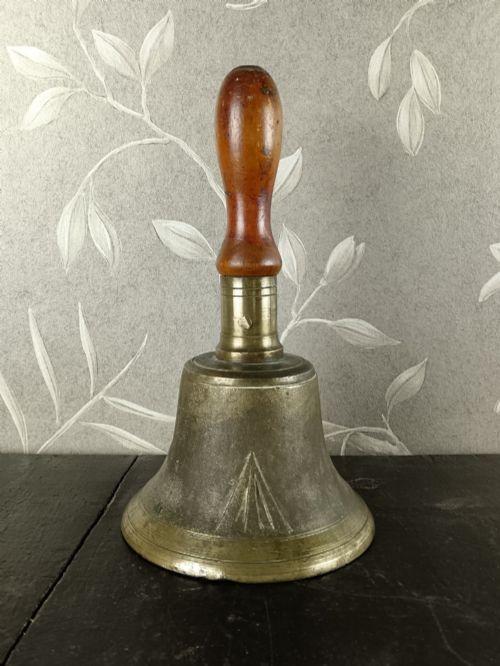


Heavy Brass Bell
These heavy brass bell pieces offer solid ringing tone and honest weight, built to serve for centuries in homes, schools and camps.
Heavy Brass Bell
A heavy brass bell serves practical purposes ranging from summoning dinner guests to sounding military warnings and managing classrooms. The selection draws on utilitarian forms from the eighteenth, nineteenth and twentieth centuries, spanning periods from seventeen hundred up to nineteen forty.
Most entries on this page consist of hand-held designs, school bells and military warnings cast in solid metal. Alongside these vocal instruments, related forms appear including mortars, pestles, dinner gongs and door stops in brass and bronze.
Origins stretch across British military, Victorian domestic and maritime contexts, using robust materials designed for constant daily use. Buyers encounter pieces mounted on wood, fitted with leather handles or cast entirely as single metal units.
How they were made
Foundries cast these objects using traditional sand-casting and lost-wax methods to pour molten bell metal, bronze and brass into dense, resonant shapes. This metal composition contains precise proportions of copper and tin to produce a clear, sustained ring when struck.
Secondary elements involve turned hardwood handles, oak gongs frames and fitted leather straps that complement the heavy metal bodies. Smiths and joiners assembled these components to withstand the physical stress of repeated swinging and striking.
Heavy Brass Bell Retail Price Guide 2026
Typical asking prices for heavy brass bell among the pieces listed under this phrase on Sellingantiques today, from the lower quarter to the upper quarter. They describe what is for sale here now, not the wider market.
Listings feature items cast in brass, bronze, bell metal and oak, dating from seventeen hundred through to nineteen forty.
What varies in quality
Quality rests in the purity of the alloy and the precision of the casting work, which dictates whether the instrument produces a clean, resonant tone. Thick, uniform walls in the sound bow separate superior examples from thinner castings that yield duller acoustic results.
The integrity of secondary materials such as seasoned oak frames and original turned wooden handles shapes the overall standard of preservation. Pieces retaining their original mountings and unpolished patinas demonstrate better historical survival than altered specimens.
The Heavy Brass Bell Glossary
- Bell metal
- An alloy of copper and tin formulated specifically for high acoustic resonance and structural strength. This dense material resists cracking under repeated impact.
- Mortar and pestle
- A heavy bowl and grinding tool used historically in apothecaries and kitchens. While not strictly bells, these solid bronze and brass vessels share identical foundry techniques.
- Dinner gong
- A suspended metal disc or bowl struck with a mallet to announce meals. Oak framing frequently supports these larger domestic resonance pieces.
- Door stop
- A heavy weighted object cast in brass to hold interior doors open. These items utilise the same mass and casting methods found in utility bells.
- Cast brass
- Molten brass poured into a mould to create solid decorative and functional hardware. This technique allows for crisp detail and substantial weight.
Heavy Brass Bell: Frequently Asked Questions
What were heavy brass bells used for?
These items served functional roles in schools, military camps, towns and large households to signal time, announce meals or sound alerts.
Their heavy construction ensured the sound carried across noisy environments like parade grounds or bustling kitchens.
How do I care for a brass bell?
Keep the metal dry and dust it gently with a soft cloth to preserve the natural oxidation and historical surface character.
Avoid harsh chemical polishes that strip away the authentic dark patina accumulated over centuries of handling.
How can I tell the age of a bell?
Examine the casting texture, the wear patterns on the handle and the specific style of the metal lettering or mountings.
Earlier eighteenth-century pieces often show coarser sand-casting marks, whilst twentieth-century military versions feature standardised markings and dates.
Why do some bells have wooden parts?
Wood provided an insulating grip for the hand or a resonant hanging frame that isolated the vibration of the metal.
Turned oak and hardwood added comfort and durability to items that underwent frequent swinging.