




Victorian Service Bell
These Victorian service bell pieces are practical call devices designed to summon staff, carrying period weight and domestic function.
Victorian Service Bell
A victorian service bell serves as a functional call mechanism for domestic households, hotels, and reception desks during the nineteenth century. Buyers searching this phrase encounter desk models, counter models, and hand-held variants designed to produce a clear ring.
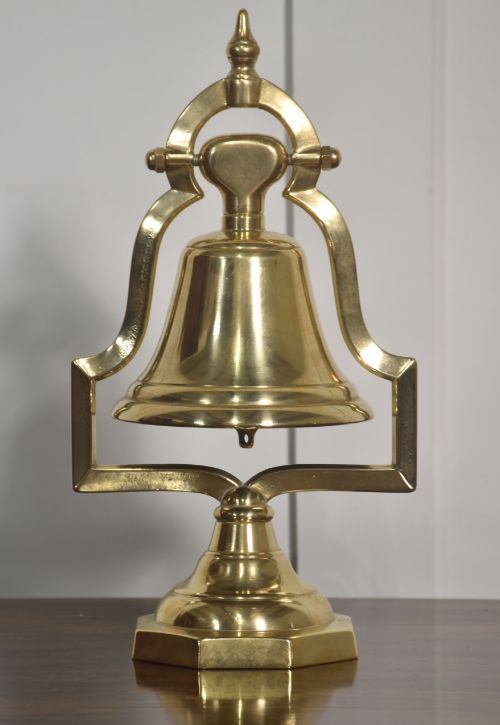
The most common examples on this page are brass counter and desk bells from the late nineteenth century. These pieces feature mechanical plungers, revolving heads, or simple clappers housed in metal stands.
Additional forms include ruby glass hand bells, silver-plated table bells, and architectural signage plates from country houses. Each object reflects the communication needs of large staff networks within period properties.
Materials and construction methods
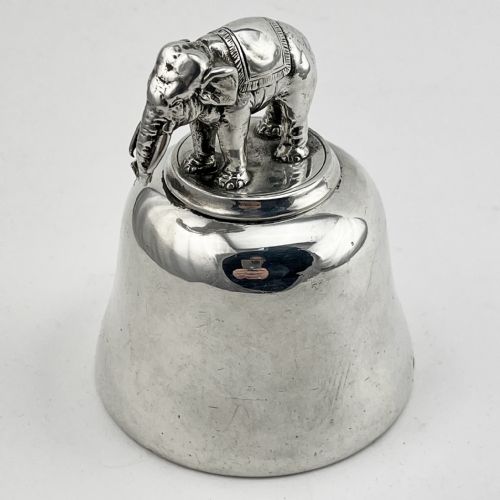
Makers utilised solid brass, bronze, and sterling silver to cast the heavy bases and domes required for clear acoustics. Silver plating and glass components also appear across desk and table variations.
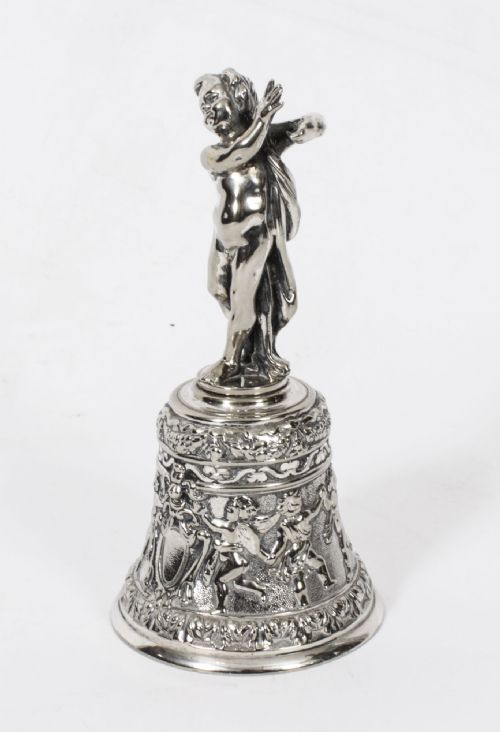
Handles and mounts incorporate turned bone, ruby glass, and ornate cast metal figures in Renaissance Revival styles. Mechanical internal springs and plungers allow the desk and counter bells to strike upon a downward press.
Assessing quality in period bells
Quality rests in the weight of the metal casting and the resonance of the dome when struck. Heavier brass and thick sterling silver plates produce a sustained tone superior to thin sheet metal.
Detailing in the handle and base separates standard utility items from decorative pieces. Ornate figural handles, crisp cast ornamentation, and smooth internal mechanical action indicate superior manufacture.
The Victorian Service Bell Glossary
- Counter bell
- A bell designed to sit on a shop counter or hotel reception desk, usually operated by pressing a plunger on top.
- Hand bell
- A portable bell featuring a handle, shaken to produce a ring. These often use glass or metal bodies.
- Renaissance Revival
- A nineteenth-century design style drawing inspiration from fifteenth-century art and architecture, seen in ornate cast relief work.
- Silver plate
- A thin layer of silver applied to a base metal such as brass or copper. This technique offers the appearance of solid silver at a lower cost.
- Signage plate
- A metal or ceramic plaque indicating a room or bell pull function within a country house.
Victorian Service Bell: Frequently Asked Questions
How do desk bells work?
Desk bells use an internal spring mechanism connected to a small internal hammer. Pressing the top plunger forces the hammer against the inner wall of the metal dome to create a sharp ring.
Most counter models operate on this vertical plunger system, allowing staff to hear the signal from another room.
What metals are used?
Makers relied heavily on cast brass and bronze for durability and acoustic resonance. Sterling silver and silver-plated metals appear on finer table models intended for formal dining rooms.
Glass and bone also form components, particularly in the handles of hand bells and decorative desk pieces.
Where were they placed?
These bells sat on reception desks, shop counters, and dining tables to summon assistance. Country houses also utilised connected wall systems alongside individual desk devices.
Servants relied on the clear tone to respond to calls from specific rooms or public areas instantly.
Are hand bells different?
Hand bells lack the mechanical plunger base found on counter models, requiring the user to lift and shake them by a handle. They appear in materials like ruby glass and polished bronze.
These pieces served similar summoning purposes in domestic settings but offered greater portability around the house.