





Victorian Brass Gong
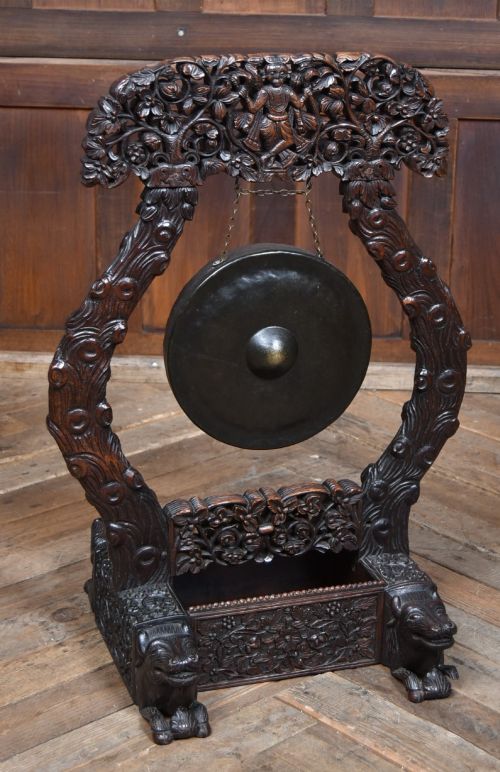
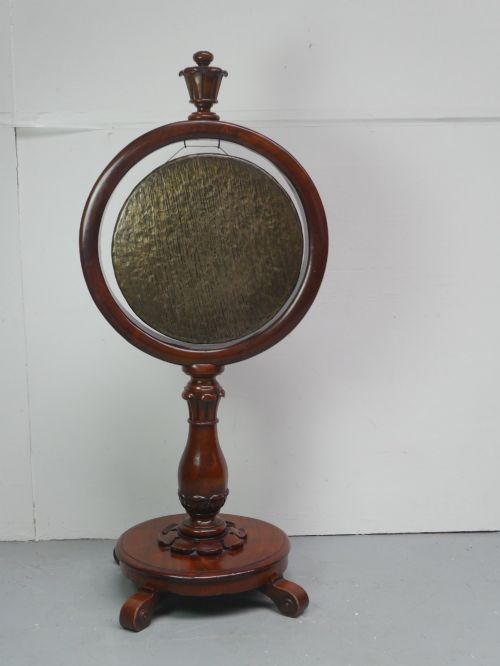
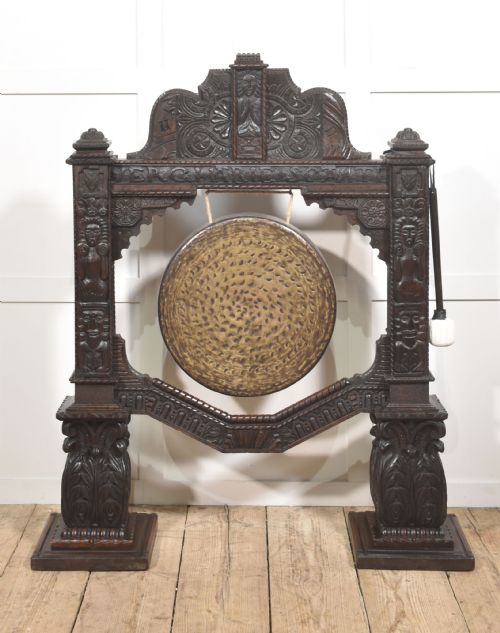
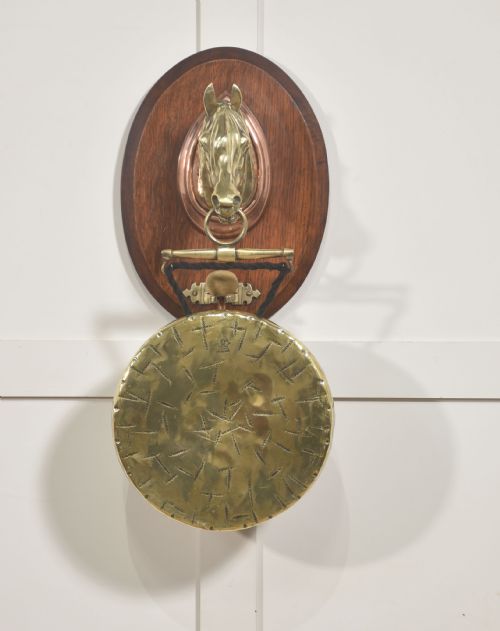
A victorian brass gong brings a resonant, historic voice to a hall or dining room, hanging from carved wood or wrought iron frames.
Victorian Brass Gong
When you search for a victorian brass gong, you encounter striking percussion pieces designed to summon households to dinner or mark the passing hours in country houses and shooting lodges.
The pieces on this page appear in various formats, from table-top versions to large wall-hanging designs and monumental framed structures.
Oak and mahogany frames dominate the selection, often accompanied by distinctive mounts in bronze, wrought iron, or cattle horn reflecting diverse stylistic movements.
Materials and Construction
The metal components rely heavily on cast and beaten brass or bronze, shaped to produce a clear, sustained tone when struck with a mallet.
Supporting frames utilise dense timbers such as oak, walnut, and mahogany, frequently enhanced by intricate hand-carving or turned details.
Secondary elements incorporate cord, fabric, bamboo, and occasionally animal horn or iron mounts to secure the suspended metal chimes.
Victorian Brass Gong Retail Price Guide 2026
Typical asking prices for victorian brass gong among the pieces listed under this phrase on Sellingantiques today, from the lower quarter to the upper quarter. They describe what is for sale here now, not the wider market.
Listings feature periods spanning from the early nineteenth century through the nineteen-twenties, incorporating styles from Anglo-Indian to Japonisme.
Assessing Quality
Superior examples distinguish themselves through the resonance and clarity of the metal chime, paired with substantial, finely figured timber frames.
The execution of the carved ornamentation, whether executed in a Gothic Revival or Aesthetic Movement idiom, indicates the maker's level of skill.
Integration between the hanging apparatus and the structural frame ensures stability and allows the metal to vibrate freely without dampening.
Winterhalder & Hofmeier·Townshend & Co
The Victorian Brass Gong Glossary
- Dinner gong
- A percussion instrument mounted on a stand or wall bracket, historically utilised in large homes to announce meals.
- Gothic Revival
- An architectural and decorative style drawing on medieval forms, frequently seen in pointed arches and heavy carved oak frames.
- Aesthetic Movement
- A late nineteenth-century design current emphasising visual beauty and artistic expression over strict historical revivalism.
- Bracket
- A supporting architectural member projecting from a wall to hold a hanging object or shelf.
- Chime
- A metallic sound produced by striking a suspended plate or bell.
Victorian Brass Gong: Frequently Asked Questions
How were dinner gongs used?
Household staff struck the suspended brass plate with a padded mallet to signal that meals were served in the dining room.
They also functioned as large clocks or chimes to regulate daily schedules in country houses and shooting lodges.
Where should I place a table gong?
Table gongs sit securely on sideboards, hall tables, or desks where their compact frames remain accessible for striking.
Ensure the surrounding surface leaves enough clearance for the suspended metal to vibrate and resonate fully.
How do I distinguish Gothic Revival styles?
Gothic Revival pieces display architectural motifs such as pointed arches, quatrefoils, and heavy dark oak or walnut construction.
These designs mirror ecclesiastical architecture popular during the nineteenth century.
What woods support wall gongs?
Frames employ sturdy timbers including oak, mahogany, and walnut to bear the weight of the metal gong.
Some examples incorporate bamboo or carved animal horn into the hanging structure for decorative contrast.