


Decorative Brass Gong
A decorative brass gong brings sonorous resonance and striking visual presence to any room, blending period craftsmanship with functional acoustic heritage.
Decorative Brass Gong
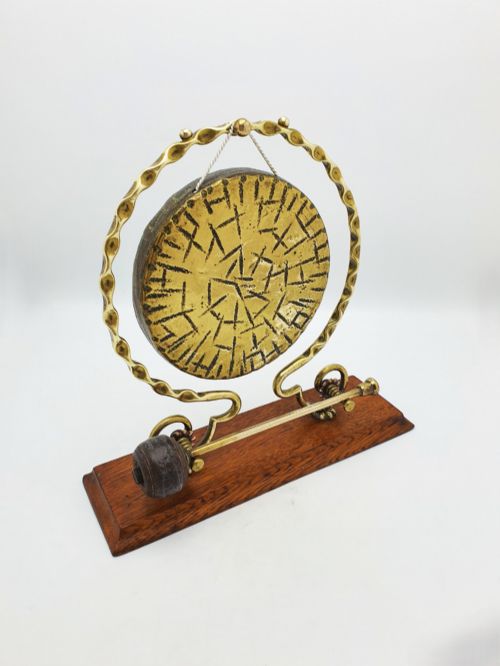
A decorative brass gong combines metalwork with sculptural framing, originating in domestic settings primarily to summon households for meals or mark the hours. When you search for decorative brass gong, you encounter dinner gongs, table gongs, and wall chimes spanning the Victorian era through the early twentieth century. The forms range from simple tabletop designs to elaborate hanging structures.
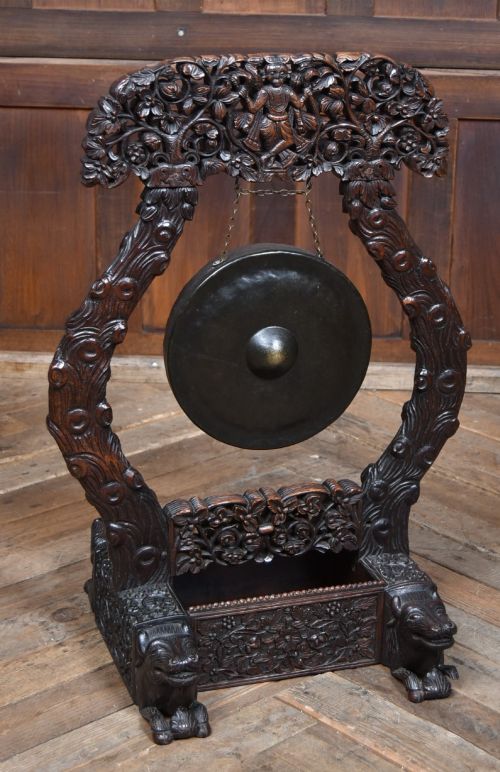
Most examples on this page pair a cast metal disc or bell with a timber mounting, frequently utilising oak, walnut, bamboo, or carved hardwood. You also find specialised regional iterations, including Chinese carved dragon gongs and Burmese carved gongs, which demonstrate distinct cultural motifs. These pieces serve as both musical instruments and decorative objects.
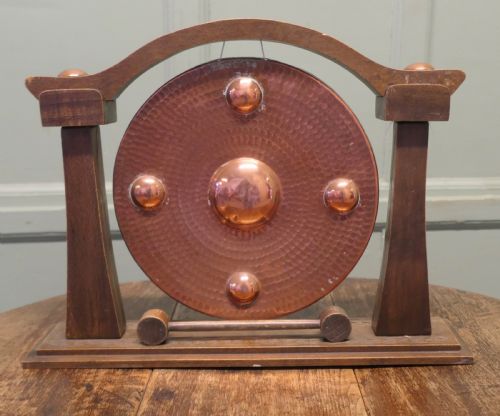
The styles shift across the decades, moving from ornate Victorian aesthetic movement pieces and Gothic revival designs toward clean Arts and Crafts interpretations and sinuous Art Nouveau lines. Table gongs sit compactly on desks or sideboards, while wall chimes and hanging dinner gongs demand vertical display space. Each variation reflects the interior design priorities of its specific period.
Assessing quality and execution
Quality rests in the acoustic resonance of the metal disc and the depth of hand-carving on the supporting woodwork. Superior examples feature well-cast brass or bronze that produces a clear, sustained tone when struck, paired with tightly joined frames of solid oak or walnut rather than inferior veneers.
The artistry of the decorative carving distinguishes standard production from finer workshop pieces. Intricate details on frames, such as deep relief carving on Chinese dragon gongs or refined metalwork on Art Nouveau table gongs, indicate greater maker skill and material investment.
The listings span multiple periods from the nineteenth century through the nineteen thirties, featuring oak, walnut, bamboo, and carved hardwood.
The Decorative Brass Gong Glossary
- Dinner Gong
- A suspended metal disc or bell struck with a mallet to announce meals in large Victorian households. They often feature elaborate wooden or brass stands designed for display in hallways or dining rooms.
- Table Gong
- A smaller scale version designed to sit directly on a desk, sideboard, or table. These pieces bring acoustic elements into tighter domestic spaces without requiring wall mounting or floor stands.
- Striker
- The handheld mallet or beater used to sound the gong. They typically feature a wooden handle paired with a padded, leather, or woven head to modulate the tone.
- Arts and Crafts
- A design movement emphasising visible handcraftsmanship, simple structural forms, and local materials. Gongs from this tradition reject machine-made excess in favour of honest construction.
- Aesthetic Movement
- A late nineteenth century design approach prioritizing visual beauty over narrative meaning. Pieces from this movement often incorporate exotic motifs and refined metal finishes.
Decorative Brass Gong: Frequently Asked Questions
How were decorative brass gongs used historically?
These gongs served primarily as domestic signals to gather family and guests for dinner or to announce formal events within large houses.
They functioned simultaneously as decorative ornaments for hallways and drawing rooms, showcasing the owner's taste through elaborate metalwork and carved wooden stands.
How do I clean and maintain a brass gong?
Dust the wooden frame gently with a dry cloth and avoid harsh chemical polishes that strip original patination from the brass or bronze.
Keep the hanging cords secure and handle the striker with care to protect the acoustic surface from unnecessary scratching.
What is the difference between a table gong and a dinner gong?
Table gongs are compact pieces built to rest on horizontal surfaces like sideboards or desks, making them suitable for smaller domestic spaces.
Dinner gongs are larger hanging arrangements, often mounted on substantial oak or bamboo frames designed to project sound across multiple rooms.
How can I tell a Victorian gong from a later piece?
Victorian examples frequently display heavier ornamentation, including Gothic revival motifs, bamboo framing, or Aesthetic movement silver plating.
Later twentieth century pieces from around nineteen twenty often shift toward simpler geometric forms and minimalist timber bases.