



Antique Meal Gong
An antique meal gong gathers household and guests, bringing rich resonance and striking presence to any interior.
Antique Meal Gong
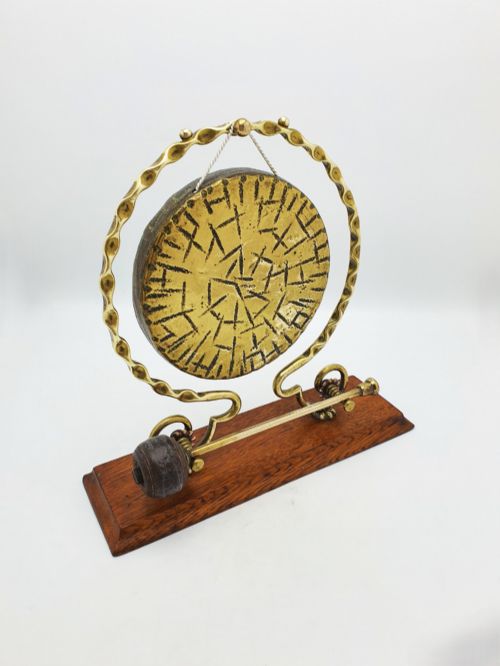
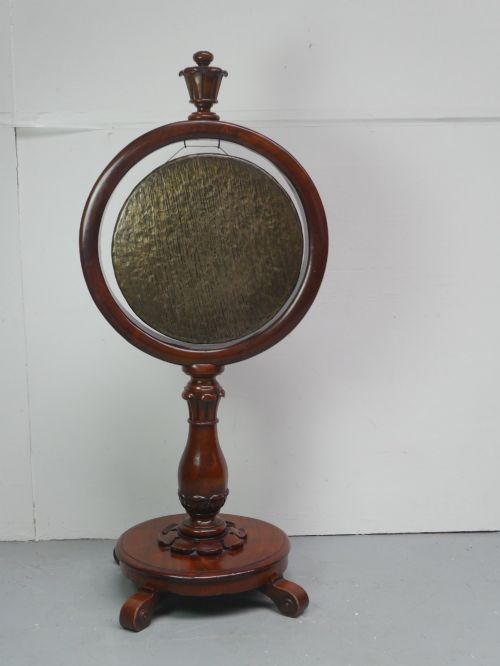
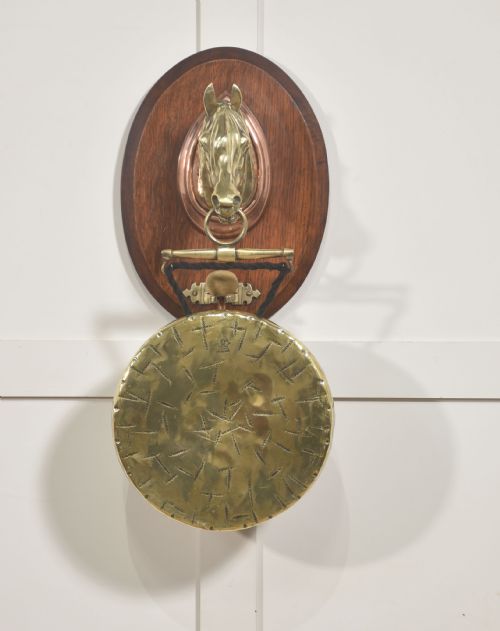
When you search for an antique meal gong, you encounter substantial summoning devices designed to call households to the table. These pieces predominantly take the form of dinner gongs and table gongs, alongside wall-hanging variants that dominate our selection.
The objects span the nineteenth century, Victorian era, Edwardian period, and early twentieth century up to nineteen thirty. Oak, mahogany, and walnut provide the structural framework, while brass, bronze, and silver plate form the sound-producing discs.
You will regularly find domestic examples mounted on timber bases or suspended from elaborate frames, often complete with a handheld striker. Stylistic influences vary widely, incorporating Gothic Revival, Arts and Crafts, Japonisme, and Victorian Aesthetic Movement design principles.
Qualities that distinguish finer examples
The calibre of an antique meal gong rests upon the purity and resonance of its metallic ring, achieved through careful alloy composition and casting thickness. Sound quality separates standard domestic pieces from monumental or finely tuned examples.
Framing craftsmanship and timber selection establish the physical merit of the piece, with dense hardwoods and intricate carving marking superior workshops. The integration of decorative mounts, such as silver plating or bronze detailing, elevates the visual presence of the apparatus.
Several gongs feature cow horn and horse head mounts, bringing an unexpected equestrian atmosphere to the dining room.
The Antique Meal Gong Glossary
- Dinner gong
- A large metallic disc or bar suspended in a frame, struck with a mallet to announce meals in large houses. These pieces formed a central part of formal dining traditions across the nineteenth and early twentieth centuries.
- Striker
- The handheld mallet or beater used to hit the gong plate. Strikers typically feature a wooden handle with a padded or bound head to produce the desired acoustic tone.
- Gothic Revival
- A nineteenth-century design style drawing inspiration from medieval architecture and ornamentation. Pieces in this style often feature pointed arches, heavy tracery, and dark carved timbers.
- Japonisme
- The influence of Japanese art and design on Western decorative arts, prominent during the Victorian era. This aesthetic introduced asymmetrical motifs and exotic bronze elements to domestic metalwork.
- Aesthetic Movement
- A late nineteenth-century movement emphasising visual beauty over narrative or moral function. Items reflecting this style prioritise refined form and decorative elegance.
Antique Meal Gong: Frequently Asked Questions
How do I date an antique meal gong?
Dating relies on identifying the prevailing style, timber choices, and construction methods used in the frame. Victorian and nineteenth-century examples often display heavier ornamentation and specific revival motifs.
Later pieces from nineteen ten or nineteen thirty introduce simpler lines and alternative woods like mango wood. Examining the wear on the striker and the patination of the metal provides further temporal clues.
Where were these placed in the home?
Dinner gongs traditionally stood in hallways, grand reception rooms, or near the dining room entrance so the sound carried effectively. Wall-hanging versions were secured to structural walls in corridors for easy access by household staff.
Table gongs sat on sideboards or smaller furniture pieces within entertaining spaces. Their placement ensured the summons reached every corner of the residence.
What metals produce the best sound?
Bronze and heavy brass historically deliver the deepest, most sustained resonance when struck. The thickness of the metal plate and the quality of the alloy directly dictate the acoustic properties.
Silver-plated examples offer a brighter, distinct tone compared to raw brass or bronze. The suspension method also affects resonance, as sturdy cords allow the metal to vibrate freely.
How do I care for the wooden frame?
Maintain the timber frame by dusting regularly with a soft cloth and applying a microcrystalline wax periodically to nourish the wood. Avoid placing the piece near direct heat sources or in damp environments to prevent splitting.
Handle the metal components carefully during cleaning, using appropriate metal polish only when necessary to preserve the historic patination. Regular gentle upkeep ensures the structural integrity of both frame and hanging cord remains sound.