


Carved Dinner Chime
A carved dinner chime brings resonant call-to-table sounds and striking wooden frameworks into the dining room.
Carved Dinner Chime
A carved dinner chime combines a suspended metallic sounding element with an intricately worked wooden or metal stand, functioning historically to summon households to meals. When you search for a carved dinner chime, you encounter striking domestic objects designed to sit upon tables or sideboards within dining spaces.
The selections span multiple aesthetic movements, featuring styles such as Gothic Revival, Arts and Crafts, Chinese Export, and Japonisme alongside rustic Victorian pieces. These objects emerge most frequently from the nineteenth century and the Edwardian era, showing diverse cultural influences from British country houses to Asian export workshops.
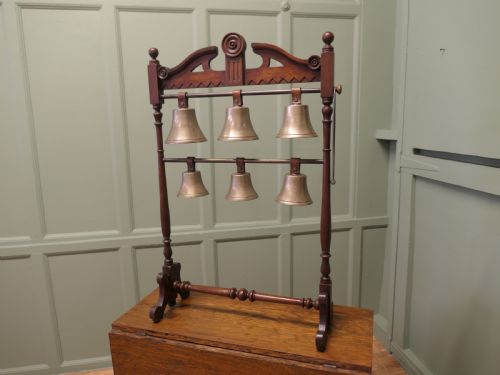
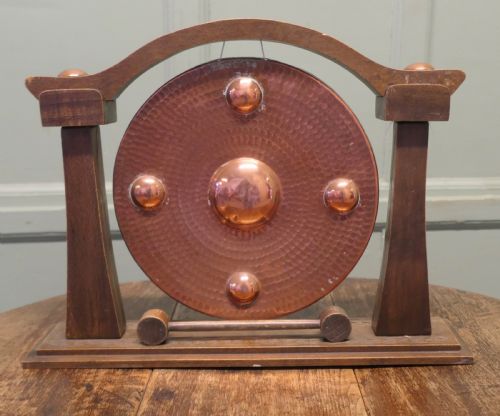
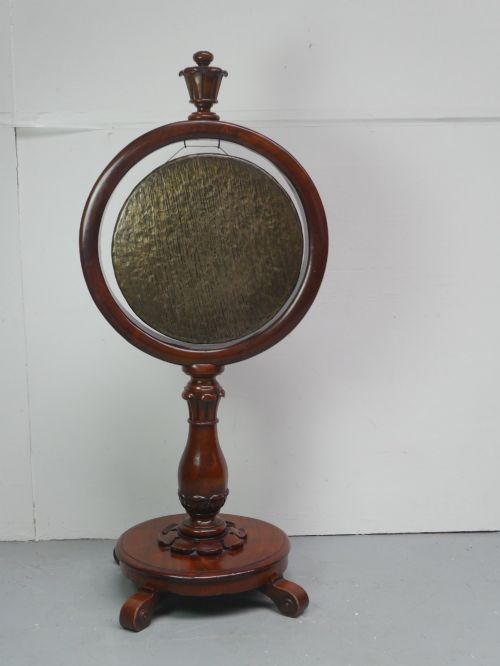
Makers utilised various physical forms, ranging from framed table gongs and hanging bells to multi-bell musical racks and novelty wooden stands. The structural framework often incorporates detailed carving, giving the domestic summoning bell a decorative presence even when silent.
Materials and construction
Makers built the supporting frameworks primarily from seasoned timbers including oak, walnut, hardwood, mango wood, and occasionally unusual additions like cattle horn. These stands received hand-carved ornamentation, displaying geometric tracery, dragon motifs, or rustic shaping.
The sounding elements combine cast or beaten metals such as brass, bronze, copper, and tuned musical bells suspended by cord. Glass elements occasionally appear alongside the metal and wood assemblies to complete the hanging structure.
One exceptional piece incorporates cattle horn into the carved wooden frame, proving that Victorian makers utilised truly eclectic natural materials.
Evaluating craftsmanship
Quality rests in the depth and precision of the wood carving upon the frame, distinguishing standard production from deeply detailed regional or export work. The structural stability of the stand determines how well it supports the swinging weight of a heavy metal bell.
The acoustic properties of the metal element separate ordinary examples from superior pieces, depending on the alloy composition and casting skill. Additionally, the originality of the hanging cord and the proportional balance between the bell and its carved mount govern the overall integrity of the object.
The Carved Dinner Chime Glossary
- Dinner Gong
- A suspended metallic disc or bowl struck with a mallet to produce a resonant tone for summoning guests. This term often appears interchangeably with table chimes in period descriptions.
- Gothic Revival
- An architectural and decorative style drawing on medieval ecclesiastical forms. Pieces in this manner display pointed arches, heavy tracery, and dark oak frames.
- Japonisme
- The influence of Japanese art on Western design during the late nineteenth century. These objects incorporate characteristic oriental motifs and aesthetic restraint.
- Chinese Export
- Items manufactured in China specifically for Western markets during the nineteenth century. They frequently showcase elaborate hand-carved dragons and traditional iconography.
- Arts and Crafts
- A design movement prioritising hand workmanship and traditional materials over industrial mass production. Works from this tradition emphasise visible joinery and honest construction.
Carved Dinner Chime: Frequently Asked Questions
What is a carved dinner chime?
A carved dinner chime is a decorative domestic device featuring a suspended metal bell or gong mounted within an ornately carved wooden or metal frame. Households historically utilised these pieces to announce meals through a resonant acoustic signal.
Today, these objects function as decorative interior items that reflect nineteenth-century and early twentieth-century design movements. The combination of sculptural woodwork and metallic sound elements gives them a distinct presence on sideboards.
How do I date a dinner chime?
Dating relies on identifying the prevailing stylistic cues, such as heavy ecclesiastical tracery for Gothic Revival pieces or naturalistic motifs for Arts and Crafts examples. Materials like oak, walnut, and specific brass or bronze casting techniques also point towards nineteenth-century or Edwardian manufacture.
Examining the construction methods of the carved frame and the wear on the hanging cords provides further context regarding age. Comparing the decorative vocabulary to known historical periods helps narrow the decade of production.
Where were these gongs placed?
These gongs traditionally stood on large dining room sideboards, serving tables, or entrance hall surfaces within substantial nineteenth-century homes. Their placement allowed the sound to travel effectively across domestic spaces when struck before dinner.
Modern interiors accommodate these pieces on similar surface furniture where the carved frame can be appreciated visually. They continue to serve as functional musical instruments as well as decorative focal points.
What materials are used?
Frames are constructed from hardwoods such as oak, walnut, mango wood, and general hardwood timber, occasionally incorporating organic elements like cattle horn. Sounding components consist of cast brass, bronze, copper, or tuned musical bells.
Suspension is typically achieved using sturdy cord to hang the metal element freely within the carved aperture. Some examples incorporate glass components alongside the primary wood and metal structure.