





Carved Wooden Gong Stand
A carved wooden gong stand brings a resonant historic presence into a room, holding brass or bronze bells meant to summon people together.
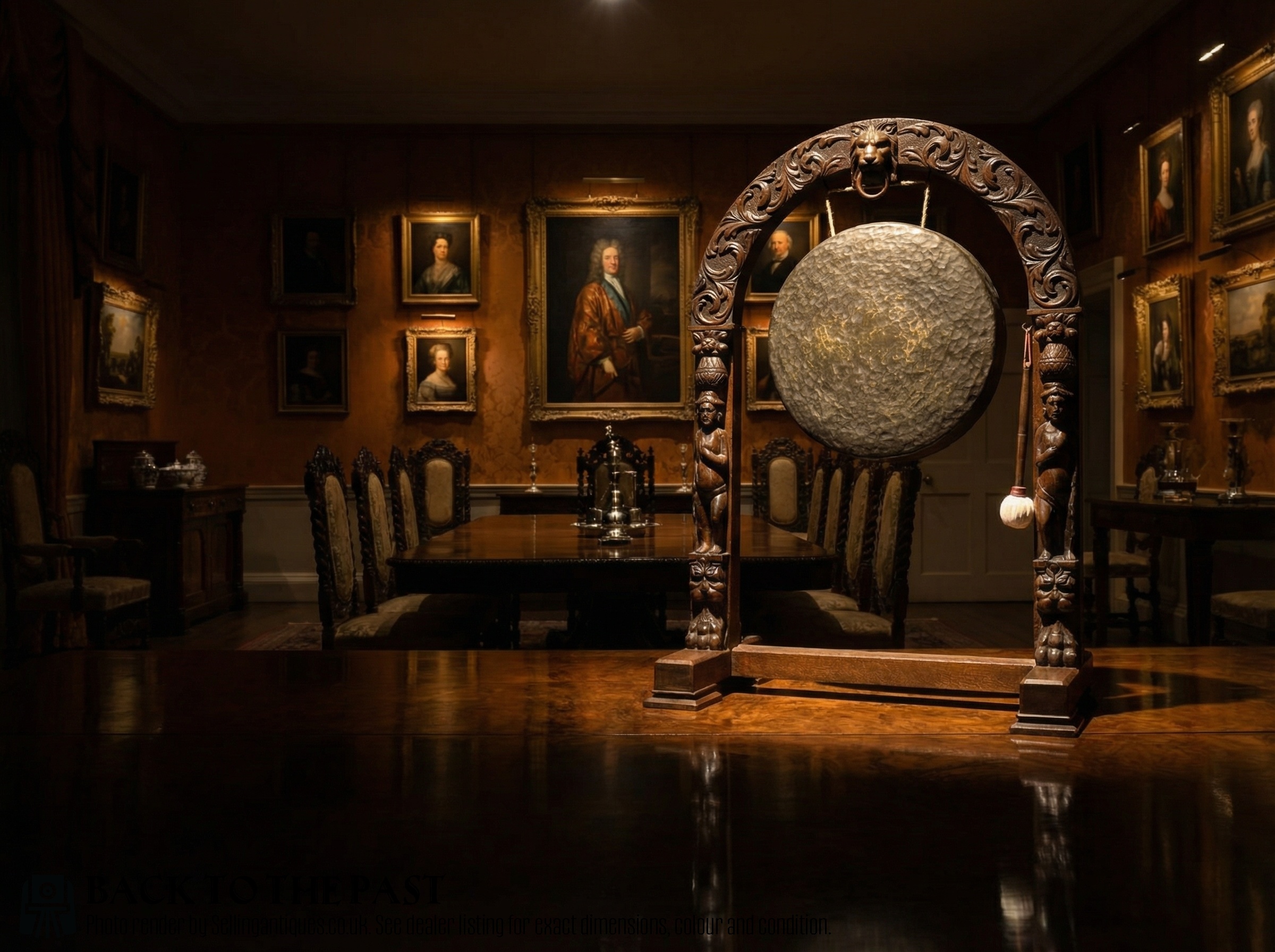
Carved Wooden Gong Stand
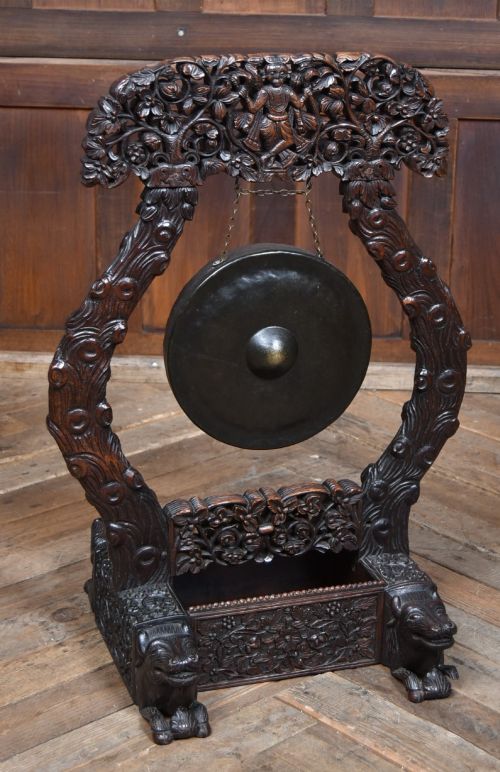
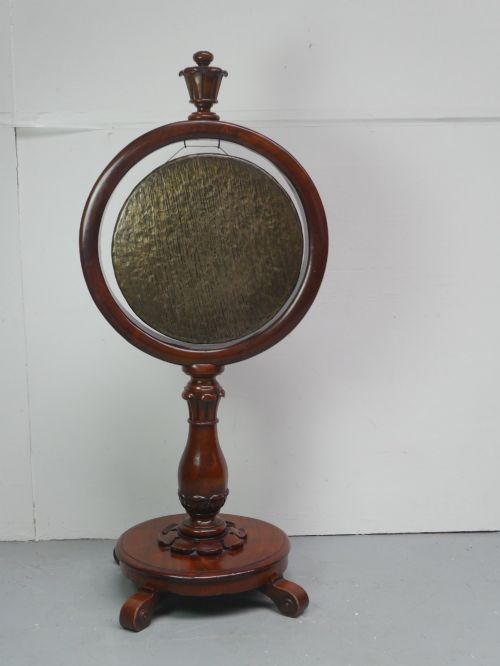
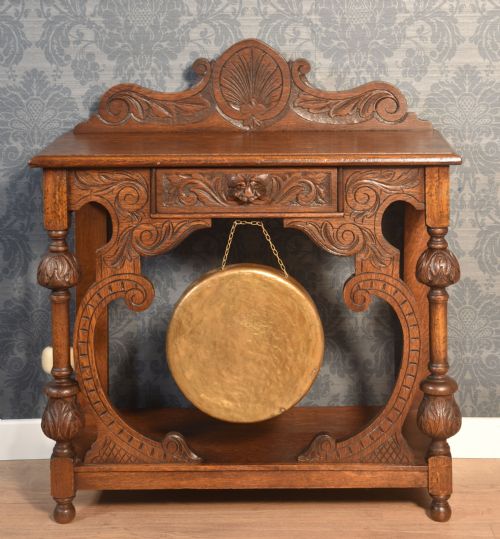
A carved wooden gong stand is a decorative and functional furnishing designed to suspend a metal bell or gong, primarily originating from the Victorian period through to the early twentieth century. These pieces appear in forms such as table gongs, dinner gongs, and even integrated hall tables, serving both domestic and ceremonial roles in country houses and studies.
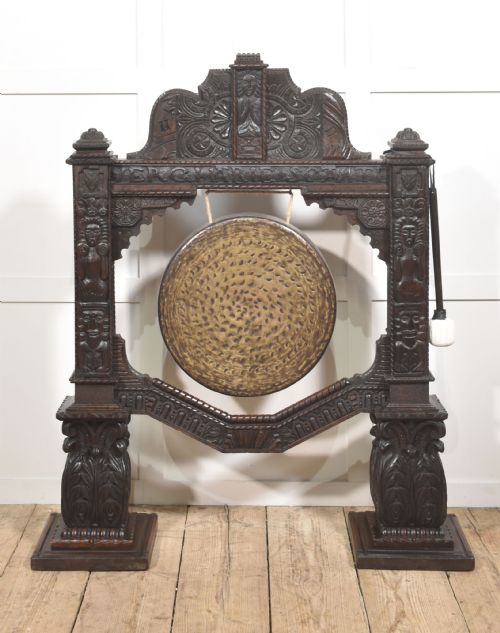
The versions most commonly met on this page span the nineteenth century and the Edwardian era, often rendered in solid oak, mahogany, or walnut. Alongside British Gothic Revival designs, buyers encounter Chinese Export, Burmese, and Anglo-Indian interpretations incorporating intricate hand carving and oriental motifs.
The structural framework typically consists of a stable wooden base supporting upright pillars and a crossbeam from which the bell hangs by cord. Whether intended for a grand Scottish country house or a domestic tea ceremony, each piece combines utility with distinct period craftsmanship.
How they were made
Makers utilised dense timbers such as oak, mahogany, walnut, and teak, selecting woods capable of supporting the substantial weight of cast brass or bronze bells. Carpenters and carvers shaped these materials using hand tools, executing deep relief work, dragon motifs, and architectural tracery.
The hanging mechanism relied on durable cord or rope threaded through the wooden crossbeam to suspend the metal gong securely. Structural stability was achieved through traditional joinery within the frames and table bases, ensuring the stand remained rigid when the bell was struck.
Carved Wooden Gong Stand Retail Price Guide 2026
Typical asking prices for carved wooden gong stand among the pieces listed under this phrase on Sellingantiques today, from the lower quarter to the upper quarter. They describe what is for sale here now, not the wider market.
Recorded styles span Victorian Gothic Revival, Anglo-Indian, Chinese Export, and Chinoiserie traditions across table gongs and large hall tables.
What varies in quality
The distinction between standard examples and finer works lies in the depth and precision of the wood carving, particularly where regional styles like Gothic Revival or Chinese Export demand intricate detail. Superior stands display crisp execution in foliage, figures, or architectural elements without superficial machine tooling.
Material selection also dictates the standing of a piece, with well-figured timbers, substantial brass bells, and robust structural joinery commanding greater appreciation. The integrity of the hanging cord and the resonance of the suspended bronze or brass add further layers of distinction to individual examples.
The Carved Wooden Gong Stand Glossary
- Gong
- A suspended metal disc or bowl struck with a mallet to produce a resonant tone. These are typically cast from brass or bronze.
- Gothic Revival
- An architectural and decorative style drawing on medieval forms, frequently seen in nineteenth-century oak stands with pointed arches and tracery.
- Dinner Gong
- A domestic bell apparatus used historically in large houses to announce meals to residents and guests.
- Chinoiserie
- European artistic styles reflecting Chinese motifs and techniques, often applied to the woodwork and decorative framing of stands.
- Table Gong
- A scaled-down version designed to sit upon a surface rather than stand directly on the floor.
Carved Wooden Gong Stand: Frequently Asked Questions
Where were these gongs used?
These pieces sat in the hallways, dining rooms, or reception spaces of country houses and residences. They served a practical purpose in announcing the arrival of dinner or summoning household staff.
Over time, they transitioned from utilitarian objects into decorative conversation pieces that introduced historic atmosphere and acoustic character to interior spaces.
How do I hang the bell safely?
Suspension relies on robust cord threaded through the upper crossbeam of the wooden frame. Ensuring the knot is secure prevents the heavy brass or bronze bell from slipping.
Inspect the cord periodically for fraying, replacing it with a suitably strong material that matches the historical character of the stand.
How can I date a wooden stand?
Dating depends on observing the timber species, the joinery methods, and the decorative style present in the carving. Victorian and Edwardian examples often display distinct regional motifs such as Gothic tracery or Chinese Export dragon designs.
Comparing the framing construction with dated pieces from the same era helps establish a reliable timeline of origin.
Can these stands hold any bell?
Stands are engineered to bear specific weight tolerances based on the timber frame and the span of the crossbeam. Matching a bell to its original stand ensures the uprights and cords are not placed under undue stress.
Using an appropriately sized brass or bronze temple bell or dinner gong preserves both the structural integrity and the acoustic resonance of the piece.