




Antique Dinner Chime
An antique dinner chime calls households to the table with resonant brass, bronze, and copper bells suspended in timber frames.
Antique Dinner Chime
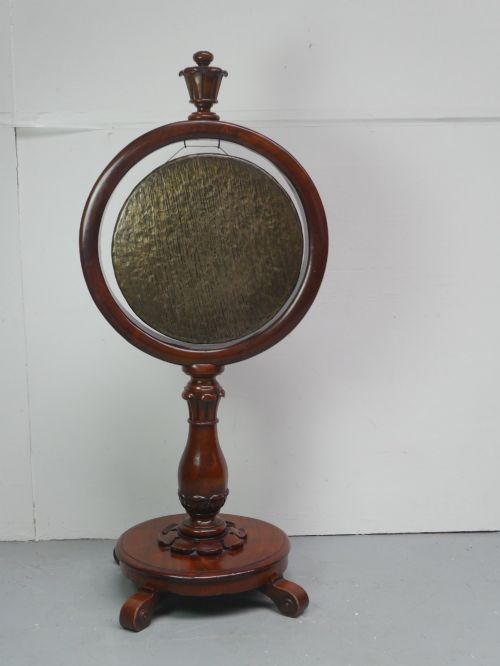
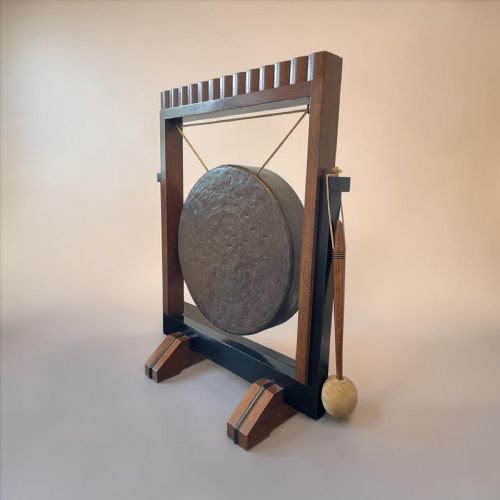
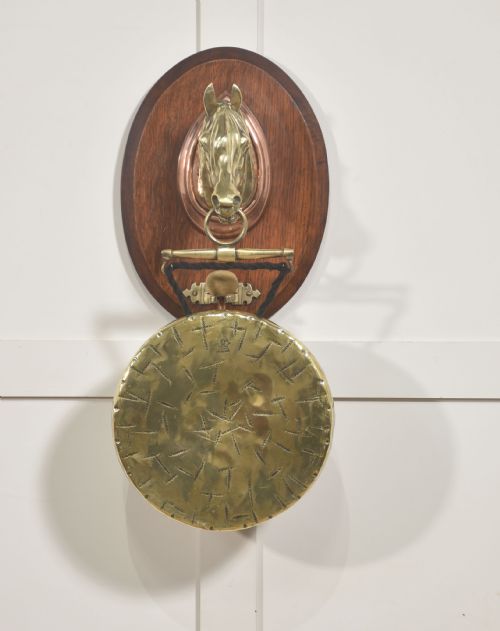
An antique dinner chime encompasses table gongs, wall-hanging bells, and floor-standing pieces designed to summon guests. The most common forms pair a brass or bronze bell with an oak, walnut, or bamboo support structure.
Originating largely in nineteenth-century and early twentieth-century domestic settings, these pieces span Victorian, Edwardian, and Arts and Crafts periods. Country houses utilised substantial floor or wall gongs, while smaller table versions suited suburban dining rooms.
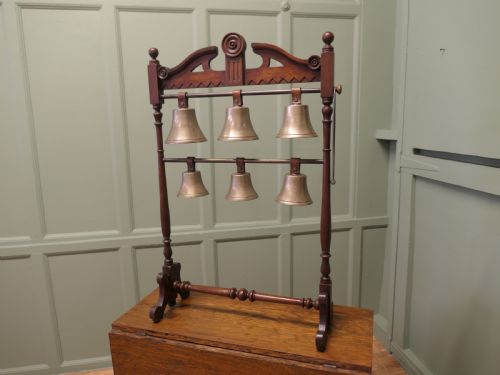
Makers drew on diverse stylistic influences, producing Gothic Revival frames, Aesthetic Movement brassware, and Chinese or Japanese export designs. Some examples incorporate unusual materials such as cattle horn, mango wood, or wrought iron.
Materials and Construction
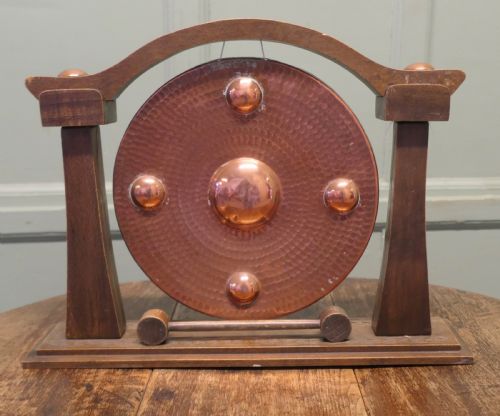
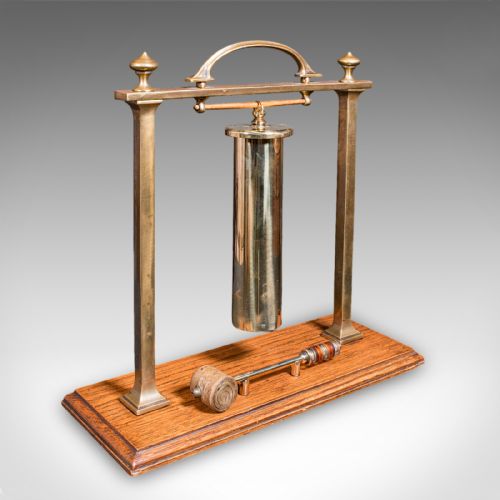
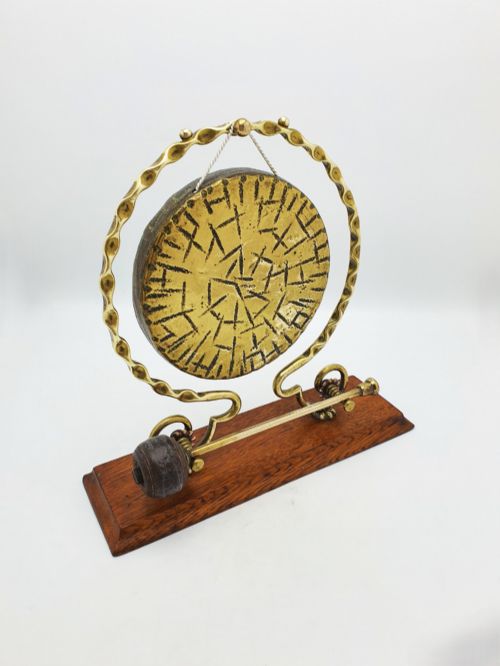
Metals form the acoustic core of each piece, utilising cast brass, bronze, copper, and silver plate to achieve clear resonance. These bells and gongs are struck with dedicated handheld mallets or hammers.
Timber frames utilise seasoned hardwoods including oak, walnut, fruitwood, and bamboo, frequently shaped with carved decoration or brass mounts. Joints are pegged or screwed to support the weight of swinging metal gongs.
Hanging mechanisms rely on sturdy cords, metal loops, or wrought iron brackets to suspend the chime securely within its stand.
The site listings feature oak, walnut, and bamboo frames paired with brass, bronze, copper, and silver-plated bells across Victorian and Edwardian periods.
Craftsmanship and Acoustics
The purity and sustain of the tone separate superior chimes from simpler pieces, depending on the alloy composition and thickness of the metal bell. A well-cast bronze or brass gong delivers a resonant, sustained note rather than a dull thud.
Cabinetwork and carving quality vary significantly across frames, ranging from plain functional oak boards to intricately carved walnut and bamboo structures. Superior examples feature integrated strikers, pegged joinery, and detailed cast metal mounts.
Design cohesion defines the better pieces, where the proportions of the frame complement the scale and acoustic properties of the suspended bell.
The Antique Dinner Chime Glossary
- Dinner Gong
- A suspended metal disc or bowl struck with a mallet to announce meals. They replaced handheld bells in larger Victorian and Edwardian households.
- Table Chime
- A smaller acoustic device, often featuring multiple tuned bells or bars mounted on a timber base for domestic use. These sat upon sideboards or dining tables.
- Gothic Revival
- An architectural and decorative style popular in the nineteenth century, characterised by pointed arches, heavy oak framing, and ecclesiastical motifs. Many dinner gong stands adopted this aesthetic.
- Aesthetic Movement
- A late nineteenth-century design current emphasising visual beauty over narrative function, often seen in stylised brasswork and geometric wall mounts. Pieces from this era display refined, minimalist metal forms.
- Striker
- The handheld mallet, hammer, or baton used to sound the gong. Original matching strikers add completeness to a piece.
Antique Dinner Chime: Frequently Asked Questions
How were antique dinner chimes used?
Servants or hosts struck the suspended metal bell using a handheld wooden or metal mallet to signal that a meal was served.
In larger country houses, the deep resonance carried across multiple rooms and gardens to gather family and guests.
Where should I place a dinner gong?
Tabletop models sit comfortably on sideboards, side tables, or bookshelves as decorative acoustic objects. Larger wall-mounted or floor-standing chimes require adequate clearance for the frame and hanging bell.
Keep them away from high-traffic household corridors where the suspended striker might accidentally impact the metal.
How do I date an antique dinner chime?
Examine the timber species, joinery methods, and prevailing decorative style of the frame. Gothic Revival and heavy oak designs generally point to the nineteenth century, whilst lighter bamboo or Arts and Crafts models often align with the Edwardian era.
Patent marks, cast numbers, and the specific patina of the brass or bronze can offer further chronological clues.
Are original strikers usually included?
Many surviving pieces retain their original wooden, leather-headed, or brass-capped handheld strikers. Replacements are common, however, as the small mallets were easily misplaced over generations of use.
A matching striker enhances the integrity of the piece but does not alter the underlying age of the gong and frame.