





Brass Gong Carved Stand
These brass gong carved stand pieces bring striking resonance and rich woodwork into a room, offering both decorative presence and deep, resonant tone.
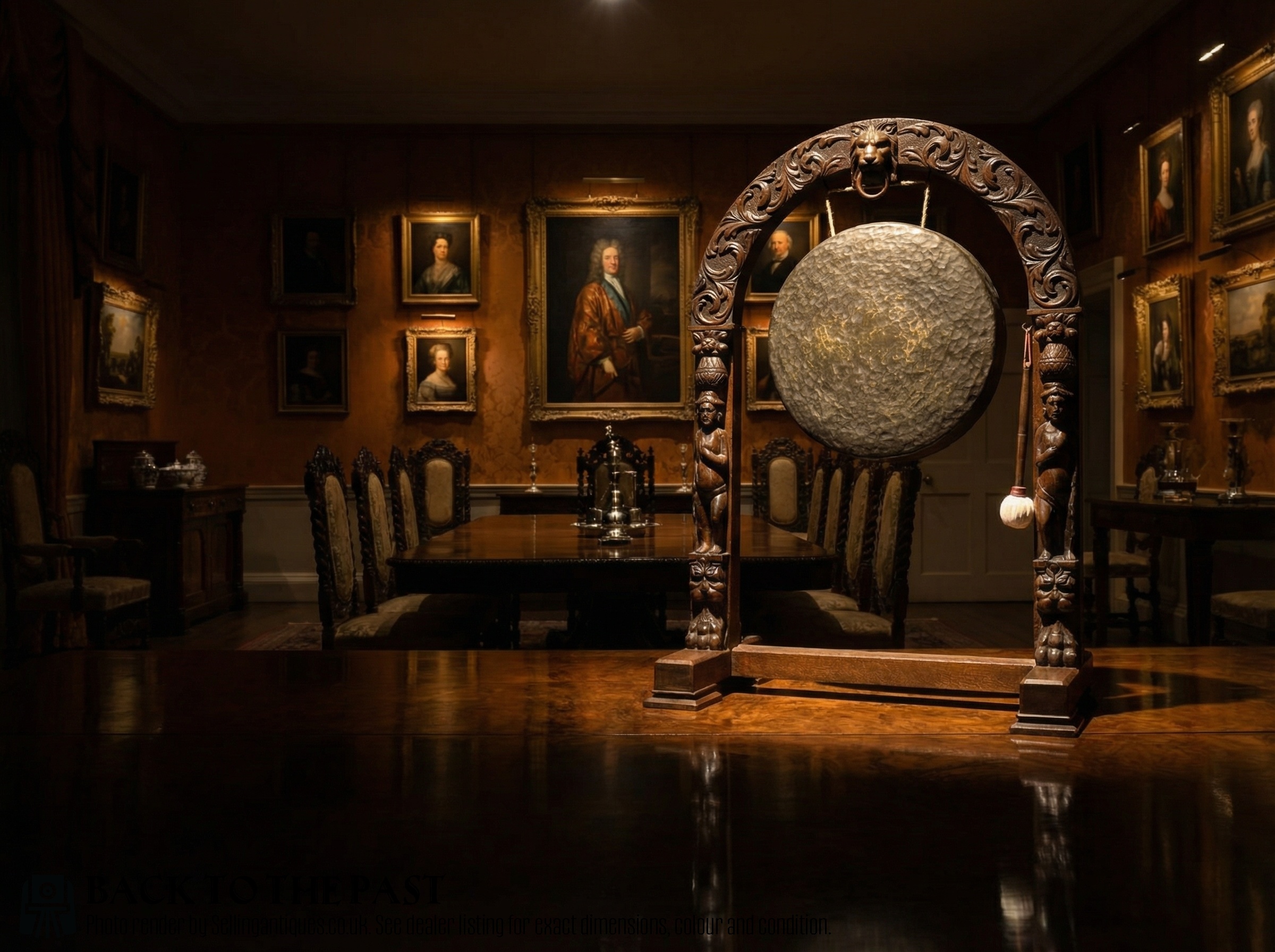
Brass Gong Carved Stand
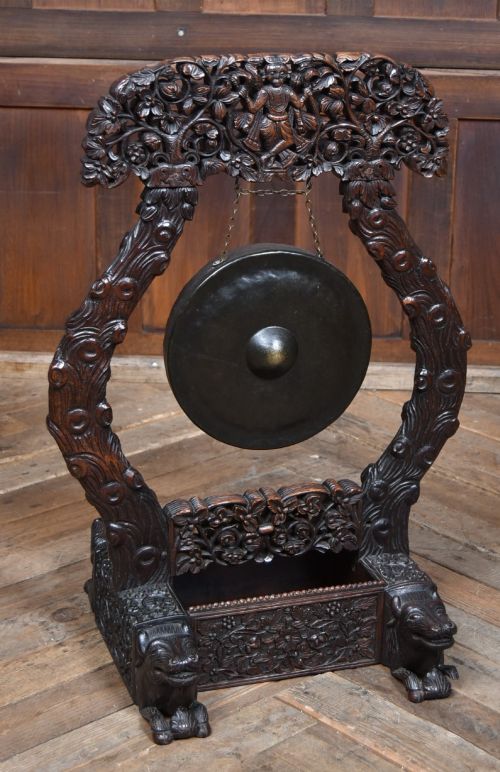
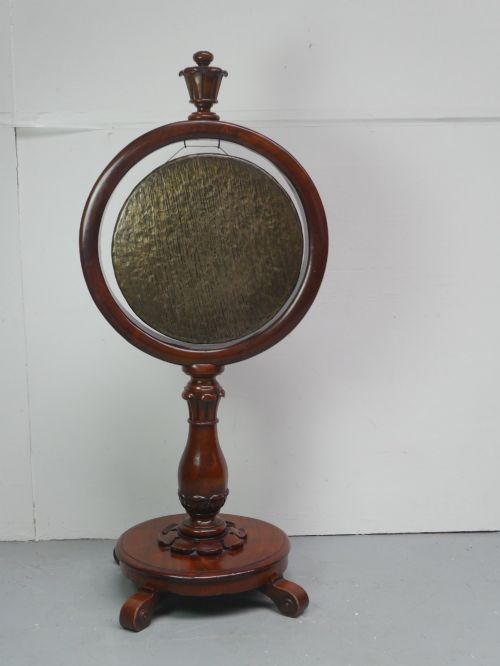
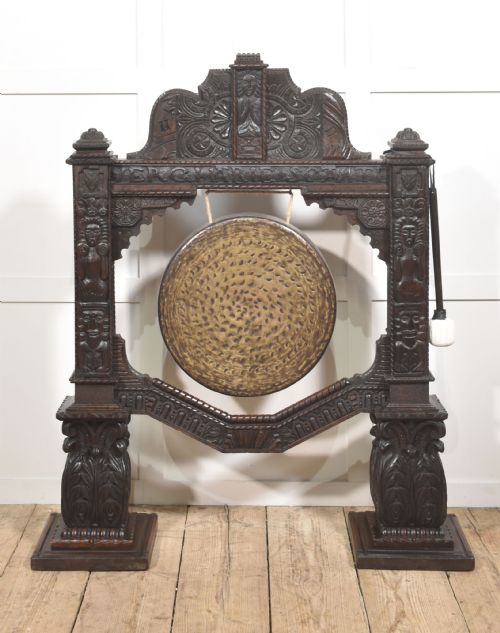
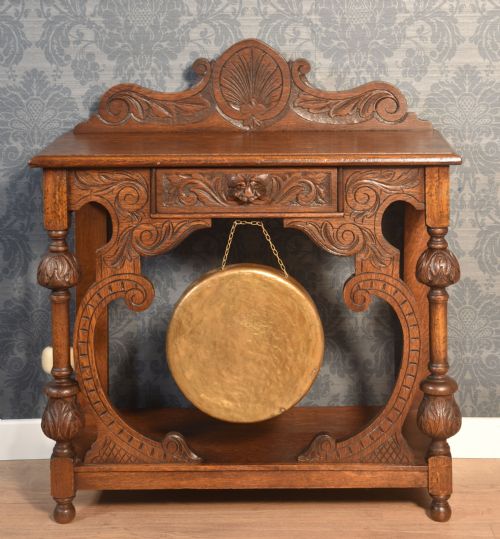
When you search for a brass gong carved stand, you are looking at striking instruments paired with sculptural wooden mountings designed for domestic or ceremonial use. These pieces range from substantial Scottish country house dinner gongs to smaller table gongs and oriental temple bells.
The versions you are most likely to meet on this page hail primarily from the nineteenth century, including Victorian and Edwardian examples, alongside pieces showing Chinese Export, Chinoiserie, Anglo-Indian, and Gothic Revival styles.
Makers utilised various forms, from hanging frames mounted on carved stands to complete hall tables incorporating the bell itself. The primary forms function as functional percussion items or decorative centrepieces within a hallway or principal room.
How they were made
The structural supports rely heavily on dense timbers such as oak, mahogany, walnut, teak, and hardwood, often shaped with intricate carving depicting dragons or Gothic motifs. Frames incorporate cord to suspend the metal element securely within its wooden housing.
The sound-producing discs and bells consist of brass or bronze, cast and hammered to achieve resonance. Some incorporate glass elements or intricate oriental metalwork alongside the primary timber frames.
Some nineteenth-century households relied on these deep tones not just for dinner, but to summon servants from the furthest reaches of the estate.
What varies in quality
The distinction between standard domestic pieces and monumental examples lies in the depth and ambition of the timber carving, ranging from simple framed structures to deeply relief-carved dragon stands or elaborate Gothic Revival architecture.
Material selection dictates the overall presence, with dense native oaks and walnuts competing with exotic hardwoods and imported oriental stands. The purity of the metal casting similarly governs the resonance and sustain of the struck bell.
The Brass Gong Carved Stand Glossary
- Dinner gong
- A large percussion instrument mounted on a stand, historically used in country houses to announce meals.
- Gothic Revival
- A design style drawing inspiration from medieval architecture, frequently featuring pointed arches and heavy tracery seen in Victorian woodwork.
- Chinoiserie
- European artistic interpretation of Chinese and East Asian decorative styles, popular in furniture and decorative objects.
- Temple bell
- A sacred or ceremonial bronze or brass bell designed to produce a clear, meditative tone.
- Table gong
- A smaller version of the standing dinner gong, proportioned for placement on furniture rather than the floor.
Brass Gong Carved Stand: Frequently Asked Questions
What is a brass gong carved stand used for?
These assemblies served primarily to summon household members for dinner in large country houses or functioned as decorative oriental items in reception rooms. The suspended brass disc produced a resonant tone that carried across multiple floors.
Today, they act as striking focal points in hallways and living spaces, retaining their acoustic properties while offering substantial decorative presence through their carved wooden stands.
How do I date a brass gong carved stand?
Dating relies on examining the timber species, construction methods, and stylistic indicators such as Gothic Revival tracery or Victorian proportions. Labels, stamps, and the specific patina of the brass or bronze provide further chronological clues.
Earlier nineteenth-century pieces often display heavier oak framing and hand-carved details, whereas Edwardian and later examples introduce lighter woods and varied oriental influences.
Are these gongs still playable?
Most gongs retain their original acoustic capability, provided the suspension cord and metal disc remain intact. Striking them with an appropriate mallet yields the deep, resonant tone intended by the maker.
Care should be taken when sounding older metal to preserve the patina and ensure the structural integrity of the carved wooden hanging frame.
What styles are common for these pieces?
The aesthetic spans domestic British revivalism and imported eastern designs, with Victorian Gothic Revival oak frames sitting alongside Chinese Export dragon-carved stands and Burmese models. Anglo-Indian and Chinoiserie influences also appear frequently.
This stylistic variety reflects both nineteenth-century trade patterns and the Victorian appetite for eclectic domestic furnishings.