
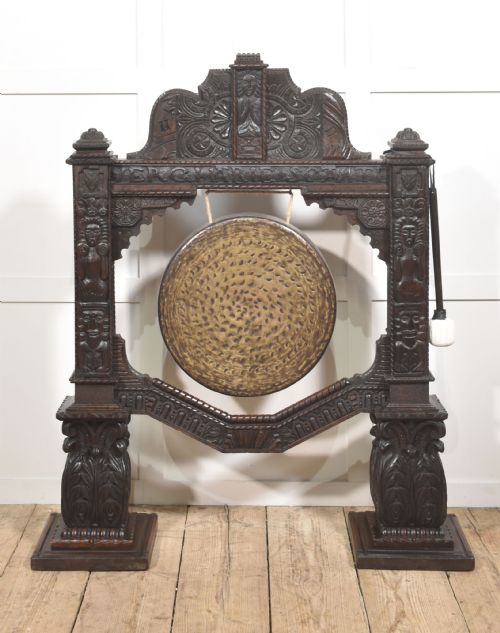
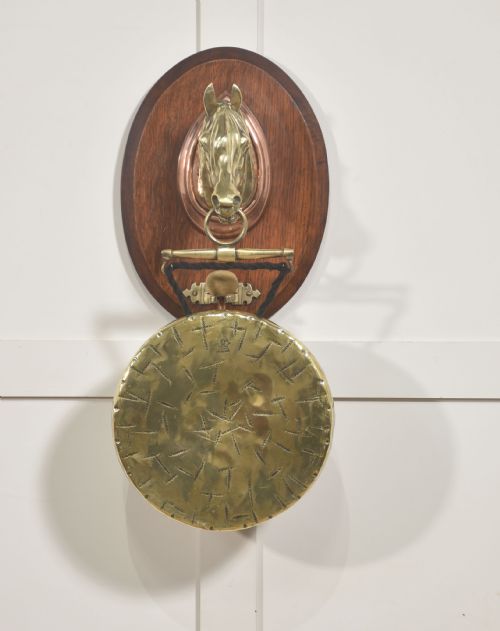


Victorian Oak Dinner Gong
A victorian oak dinner gong brings the resonant chime of the country house into a hallway with carved timber and polished brass.
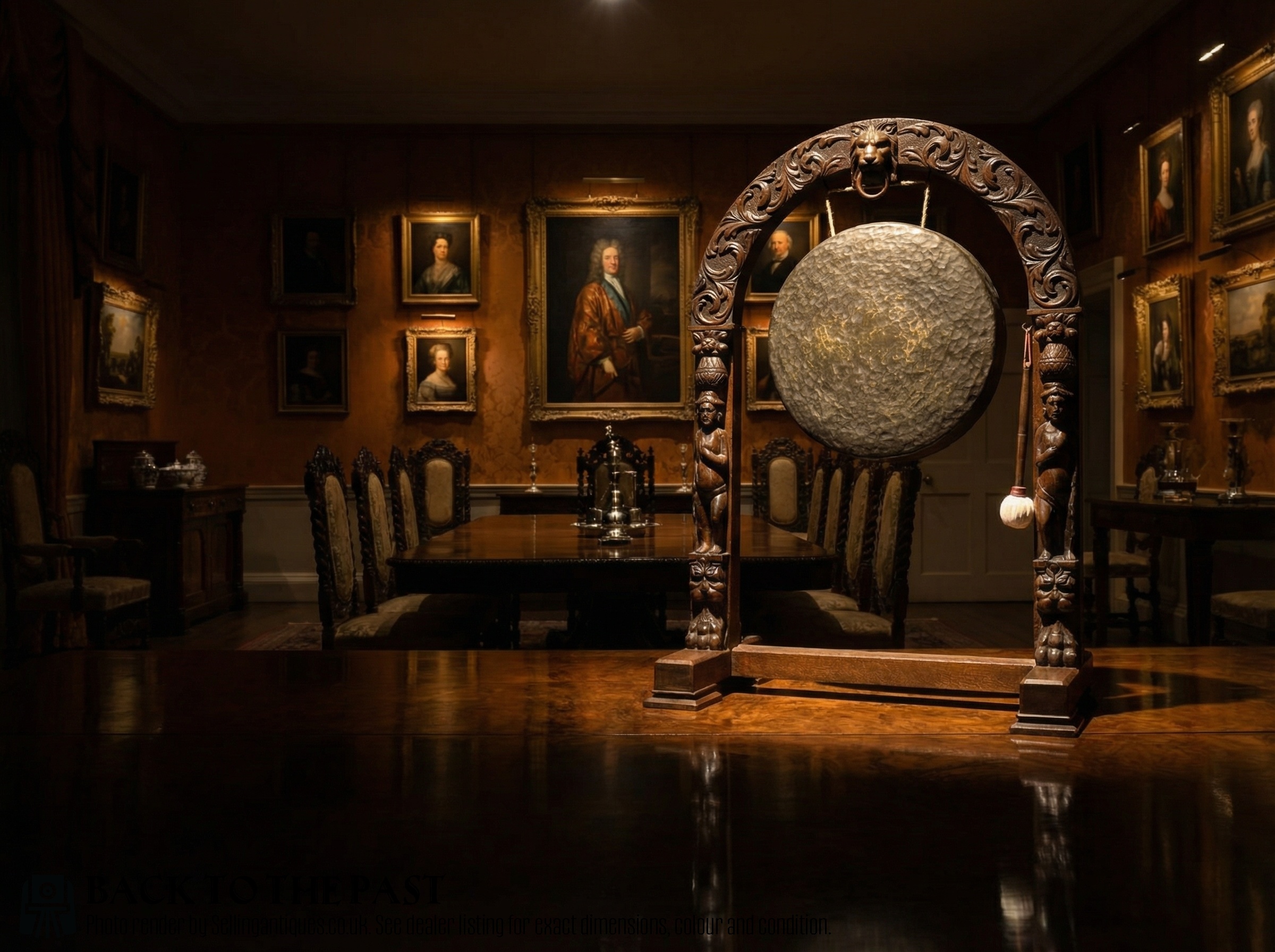
Victorian Oak Dinner Gong
A victorian oak dinner gong is a substantial household piece designed to summon family and guests to meals with a deep, echoing chime. These pieces appear most frequently as wall-hanging or table gongs framed in carved timber, alongside occasional floorstanding and hall table variants.
The materials and styles span the nineteenth century and the early twentieth century, drawing heavily on Victorian, Gothic Revival, and Arts and Crafts aesthetics. Workshops utilised golden oak, dark carved timber, and rustic elements to suit grand country houses and shooting lodges alike.
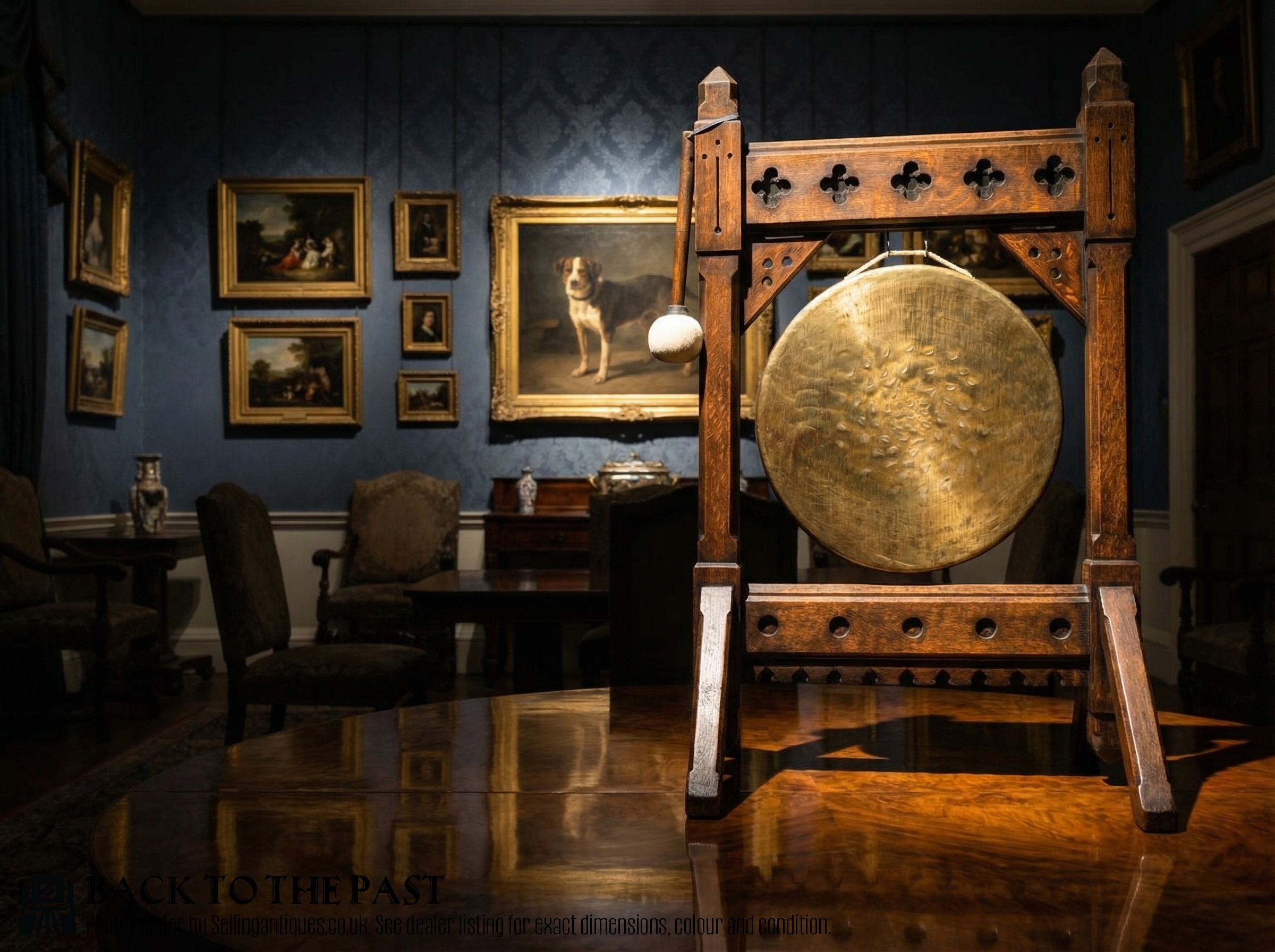
Materials and Construction
Makers constructed the supportive frames using solid oak, often featuring elaborate carving, bobbin turning, or Gothic architectural motifs. Frames frequently incorporate natural materials such as cattle horn, leather, and rope alongside structural metal elements.
The striking elements consist of brass, bronze, copper, or silver plate, sometimes shaped into horse heads, horseshoes, or boat hulls. A matching striker or beater completes the assembly, suspended from the frame or resting nearby.
Listings feature oak combined with brass, silver plate, horn, leather, rope, and copper across the Victorian and Edwardian periods.
Quality and Execution
The distinction between standard and superior pieces rests upon the depth of the timber carving and the architectural ambition of the frame. Elaborate Gothic revival details, monumental proportions, and unusual structural components like horseshoe or cow horn mounts elevate a piece above simple framed gongs.
A further measure of quality lies in the metalwork of the chime itself, where substantial cast bronze or thick brass produces a cleaner, more resonant tone than lighter metal plates. The integration of secondary materials such as silver plate and leather suspension straps also defines the upper range of these items.
The Victorian Oak Dinner Gong Glossary
- Dinner Gong
- A resonant metal disc or bowl suspended in a frame and struck with a mallet to announce meals. These objects were central to large nineteenth century households.
- Gothic Revival
- An architectural and decorative style drawing on medieval forms, featuring pointed arches and heavy carving. This aesthetic appears frequently on nineteenth century oak gong frames.
- Cow Horn
- Natural horn utilised as a decorative mount or curved structural element flanking the metal chime. It reflects the sporting tastes of country house interiors.
- Bobbin Turned
- Timber turned on a lathe to resemble a string of rounded bobbins or spools. This technique creates a distinctive decorative texture on nineteenth century wooden frames.
- Silver Plate
- A thin layer of silver fused to a base metal such as brass or copper. It provides a bright finish to gongs and hanging mounts.
Victorian Oak Dinner Gong: Frequently Asked Questions
How were dinner gongs used?
Staff struck the suspended metal disc with a mallet at regular intervals to signal that dinner was served. The deep tone carried across large country houses and estates.
Guests would hear the chime from distant rooms and assemble in the hall or drawing room before moving to the dining table.
Where were they placed in the house?
These pieces typically stood in entrance halls, corridors, or spacious landings where the sound could travel freely. Wall-hanging versions secured directly to structural timber or masonry.
Table gongs rested on hall tables alongside decorative items, positioned for easy access before the evening meal.
How do I date a Victorian gong?
Dating relies on stylistic clues within the oak frame, such as heavy Gothic revival carving or later Arts and Crafts simplicity. References to specific design movements help narrow the period of manufacture.
Hardware, mounting brackets, and the composition of the metal chime also offer guidance on the exact decade of production.
What maintenance do they require?
Timber frames benefit from occasional waxing to nourish the oak and preserve the grain. Metal chimes require gentle cleaning to maintain their lustre without removing historical patina.
Suspension cords or leather straps should be checked periodically to ensure they support the weight of the metal disc safely.