
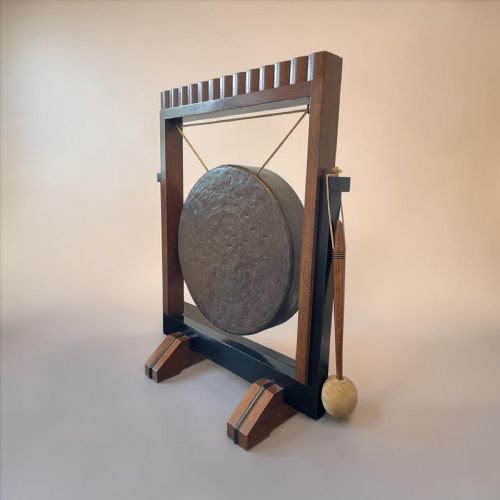


Floor Standing Dinner Gong
These floor standing dinner gong pieces bring a ceremonial resonance to a hallway, calling households to table with deep acoustic presence.
Floor Standing Dinner Gong
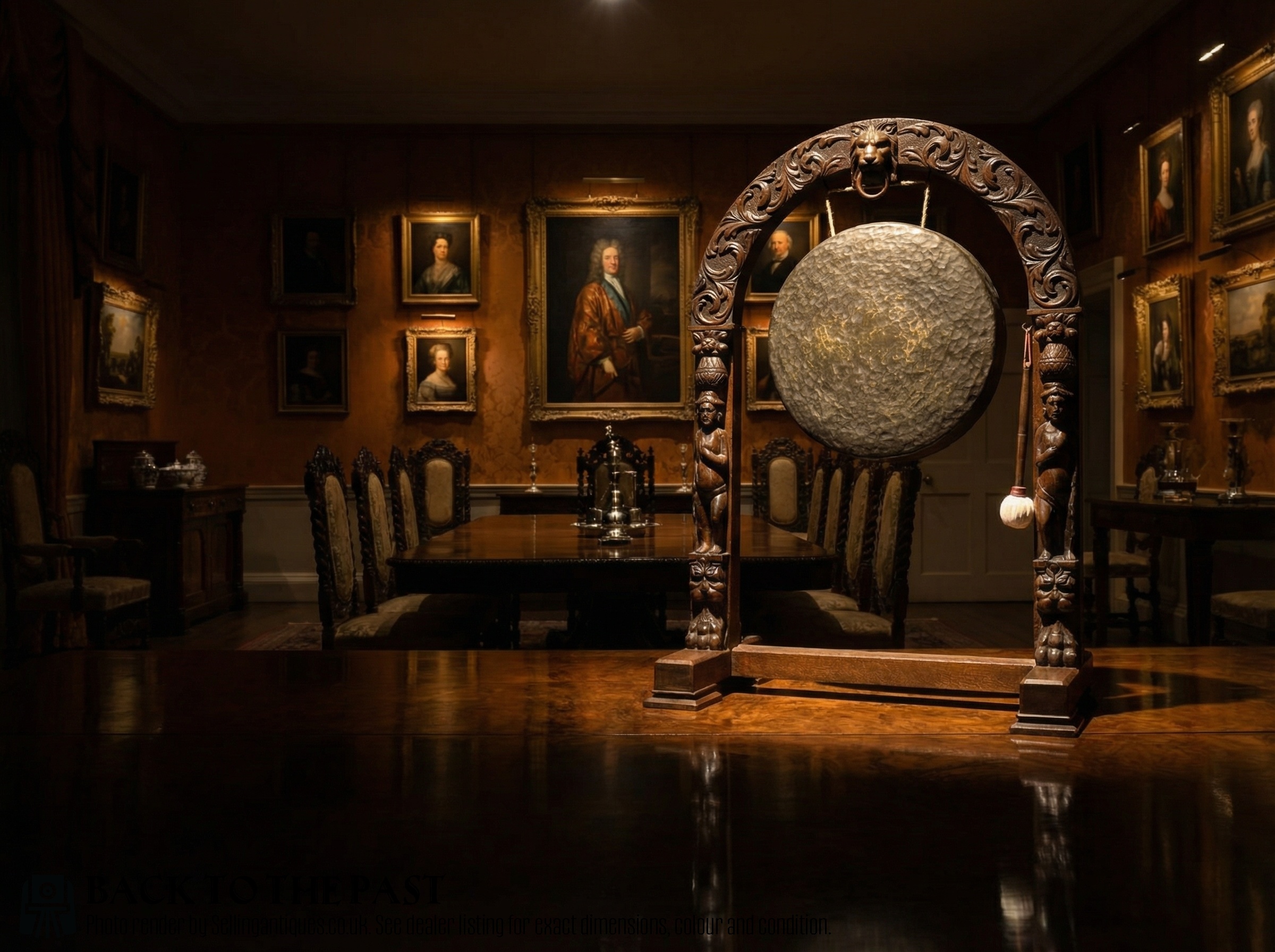
A floor standing dinner gong serves as a commanding acoustic focal point, traditionally used in large houses to summon residents and guests to meals. These substantial items combine a resonant metal plate with a sturdy timber or iron support frame, designed to stand independently in a hall or reception space.
The versions most commonly met on this page date from the nineteenth century into the early twentieth century, spanning Victorian, Edwardian, and Art Deco periods. Oak and mahogany frames appear frequently alongside brass and bronze gongs, often suspended by cord, rope, or fabric straps within the structure.
How they were made
The gongs themselves utilise cast bronze or brass, materials chosen for their sonority and ability to sustain a deep, resonant tone when struck. Suspension relies on durable cord, rope, or fabric straps threaded through the frame to isolate the vibration and allow the metal plate to ring clearly.
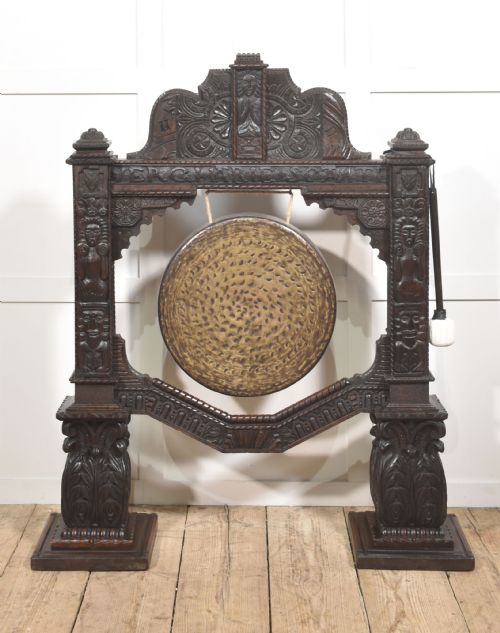
Some oak examples incorporate a carved Green Man peering out from the woodwork to supervise dinner.
What varies in quality
Quality in a floor standing dinner gong rests primarily on the acoustic properties of the metal and the architectural ambition of the frame. Monumental carved oak or walnut structures with detailed Gothic Revival motifs represent the more substantial end of the range, showing superior joinery and sculptural depth compared to plainer framing.
The harmony and resonance of the bronze or brass disc dictate the success of the piece as a functional instrument rather than a mere decorative stand. Finer examples maintain a sustained, rich tone that fills a room, matched by thoughtful detailing in the suspension hardware and frame stability.
The Floor Standing Dinner Gong Glossary
- Gong
- A percussion instrument consisting of a flat or shaped metal disc that produces a resonant note when struck with a mallet. It forms the acoustic centre of the assembly.
- Gothic Revival
- An architectural and decorative style drawing inspiration from medieval forms, frequently seen on these pieces in pointed arches and heavy carved tracery. This aesthetic dominated much nineteenth-century production.
- Arts and Crafts
- A design movement valuing visible construction, honest materials, and handcrafted detail. Pieces from this tradition often display simpler structural lines with an emphasis on natural wood grain.
- Bronze
- An alloy of copper and tin utilised for its strength and superior acoustic qualities. It produces the deep, sustained tone expected from a ceremonial dinner gong.
Floor Standing Dinner Gong: Frequently Asked Questions
How were floor standing dinner gongs used?
These pieces served a domestic signaling role in large country houses and sizeable residences, where servants struck the metal disc to announce the evening meal.
The deep sound carried across multiple rooms and corridors, providing a formal acoustic cue for family members and guests to gather in the dining room.
What woods were used for the frames?
Makers predominantly employed durable hardwoods such as oak, walnut, and mahogany to support the heavy suspended metal discs.
These timbers offered the necessary structural strength and allowed for decorative carving in styles ranging from plain Arts and Crafts designs to elaborate Gothic Revival ornamentation.
How do I date a dinner gong?
Dating relies on stylistic clues within the woodwork and the manufacturing characteristics of the frame and suspension elements. Nineteenth-century examples often feature heavy Gothic carving or wrought iron details, while later twentieth-century pieces adopt cleaner Art Deco lines.
Period references in the listing titles provide a reliable guide to the era of manufacture based on surviving design traits.
Can these gongs still be played?
Most pieces remain fully functional instruments provided the suspension cord and metal plate are intact and secure. Striking the bronze or brass disc with an appropriate mallet produces the original resonant tone intended by the maker.