



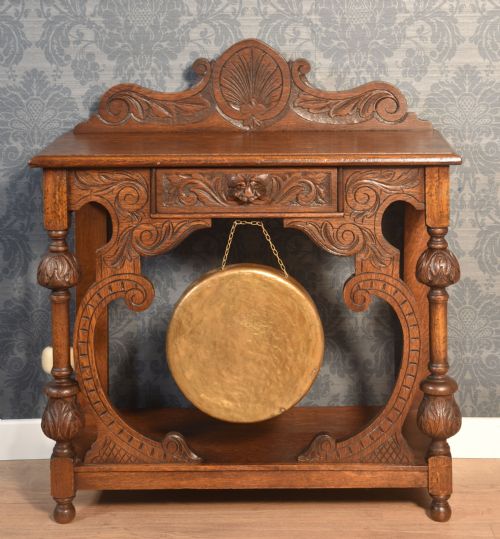


Oak Standing Dinner Gong
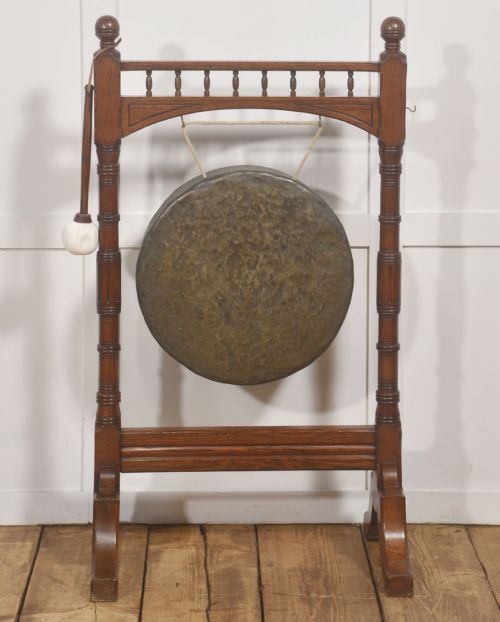
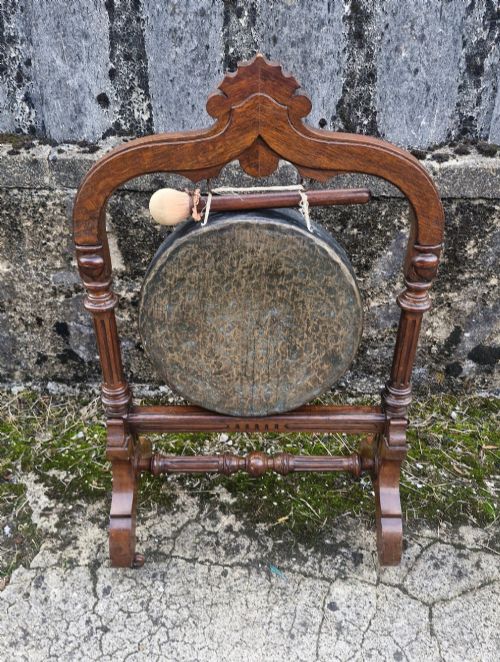
These oak standing dinner gong pieces bring a rich, resonant presence to a hallway, formed in sturdy timber to summon household guests.
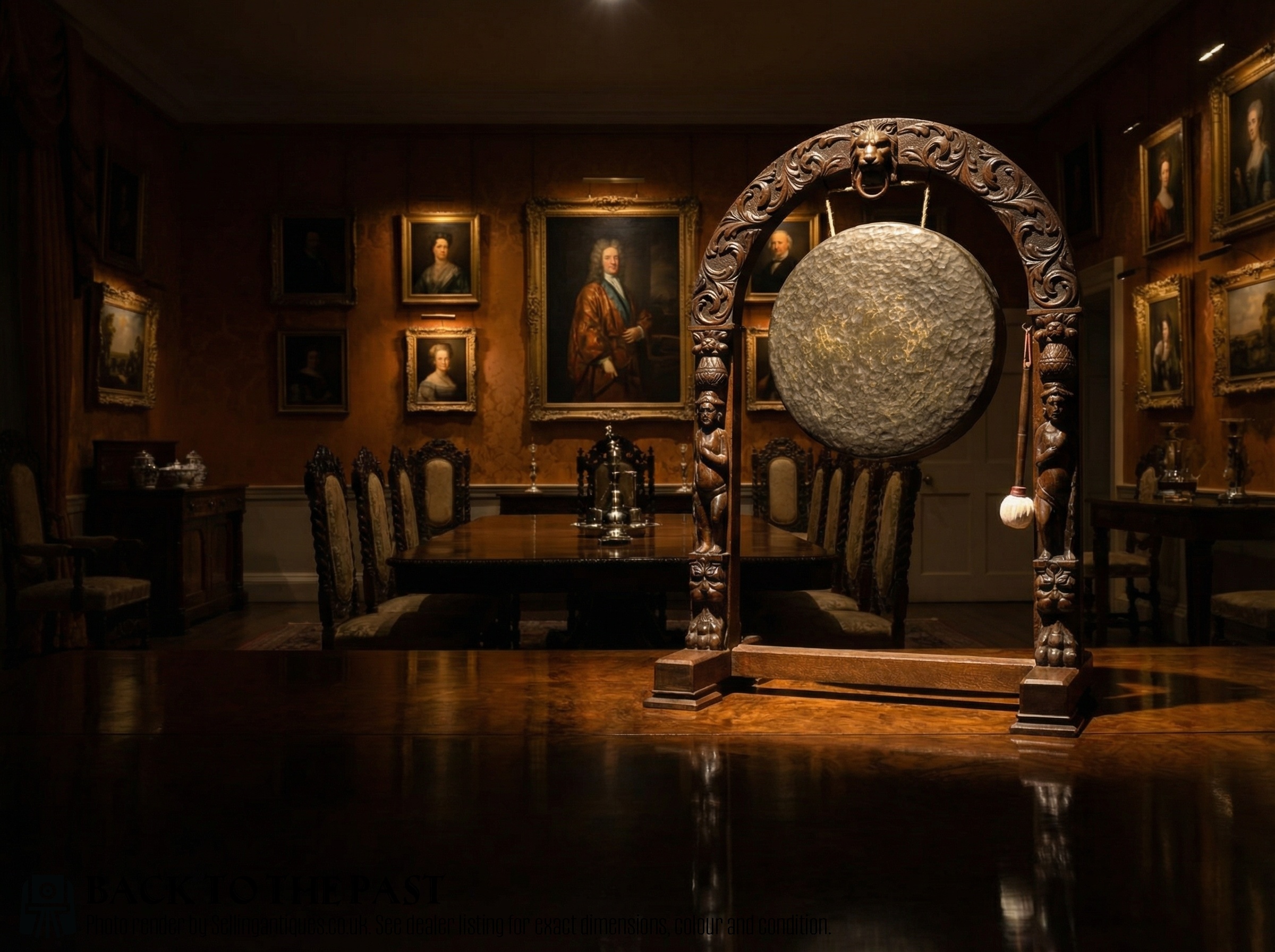
Oak Standing Dinner Gong
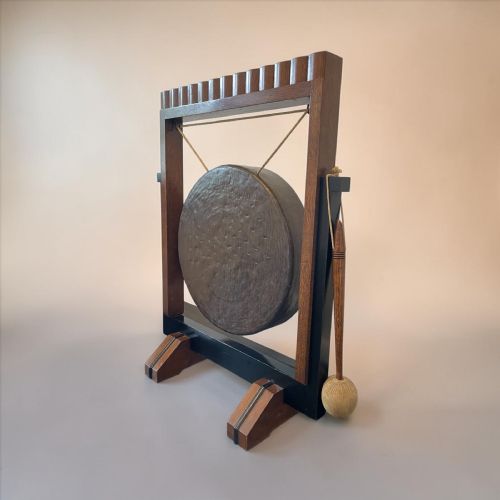
An oak standing dinner gong is a substantial household bell assembly designed to call residents to a meal, uniting a resonant metal plate with a sturdy wooden support. When buyers search for an oak standing dinner gong, they encounter floor-standing and hall pieces primarily from the Victorian and Edwardian eras, alongside some 1930s Art Deco examples.
Makers and designers from the late nineteenth and early twentieth centuries favoured robust timbers, employing oak frames to support heavy metal plates and gongs. Surviving pieces demonstrate the enduring popularity of these domestic summons instruments across the Victorian period, 1900, 1910, and into the 1930s.
Materials and construction methods
The primary structure relies on solid oak, frequently carved in styles such as Gothic Revival or Arts and Crafts to create robust frames and floor-standing supports. Woodworkers joined these structural elements to hold heavy hanging apparatus securely.
Suspension involves materials like cord, rope, leather, or felt, which support the brass or bronze gongs while allowing the metal to vibrate freely. The metal plates themselves provide the resonant tone when struck with a mallet.
Makers integrated practical furniture forms with acoustic elements, sometimes combining hall tables with bells or casing glockenspiels in oak to serve dual purposes in large residences.
Oak Standing Dinner Gong Retail Price Guide 2026
Typical asking prices for oak standing dinner gong among the pieces listed under this phrase on Sellingantiques today, from the lower quarter to the upper quarter. They describe what is for sale here now, not the wider market.
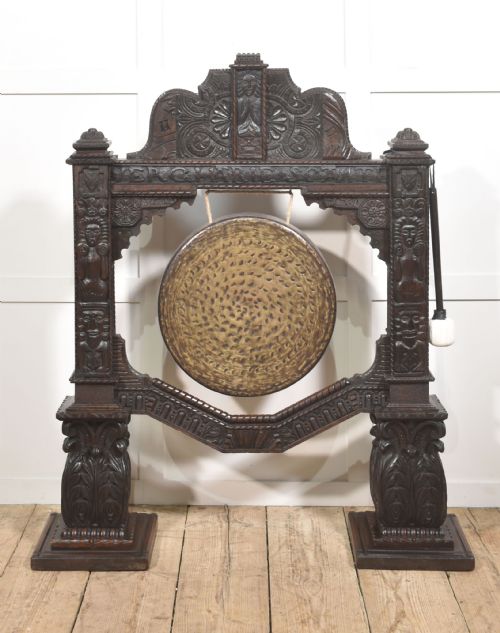
Some country house gongs feature a carved Green Man peering through foliage, ready to startle guests before dinner.
Distinctions in quality and execution
The degree of hand-carving and sculptural detail separates standard framework from exceptional pieces, particularly in Gothic Revival and figural examples like Green Man designs. Monumental proportions and substantial timber thickness also indicate higher ambition in the original workshop.
The selection of suspension materials and the purity of the brass or bronze plate dictate the acoustic resonance and longevity of the piece. Superior examples maintain balanced proportions between the heavy oak frame and the hanging metal gong.
The Oak Standing Dinner Gong Glossary
- Gothic Revival
- A nineteenth-century style drawing on medieval architectural motifs, frequently seen in pointed arches and heavy carved oak frames on these gongs.
- Arts and Crafts
- A design movement valuing honest construction and visible craftsmanship, often reflected in the straightforward oak framing of domestic bells.
- Bronze
- A copper alloy utilised for certain dinner gong plates to achieve a deeper, more resonant tone than standard brass.
- Green Man
- A sculptural motif depicting a face carved from leaves and foliage, sometimes found adorning country house dinner gongs.
Oak Standing Dinner Gong: Frequently Asked Questions
What is an oak standing dinner gong?
An oak standing dinner gong is a freestanding timber frame holding a suspended metal bell plate, used historically in large homes to announce meals.
Today, buyers place them in entrance halls or large reception rooms as sculptural furniture with a distinct acoustic character.
How do you date an oak standing dinner gong?
Dating relies on stylistic clues, such as heavy Victorian Gothic Revival carving versus cleaner 1930s Art Deco lines, alongside construction methods.
Materials like original leather, cord, or felt suspension straps also offer helpful chronological indicators for nineteenth and twentieth-century pieces.
Where were these gongs placed?
They typically stood in spacious entrance halls, corridors, or near dining rooms so the sound could carry throughout a large country house.
Some examples combined the gong function directly with hall tables, serving a dual purpose for residents and visitors.
What metal is used for the gongs?
The hanging plates are primarily formed from brass or bronze, chosen for their ability to produce a clear, sustained tone when struck.
These metal discs are suspended within the oak frame using durable cords, ropes, or leather straps to prevent dampening the vibration.