
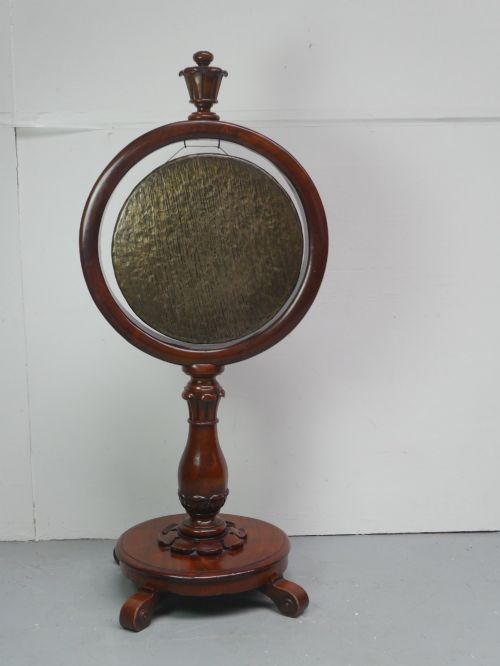


Brass Table Dinner Gong
A brass table dinner gong summons the household with a resonant note, combining utility and decorative flair from earlier centuries.
Brass Table Dinner Gong
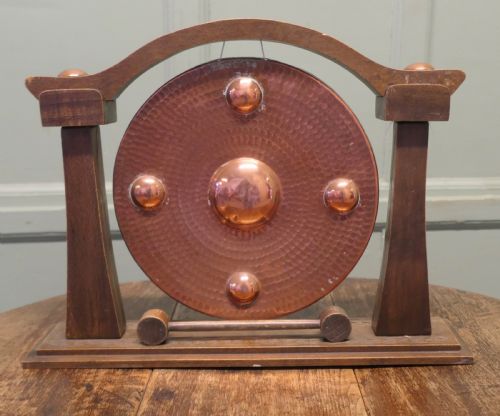
These pieces emerge across the Victorian and Edwardian eras, spanning the nineteenth and early twentieth centuries. Alongside straightforward brass discs, variations incorporate exotic influences such as Chinese export designs, Japanese bronze work, and Arts and Crafts copper details.
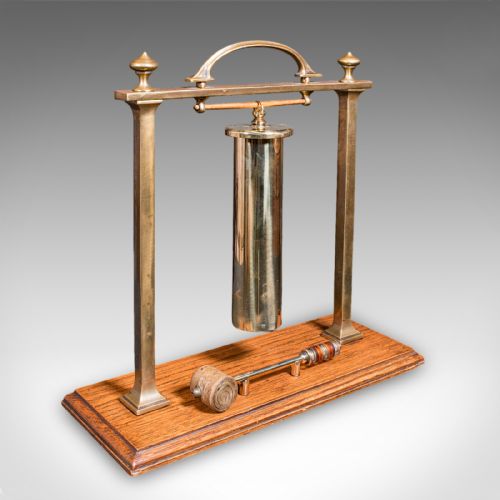
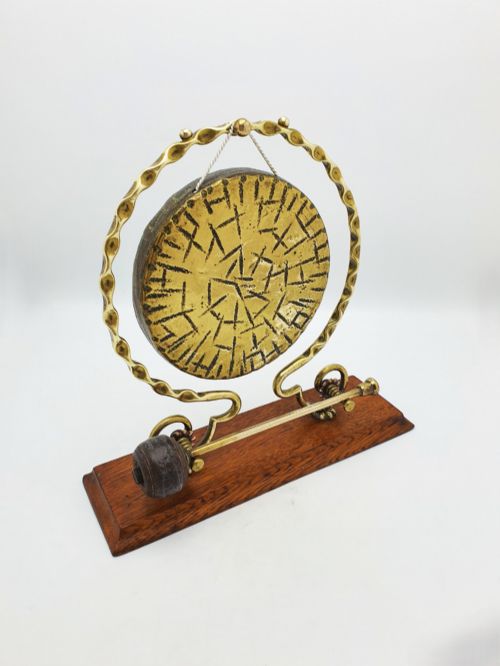
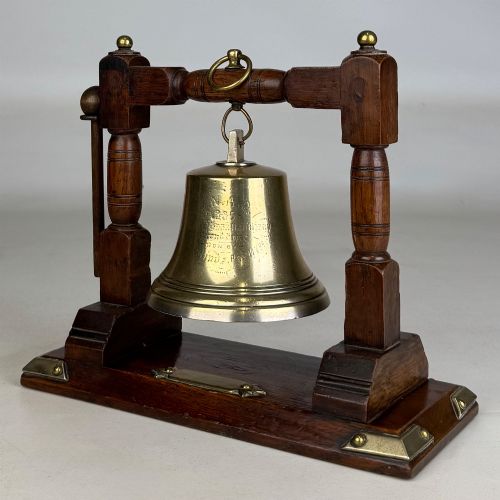
Support structures vary considerably in form, ranging from simple hardwood stands to carved frames incorporating cattle horn, bamboo, or walnut. Many examples include a matching handheld striker resting neatly alongside the frame.
Materials and construction
The primary metal components rely on cast brass, bronze, or copper, shaped to produce a clear, sustained ring when struck. Metalwork is frequently paired with dense timbers like oak and walnut, or organic materials such as cattle horn and bamboo for the suspension stands.
Joinery on the wooden frames utilises traditional woodworking techniques, often featuring carved ornamentation or turned supports. Cord or metal loops suspend the gong itself, allowing the metal to vibrate freely without dampening the tone.
Some Victorian households relied on cattle horn stands to hold their dinner gong, proving that teatime once had a distinctly wild side.
Distinctions in quality
Quality in a brass table dinner gong rests largely on the purity and thickness of the metal disc, which dictates the depth and longevity of the tone. Superior examples deliver a rich, resonant chime that lingers, rather than a dull, flat thud.
The craftsmanship of the mounting frame equally separates standard pieces from finer works. Finely carved oak or walnut stands, intricate metal detailing, and robust original strikers indicate a higher standard of manufacture.
The Brass Table Dinner Gong Glossary
- Brass
- A copper and zinc alloy prized for its bright appearance and acoustic properties. It forms the resonant body of most table gongs.
- Striker
- The small mallet or hammer used to hit the gong. Original matched strikers enhance the completeness of the piece.
- Aesthetic Movement
- A late nineteenth-century design style emphasising visual beauty over narrative content. Pieces from this movement often feature refined, stylised motifs.
- Chinoiserie
- European artistic styles reflecting Chinese motifs and techniques. These gongs often incorporate carved wooden dragon stands or oriental symbols.
Brass Table Dinner Gong: Frequently Asked Questions
How do you clean a brass gong?
Dust the metal gently with a soft cloth to maintain the surface without removing natural age. Avoid harsh chemical polishes that strip away historic patination.
Wooden stands require only a wipe with a dry cloth or occasional treatment with suitable wax to nourish the timber.
Were these used in every home?
These gongs typically belonged to larger country houses and affluent suburban residences where meals were announced formally. They stood in halls or dining rooms to gather family and guests.
Today, they serve as striking decorative objects that retain their original acoustic function.
How do I date an oak and brass gong?
Dating relies on the style of the woodwork and the manufacturing techniques visible on the frame. Edwardian and Victorian pieces often display distinct carving patterns and hardware conventions.
Comparing the turned details and timber finish with documented examples helps narrow the period of origin.
What makes the horn gongs different?
Certain Victorian and Edwardian examples utilise cattle horn alongside oak and brass for the support structure. This reflected a taste for exotic and natural materials in domestic interiors.
These pieces combine robust organic textures with polished metal to create a distinct visual contrast.