

Antique Blue Transferware
When seeking antique blue transferware, buyers encounter the cobalt-printed earthenware and porcelain of past centuries that bring pictorial scenes to domestic interiors.
Antique Blue Transferware
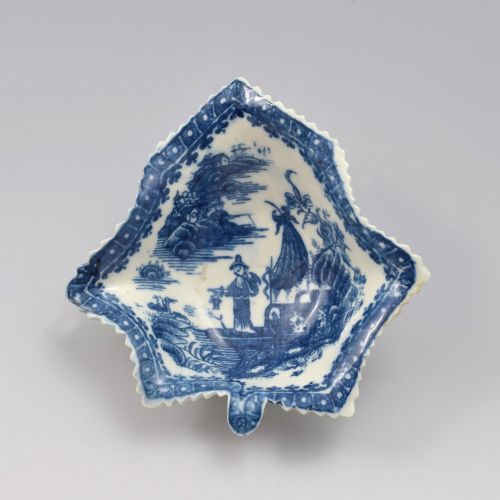
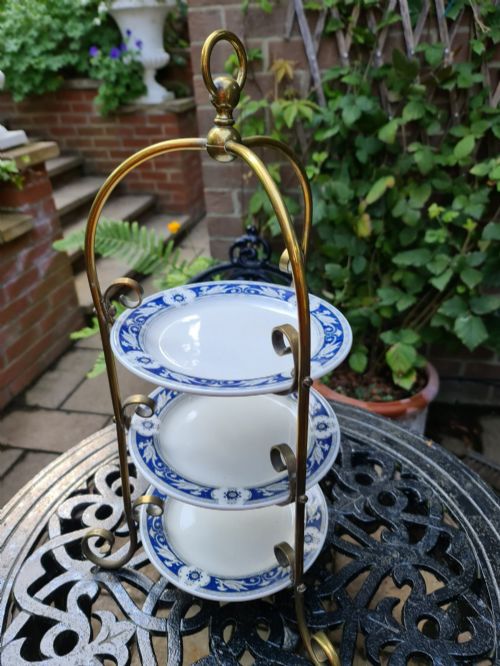
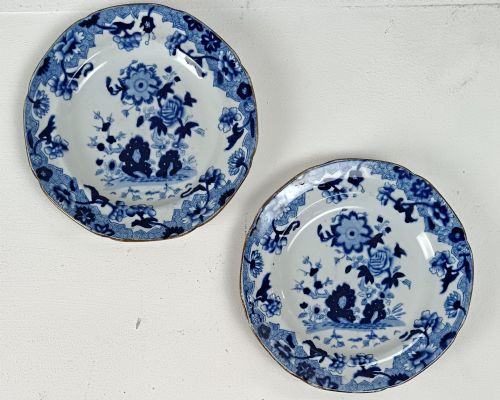
Antique blue transferware comprises ceramic tableware and decorative pieces decorated with printed cobalt designs transferred from engraved copper plates. Collectors find platters, tureens, plates, and bowls spanning the eighteenth and nineteenth centuries.
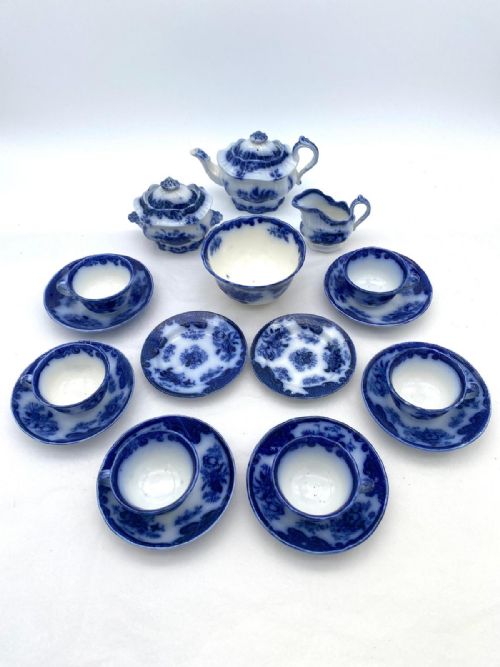
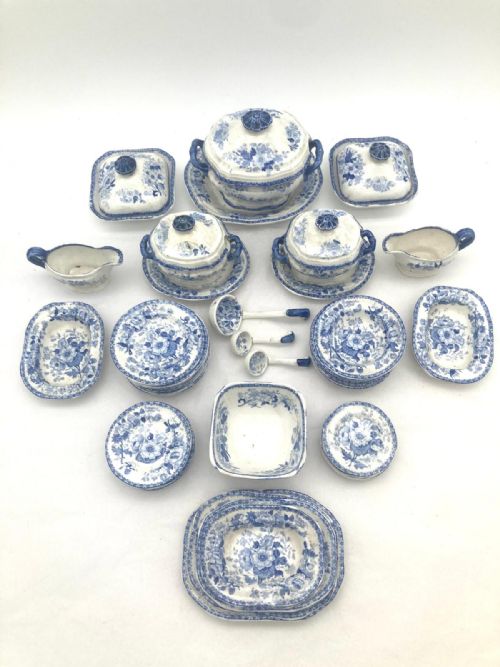
The objects derive largely from the Georgian and Victorian periods, produced by Staffordshire potteries and English porcelain works. Pieces range from large meat platters to child tea services and footbaths.
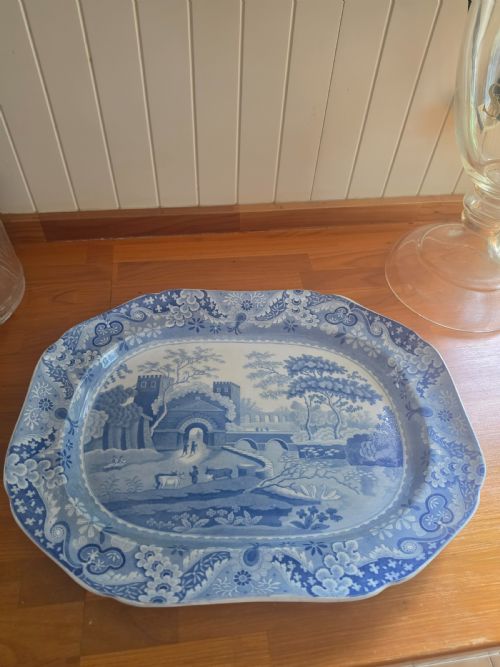
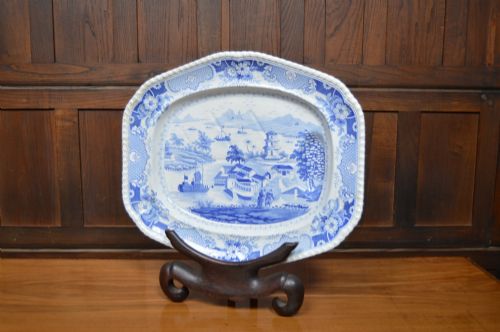
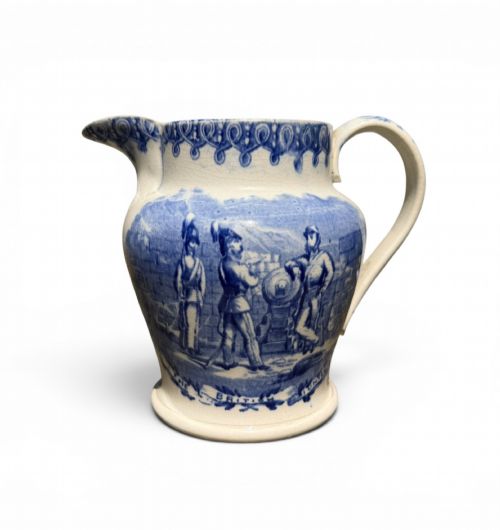
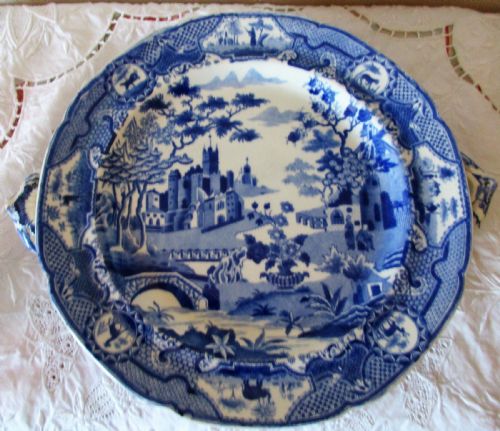
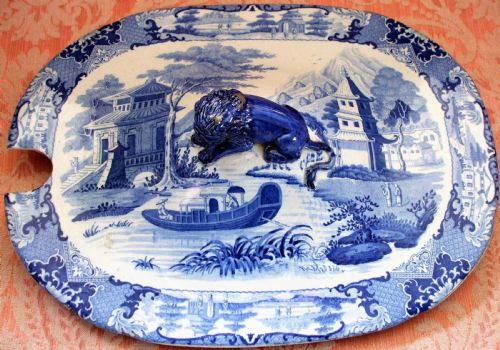
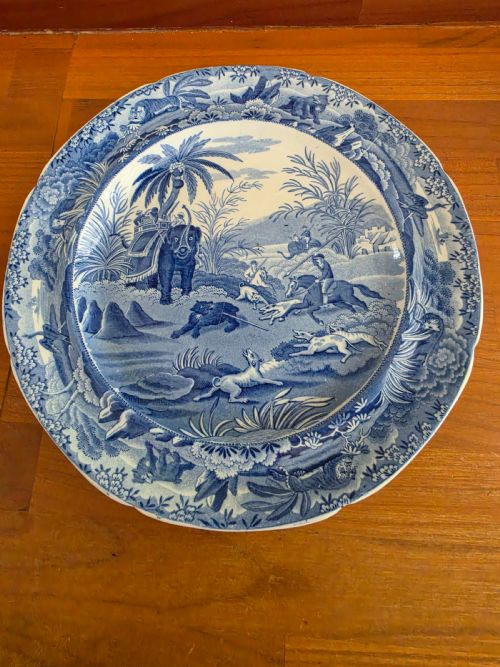
The visual subjects cover classical landscapes, oriental scenes like Canton and Long Bridge, and narrative subjects such as the Death of the Bear or the British Volunteers.
Materials and Transfer Printing
Potters formed bodies from earthenware, ironstone, pearlware, and soft-paste porcelain, covering them with transparent glaze to protect the cobalt print. Pigment mixed with oil was etched onto copper plates, transferred to tissue paper, and pressed onto the unglazed or biscuit ceramic.
Following the transfer of the design, workers fired the pieces in kilns to fix the blue pigment beneath the glaze, producing the characteristic durable finish. Certain wares received supplementary enamel painting or gilt highlights after the primary firing.
Early nineteenth-century potters printed dramatic historical scenes on meat plates, including the Death of the Bear.
Appraising Quality in Transferware
Quality depends upon the clarity of the transfer print, where sharp lines and deep cobalt tones indicate superior engraving and firing. Smudged prints or uneven glaze pooling reveal less careful execution in the pottery.
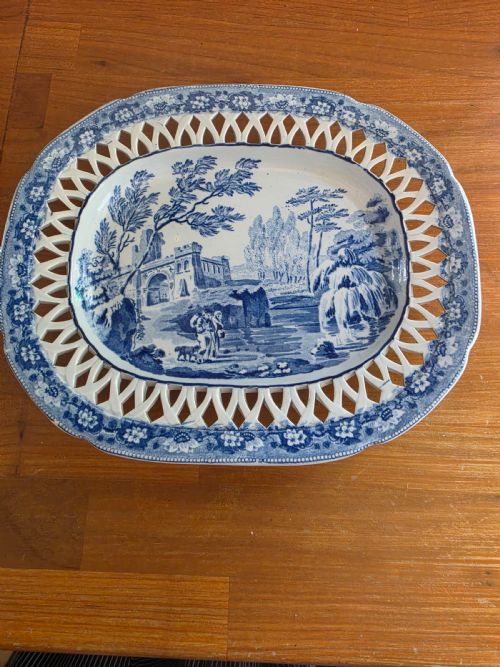
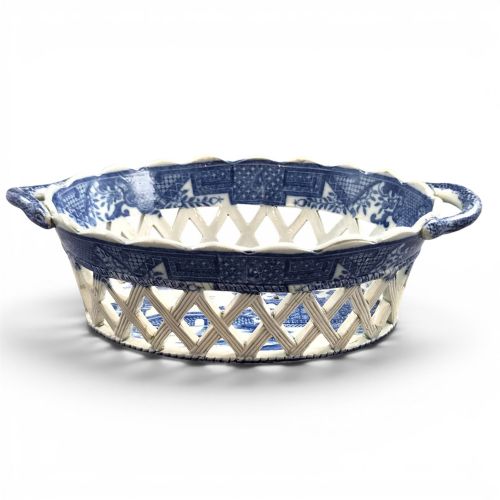
The complexity of the ceramic form, such as pierced reticulation on chestnut baskets or moulded handles on vegetable tureens, distinguishes standard domestic output from more ambitious workshop production.
Caughley Porcelain·Minton·Spode·Davenport·John Rogers and Son·J and R Clews·J and R Riley·Stubbs·Mintons·Doulton Burslem
The Antique Blue Transferware Glossary
- Transferware
- Pottery decorated by applying a printed paper design from a copper plate onto the ceramic surface before glazing.
- Pearlware
- A refined earthenware developed in the late eighteenth century featuring a subtle bluish glaze that sat over a whitish body.
- Ironstone
- A dense, durable ceramic patented in the nineteenth century to withstand heavy domestic use while mimicking porcelain.
- Flow Blue
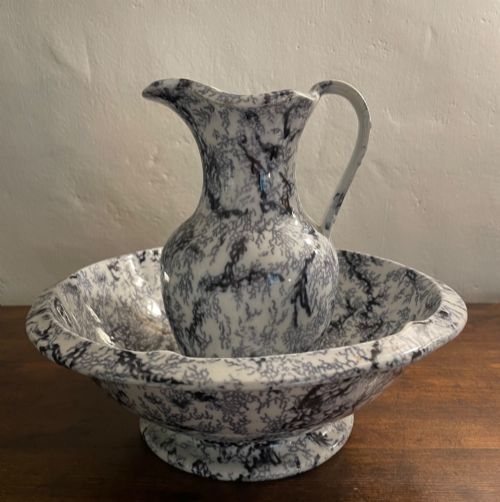
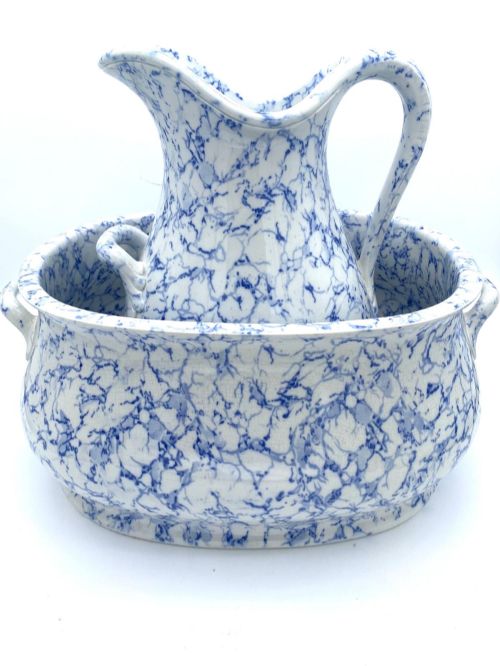
- A nineteenth-century style where cobalt pigment intentionally blurred into the surrounding white glaze during the kiln firing.
Antique Blue Transferware: Frequently Asked Questions
How do I date blue transferware?
Dating relies on ceramic body composition, pottery marks impressed into the base, and the style of the printed border. Pearlware bodies and specific scenic patterns often point to the Georgian era, while heavy ironstone and flow blue finishes typically indicate Victorian production.
Makers' marks evolved from simple printed names to complex registration diamonds and factory ciphers after the mid-nineteenth century. Comparing the backstamp against documented pottery histories provides precise decade attribution.
Can I use antique transferware daily?
Most antique earthenware and ironstone withstand gentle hand washing, though fragile soft-paste porcelain and pieces with gilt highlights require careful handling. Thermal shock from hot liquids can stress centuries-old ceramic bodies.
Displaying platters on plate rails or using footed bowls for dry items protects the historic glaze from modern cutlery scratching. Hand washing preserves both the cobalt decoration and the underlying earthenware structure.
What caused flow blue to blur?
Potters added lime or ammonia chloride flux inside the kiln during firing to vaporize the cobalt pigment. This vapour caused the blue design to bleed intentionally into the surrounding white glaze.
Victorian makers embraced this chemical reaction to achieve a soft, atmospheric aesthetic reminiscent of oriental porcelain. The degree of blur varied by kiln placement and temperature control.
How do pearlware and ironstone differ?
Pearlware utilises a softer earthenware body perfected in the late eighteenth century, featuring a pale bluish glaze designed to imitate Chinese export porcelain. Ironstone, patented later in the nineteenth century, employs a heavier, vitrified composite body built for extreme durability.
Ironstone pieces generally feel heavier in the hand and resist crazing better than earlier pearlware vessels. Both wares accepted cobalt transfer printing successfully across different manufacturing decades.