

Antique Black Urn
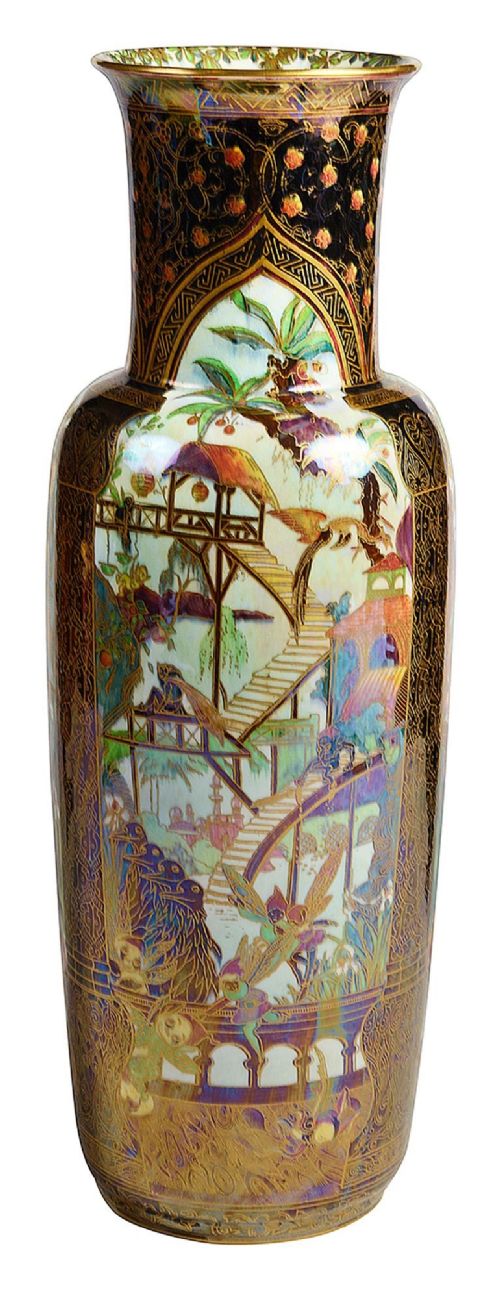
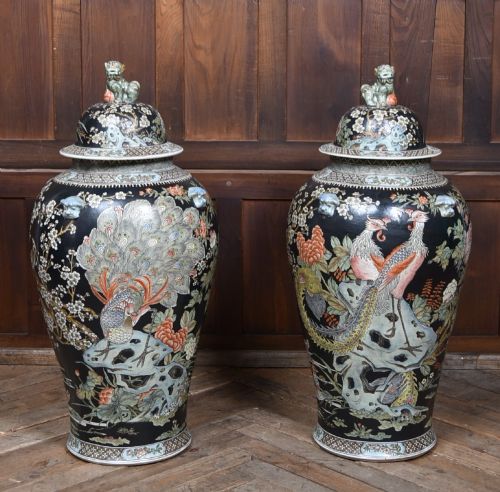
An antique black urn brings classical weight and presence to a room, drawing the eye with dark stone and patinated bronze.
Antique Black Urn
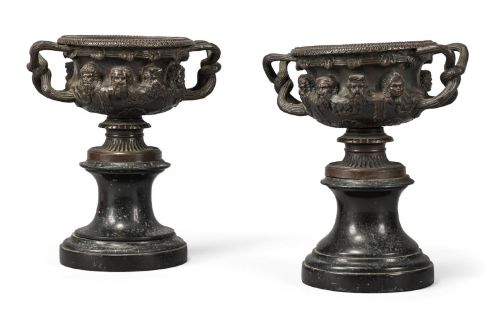
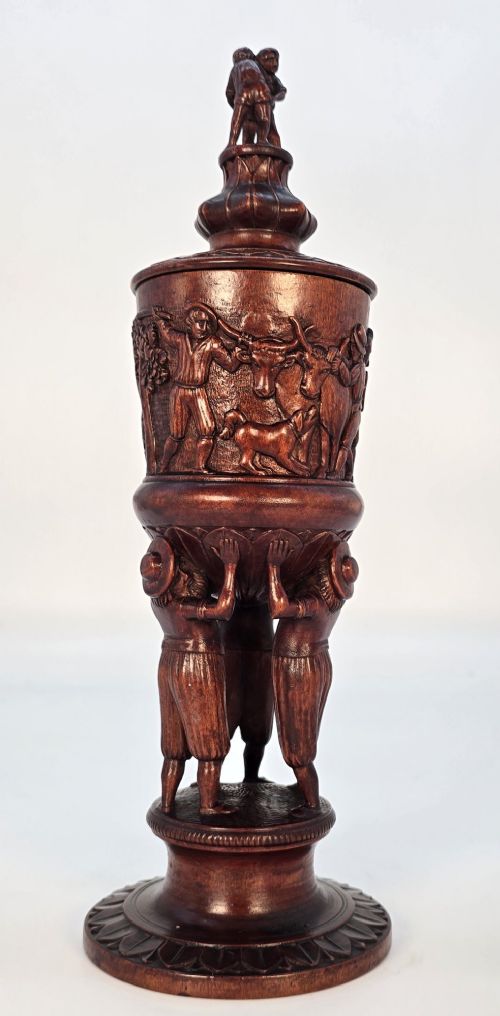
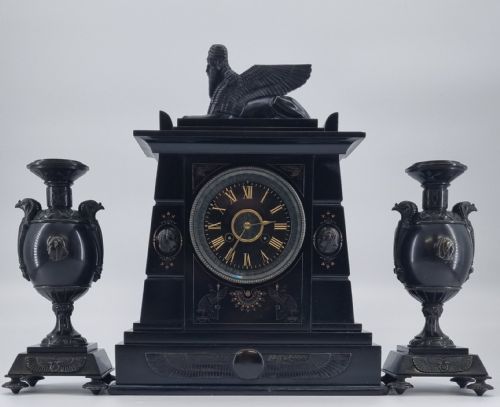
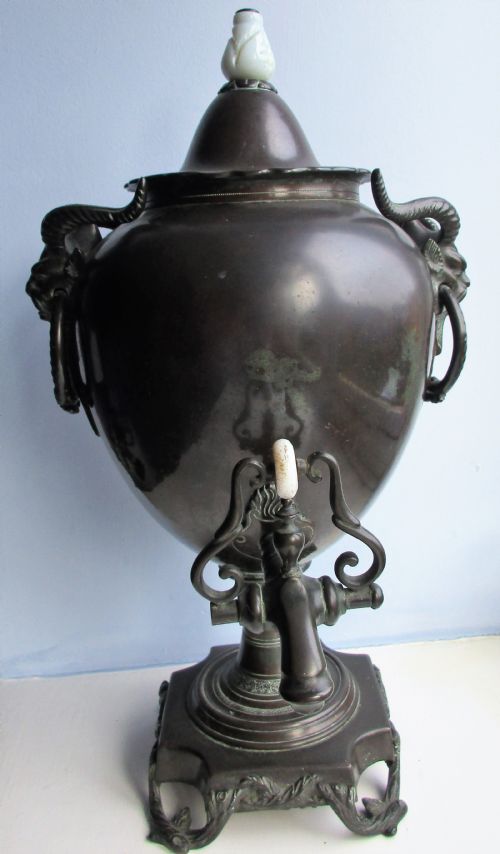
An antique black urn encompasses decorative vessels, mantel clock garnitures, and grand tour souvenirs shaped from dark marble, patinated bronze, and ebonised metals. These pieces originate predominantly in the nineteenth century, reflecting Victorian, Neoclassical, and Egyptian Revival tastes.
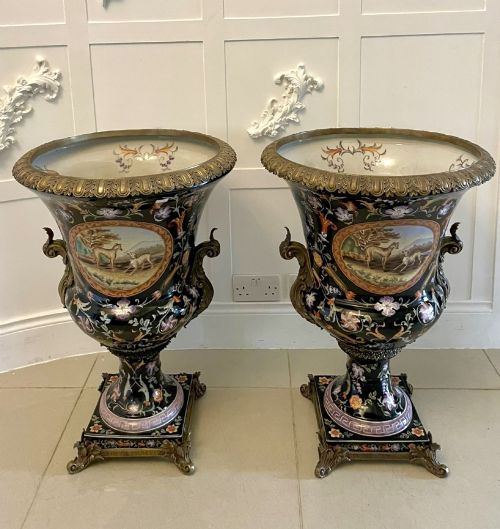
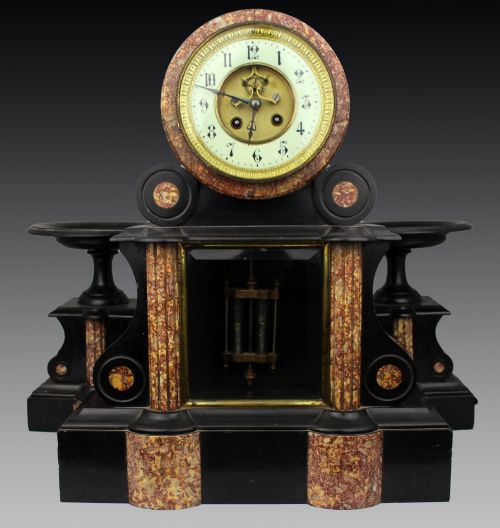
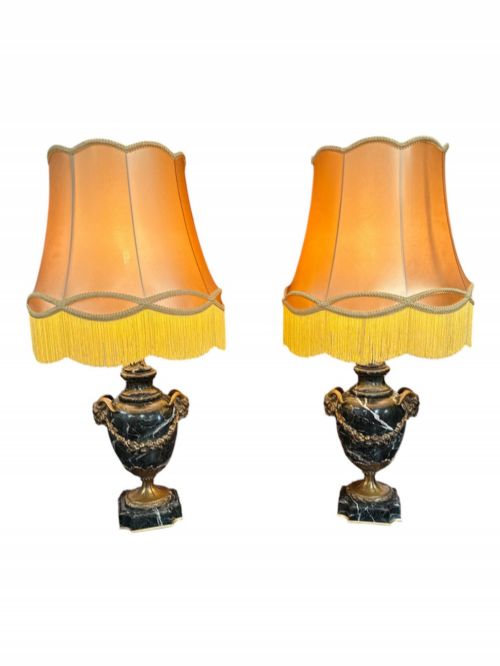
The version most commonly met on this page is the nineteenth-century French or Italian decorative urn, frequently mounted on a square black marble base or paired as garnitures alongside mantle clocks.
Materials and construction methods
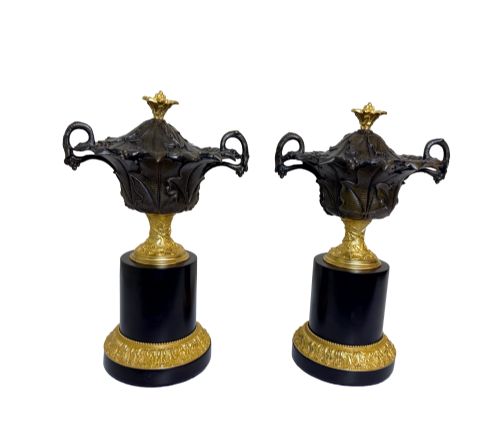
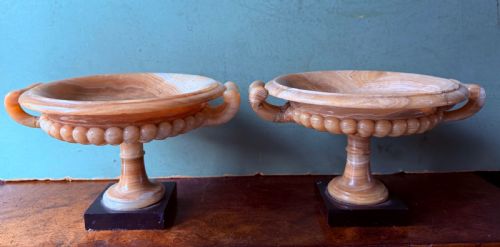
The construction of these pieces relies on heavy natural stones such as black marble, alabastro egiziano, and Ashford marble, turned on lathes or carved by hand to replicate classical forms. Artisans combined these dark stone bodies with cast bronze, ormolu, brass mounts, and occasional gold leaf details.
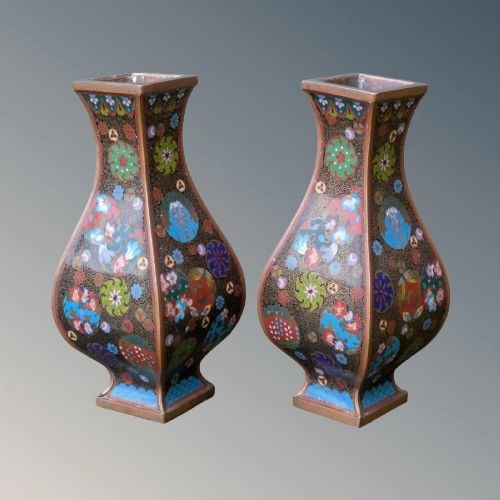
Surface finish is achieved through patination of metals, high polishing of stone, and occasionally hand-painted ceramic or enamel elements set into the dark ground.
Listings span the nineteenth century, featuring materials such as marble, brass, and bronze across Neoclassical and Victorian styles.
Distinctions in craftsmanship
Quality separates in the crispness of the bronze casting and the depth of finish in the black marble or patinated surface. Finer examples display meticulous hand-chasing on metal mounts and precision in the turning of the stone body.
Proportion and architectural balance dictate the upper tier of the range, where bases, handles, and pedestals form a cohesive classical silhouette rather than a generic assembly of parts.
Japy Frères·Daisy Makeig jones·Liberty of London·Benetfink And Co·Selim Bright·Gallilleo Chini·Rozenburg·Sacre
The Antique Black Urn Glossary
- Garniture
- A set of matching decorative objects, typically consisting of a central clock flanked by two urns or vases designed for a mantelpiece.
- Grand Tour
- A nineteenth-century tradition where wealthy travellers collected classical souvenirs, including miniature marble and bronze urns, across Italy and France.
- Campana Urn
- A bell-shaped vessel with flared rims and looped handles, originating in ancient Roman pottery and revived in Neoclassical design.
- Ormolu
- Gilded bronze mounts and decorative elements applied to stone and wooden furniture or objects, common in French nineteenth-century decorative arts.
Antique Black Urn: Frequently Asked Questions
What were antique black urns used for?
These pieces served primarily as decorative interior ornaments, often displayed on mantelpieces, pedestals, or console tables to project classical erudition.
Some functioned as clock garnitures or plant stands, while smaller grand tour examples were collected as mementos of foreign travel.
How do I style a black urn in a modern room?
Place a single large urn on a wooden sideboard or entryway table to create a strong focal point against neutral walls.
Pare down surrounding objects so the dark marble or patinated bronze texture remains the primary visual anchor.
How can I tell the difference between French and Italian pieces?
French pieces from the nineteenth century frequently incorporate elaborate ormolu mounts, gilded details, and precise architectural clock garnitures.
Italian pieces from the same era lean towards carved stone souvenirs like alabastro egiziano or Ashford marble referencing classical antiquity.
Are these urns heavy?
Most examples possess substantial weight due to their solid marble, bronze, and cast iron construction.
Care must be taken when placing them on glass or delicate wooden surfaces to avoid scratching or structural strain.