




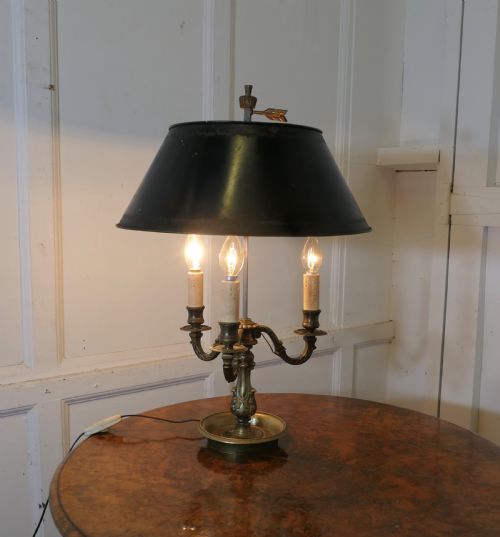


French Empire Toleware
French Empire toleware combines painted sheet metal with brass, gilt metal, and bronze to create functional lighting and trays rooted in neoclassical design.
French Empire Toleware
When you search for french empire toleware, you enter a domain of painted metal objects designed for domestic utility and classical display. These pieces span the nineteenth century through the early twentieth century, drawing directly upon French Empire and Neoclassical vocabularies.
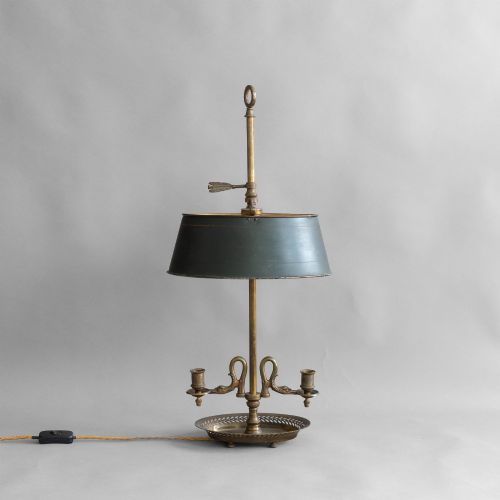
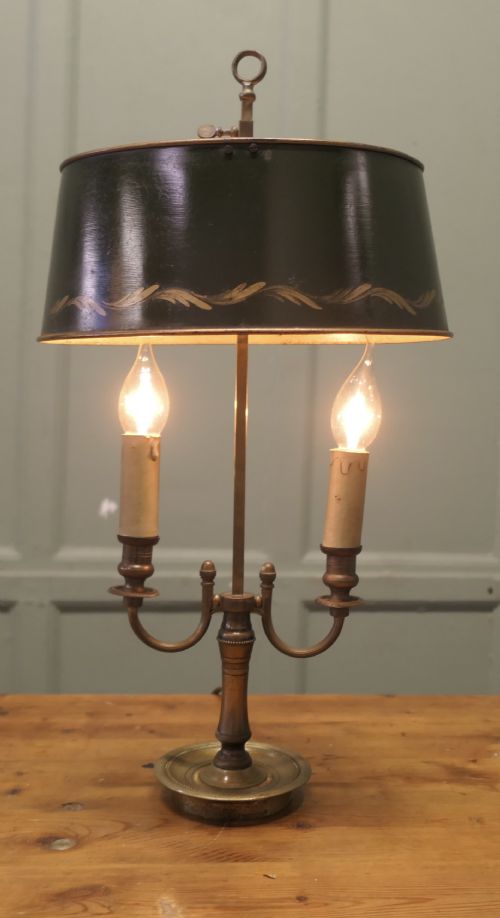
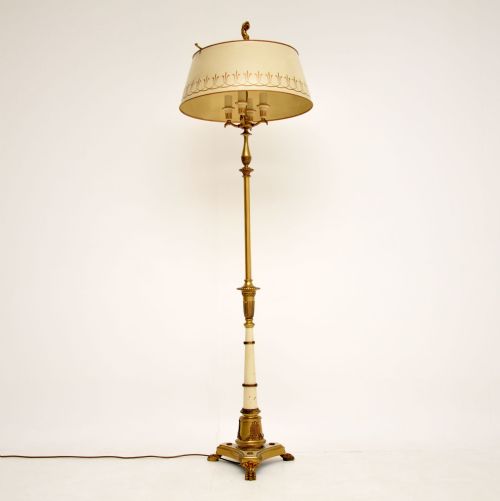
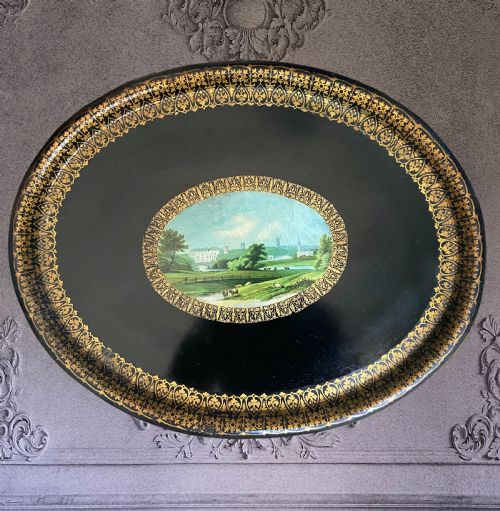
The objects appearing most frequently on this page take the form of bouillotte desk lamps, table lamps, floor lamps, and wall lights alongside decorative urns and oval trays. Green and black dominate the palette, paired with brass and gilt components to establish the characteristic aesthetic.
Makers and manufacturers utilised traditional forms such as twin and triple arm desk lamps alongside wall sconces and girandoles. The resulting inventory reflects a sustained demand for functional lighting that retains a formal architectural presence within an interior.
How french empire toleware was made
The construction of these items relies upon sheet iron or sheet metal shaped into bodies, shades, and trays, then painted in rich tones of green, black, or other colours. Artisans paired this painted sheet metal with cast and spun brass, gilt metal, and bronze elements to provide structural support and decorative contrast.
Surface ornamentation frequently incorporates gilding applied to metal or paint, alongside silver plating in specific lighting examples. The integration of adjustable mechanisms on desk lamps demonstrates the combination of decorative finish with practical utility.
Card players needed adjustable shades to keep the glare out of their eyes, which is why your desk lamp moves up and down like a polite metal guillotine.
What varies in quality in french empire toleware
Quality reveals itself in the crispness of cast brass mounts and the depth of the original painted and gilt surfaces on the sheet iron. Superior examples maintain intact surface finishes where the relationship between the dark tole shade and the metallic fittings feels entirely resolved.
The sophistication of the neoclassical proportions and the complexity of the lamp configurations, such as triple arm bouillotte designs versus single lights, distinguish finer objects. Original wiring setups and robust adjustable mechanisms further elevate the standing of surviving pieces.
The French Empire Toleware Glossary
- Toleware
- Painted or lacquered sheet metalware, typically iron, adapted for domestic objects like trays, lamps, and urns. The term derives from the French phrase tole peinte, meaning painted sheet metal.
- Bouillotte
- A type of adjustable desk lamp featuring a central shaft, candle or bulb arms, and a movable painted metal shade that travels up and down the stem. The design shares its name with an eighteenth century card game.
- Girandole
- An ornamental branched wall light or candelabrum designed to reflect light from polished metal or mirrored backs. These fixtures often incorporate gilt toleware and multiple candle arms.
- Neoclassical
- A style spanning the eighteenth and nineteenth centuries that draws inspiration from the classical art and architecture of ancient Greece and Rome. This aesthetic governs the clean lines and symmetrical proportions found across these objects.
- Gilt Metal
- Metal that has been covered with a thin layer of gold leaf, paint, or powder to give the appearance of solid gold. It provides sharp contrast against the dark green and black painted toleware bodies.
French Empire Toleware: Frequently Asked Questions
What is a bouillotte lamp?
A bouillotte lamp is an adjustable desk or table lamp featuring a central column, multiple light arms, and a characteristic painted metal shade. The shade slides up and down the main stem to control the direction and intensity of the light.
Originally designed for card players of the eighteenth century, these lamps combine practical task lighting with formal decorative presence. The combination of brass fittings and painted toleware creates a distinctive silhouette.
How do I date these pieces?
Dating relies upon stylistic markers, material construction, and manufacturing techniques recorded across the nineteenth and early twentieth centuries. Pieces span the 1850s Napoleon III period through to the 1930s, showing shifts in casting precision and paint application.
Earlier nineteenth century examples often display heavier bronze or brass components and hand-painted details. Later twentieth century interpretations retain the classical French Empire vocabulary while adopting modern electrical adaptations.
Where were these items used?
These pieces served primarily in formal domestic interiors, functioning as desk lamps, wall lights, and decorative display items. Bouillotte lamps illuminated writing tables and reading desks, while girandoles and wall sconces lit hallways and reception rooms.
Trays and decorative urns occupied prominent surfaces such as sideboards and mantelpieces. Their durable metal construction allowed them to function reliably as everyday furnishings while maintaining a decorative neoclassical appearance.
Are the shades original?
Assessing shade originality involves examining the wear patterns, paint chemistry, and structural fit relative to the metal base. Many surviving lamps retain their period painted sheet iron shades, which often exhibit characteristic craquelure and patination.
Replacement shades do occur due to the fragile nature of painted metal over decades of use. Matching the green or black tole finish and brass gallery details helps determine the historical integrity of the piece.