
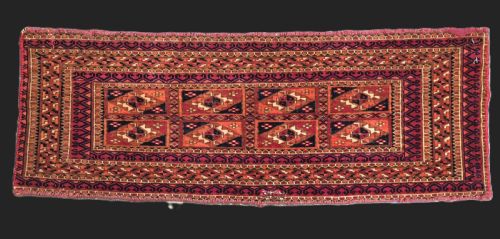
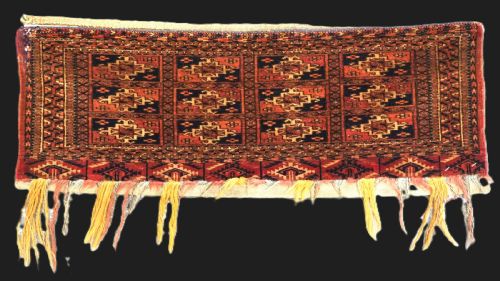


19th Century Tekke Rug
These 19th century tekke rug examples bring tribal Central Asian weaving traditions into domestic interiors through dense wool pile and geometric guls.
19th Century Tekke Rug
A 19th century tekke rug represents the nomadic and tribal textile heritage of Turkmen weavers in Central Asia. Buyers encounter various formats on this page, ranging from small dowry rugs and square scatter formats to larger main carpets and functional tent bags.
Pieces span the decades of the nineteenth century, with many examples originating from the central and final quarters of that era. Tribal subsets including Saryk attributions also appear among the Turkmen weaving tradition.
How They Were Made
Weavers constructed these textiles primarily using wool pile knotted onto cotton foundations, utilising natural dyes to achieve deep red and ivory colour palettes. The structural integrity relies on careful knotting techniques that produce fine weaves on smaller torbas and larger carpets alike.
Individual pieces incorporate flatwoven details, hanging loops, and plain weave backs on functional bag faces. Artisans arranged repeating gull motifs, such as ovoid, aina, and chuval designs, across the field with precise drawing.
The inventory spans dates from the early nineteenth century through the turn of the twentieth century, representing Central Asian nomadic traditions.
What Varies in Quality
Quality depends upon the density of the weave and the precision of the drawing within the field. Tighter knotting and finer wool distinguish the most accomplished dowry rugs and bag faces from standard examples.
Condition and completeness alter the character of individual pieces, as complete items with original backs and hanging loops retain their functional integrity. The vibrancy of natural dyes and the crispness of the geometric gul arrangement further separate ordinary examples from exceptional ones.
The 19th Century Tekke Rug Glossary
- Gul
- A repeating primary medallion motif characteristic of Turkmen carpets and tribal weaving. These octagonal or gabled forms identify specific tribal groups and design traditions.
- Torba
- A small storage bag produced by nomadic weavers for domestic use inside a tent. They frequently appear on the market as decorative faces or complete with original backs.
- Chuval
- A large tent bag used for storing household goods during migration. Examples often feature rows of large guls across the face.
- Ensi
- A tribal rug designed to hang as a door tent flap, featuring a characteristic cross panel layout dividing the field. They served a threshold function in nomadic dwellings.
- Mafrash
- A rectangular storage bale or container face produced in pairs by tribal weavers. These items display compact geometric designs adapted to smaller formats.
19th Century Tekke Rug: Frequently Asked Questions
What is a tekke rug?
A tekke rug is a hand-knotted textile made by the Tekke Turkmen tribe of Central Asia during the nineteenth century. These pieces are identified by their dense wool pile, intricate natural dye palettes, and repeating octagonal medallions known as guls.
They encompass various formats including small dowry pieces, square scatter rugs, and large carpets. Collectors value them for their disciplined geometric drawing and rich cultural history.
How were torbas and chuvals used?
Torbas and chuvals were functional storage bags utilised within nomadic tents for holding household possessions and bedding. Chuvals were larger bags for bulk storage, while torbas served smaller organisational roles around the dwelling.
Over time, many of these bag faces were separated from their plain weave backs or preserved intact. Today they function primarily as decorative wall hangings or small floor textiles.
How do I identify a dowry rug?
Dowry rugs are typically smaller in size and exhibit exceptionally fine weave and soft wool. They were produced by skilled weavers as part of a bride's traditional trousseau.
These pieces often feature scarce or unusual gul designs and careful attention to colour and detail. Their refined construction distinguishes them from utilitarian tent bags and main carpets.
How do I care for an antique rug?
Care for an antique wool textile involves regular gentle vacuuming without beater bars to remove dust from the pile. Keeping the rug out of direct sunlight prevents natural dyes from fading over time.
Allowing the wool to breathe and addressing spills promptly with professional cleaning ensures the textile remains stable. Placing a suitable underlay beneath the rug reduces friction and wear during daily use.