
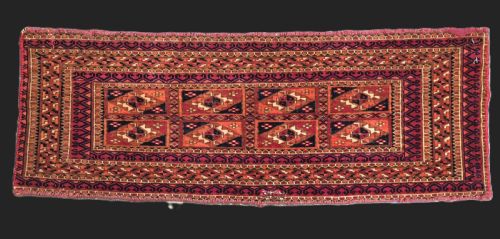


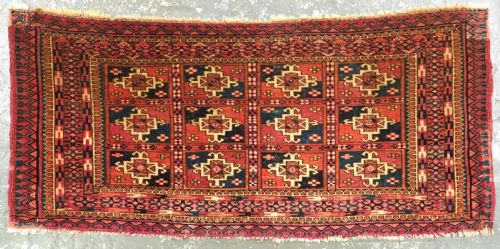

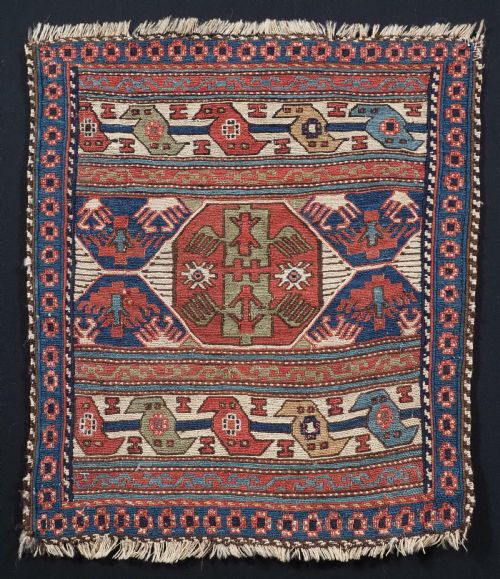
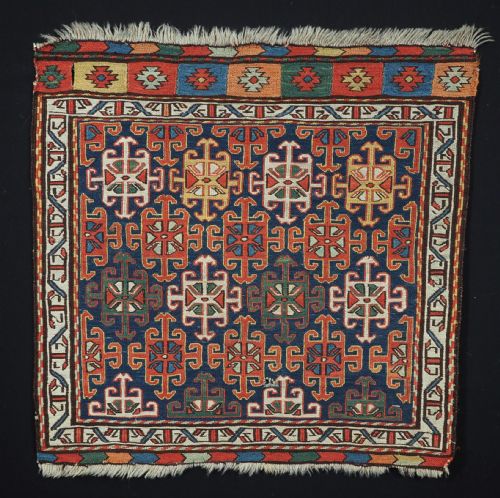
Antique Mafrash Face
An antique mafrash face offers a bold tribal textile fragment, bringing rich nomadic patterns and vegetable dyes into modern interiors.
Antique Mafrash Face
Buyers encounter these pieces in various structural formats, ranging from complete bag faces to flattened panels and fragments. Common design motifs include the aina gul, banded flatweaves, tree patterns, and stylized bird or dragon figures executed in wool.
The objects function primarily as textile art today, mounted on walls or displayed on surfaces rather than serving their original storage purpose inside tents and transport animals.
How They Were Made
Weavers constructed these textiles using hand-spun wool for the primary structure, often combined with linen foundations or supporting elements. The structures rely on techniques such as flatweave, soumak brocading, and pile knotting to build dense, durable surfaces.
Colour comes from natural vegetable dyes applied to the wool, producing deep, rich tones that mellow gracefully over time. These organic colourants interact with the hand-spun fibres to create subtle tonal variations across the expanse of the panel.
The listings show pieces originating from nineteenth-century Turkmen, Shahsavan, and Caucasian tribal workshops utilising hand-spun wool and natural vegetable dyes.
What Varies in Quality
The distinction between ordinary and exceptional examples rests upon the crispness of the tribal design and the complexity of the motif execution. Pieces featuring intricate iconography like birds, dragons, or well-defined guls command greater attention from collectors.
Material integrity and dye richness dictate the visual impact of each textile. Examples retaining vibrant vegetable dyes and tight, even hand-spun wool structures stand apart from faded or structurally compromised fragments.
The Antique Mafrash Face Glossary
- Mafrash
- A large nomadic storage bag used by tribes for bedding and household goods during migration. The face represents the decorative front panel removed from the box-like structure.
- Soumak
- A flatweave technique utilising a wrapping stitch over warp threads to produce a dense, textured surface resembling embroidery. This method allows weavers to create crisp geometric and figurative motifs.
- Torba
- A small storage bag produced by Turkmen and other Central Asian tribes, often sharing design vocabulary with mafrash panels. These pieces hang inside tribal tents for domestic storage.
- Gul
- A medallion motif repeated across Turkmen carpets and bag faces, often identifying a specific tribe or clan. Each design variation carries traditional symbolic meaning.
- Flatweave
- A textile constructed without pile by interlacing warp and weft threads directly on a loom. Mafrash faces often employ this technique alongside brocade work.
Antique Mafrash Face: Frequently Asked Questions
What is a mafrash face?
A mafrash face is the decorated front panel of a nomadic storage chest used by tribes in Central Asia and the Caucasus.
These panels were cut from larger utilitarian containers and preserved as decorative textile art due to their intricate weaving and symbolic patterns.
How were mafrash bags used?
Nomadic families packed bedding, carpets, and heavy clothing inside large rectangular mafrash chests during seasonal migrations.
Pooled in pairs on pack animals, these bags protected household goods while displaying the wealth and tribal identity of the weaver.
How do I hang a textile?
Mounting a flat textile requires gentle support that distributes weight evenly across the entire upper edge.
Conservation mounting using Velcro attached to a fabric sleeve or professional framing behind UV-filtered glass protects the wool from tension damage.
How are tribal regions identified?
Specific motifs, knotting structures, and colour palettes point directly to the producing tribe, such as Yomut, Tekke, or Shahsavan.
Comparing border designs and secondary ornaments against documented tribal corpuses helps pinpoint the geographic origin and approximate period.