

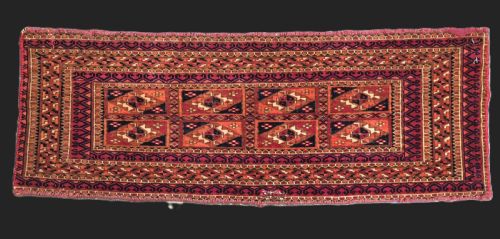
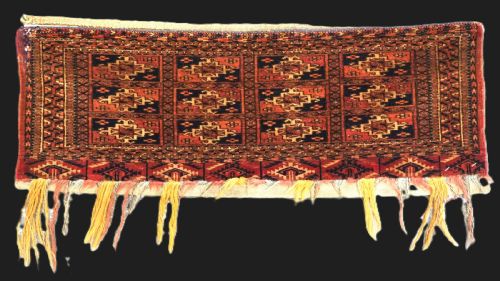


Nomadic Turkmen Torba
When you search for nomadic turkmen torba, you are hunting down tribal storage bags woven by Central Asian weavers across the nineteenth and early twentieth centuries.
Nomadic Turkmen Torba
A nomadic turkmen torba is a traditional tribal storage bag or bag face created by weaving communities such as the Tekke, Yomut, Ersari, and Saryk tribes. These pieces functioned as utility items within nomadic and village life across the Trans-Caspian steppes and Turkmenistan.
Most examples found on this page survive from the nineteenth and early twentieth centuries, spanning periods from the 1850s to the 1920s. Buyers will encounter both complete pieces retaining their plain weave backs and tassels, and individual bag faces.
The formats vary from small dowry pieces to larger storage containers featuring distinct tribal motifs like the gul, kedjebe, or kepse designs. They represent the rich textile heritage of Central Asian nomadic groups.
How they were made
Weavers constructed these textiles primarily using hand-spun wool and natural dyes, occasionally incorporating cotton or silk highlights for contrast. The wool provides a durable foundation suited to the demanding nomadic lifestyle.
Techniques range from pile-woven surfaces with dense knots to flatweaves and embroidered faces. Natural dye stuffs produced deep madder reds, ivory grounds, and secondary tones that developed rich patinas over time.
Some Yomut bag faces carry memories of swaying camel journeys across Central Asian steppes.
What varies in quality
The distinction between average and exceptional pieces rests upon the precision of the drawing and the fineness of the weave. Tightly packed knots and sharply rendered gul designs reflect the weaver's skill and the importance of the specific dowry commission.
Colour saturation and the vibrancy of the natural dyes significantly influence the visual impact of the textile. Examples exhibiting balanced proportions and complete original backs command greater appreciation among collectors.
The Nomadic Turkmen Torba Glossary
- Torba
- A traditional Turkmen tent-bag used for storage, typically wider than it is tall. These bags hung inside the yurt to hold household belongings and bedding.
- Gul
- A primary medallion or repeating motif used in Turkmen tribal carpets and torbas. Each design often identifies the specific tribe or sub-group that wove the piece.
- Mafrash
- A rectangular storage container or bag face used similarly to a torba for transporting and storing goods. They share construction techniques with other tribal bag faces.
- Kedjebe
- A camel-load wedding trapping design depicting the bridal canopy or carriage. It appears as a complex lattice motif on select torba faces.
- Flatweave
- A textile constructed without pile by interlacing warp and weft threads together. Examples include banded designs produced across various Turkmen tribes.
Nomadic Turkmen Torba: Frequently Asked Questions
What is a nomadic turkmen torba used for?
These textiles served as functional storage bags inside traditional Turkmen tents. Families utilised them to hold personal possessions, clothing, and household items.
They also formed an essential part of a bride's dowry. Wealth and tribal identity were often displayed through the quality and design of these hanging bags.
How do I identify different tribal torbas?
Tribal attribution relies heavily on the primary gul motifs, colour palettes, and structural characteristics. Tekke, Yomut, Ersari, and Saryk weavers each employed distinct geometric vocabularies.
Examining the weave density and secondary ornamentation helps clarify the specific Central Asian origin. Expert study of the border designs further separates one tribal group from another.
Are complete bags common compared to faces?
Complete torbas featuring their original plain weave backs and base structures are scarcer than isolated bag faces. Many pieces were separated from their backs over generations of use or trade.
Finding a complete example with intact tassels preserves the full historical utility of the object. Collectors often prize pieces that retain their original backing materials.
How should I care for an antique torba?
Protect antique tribal textiles from direct sunlight to prevent natural dye fading. Gentle vacuuming with a mesh screen attachment helps remove dust without disturbing the wool fibres.
Avoid hanging heavy pieces by a single point to distribute weight evenly across the structure. Professional textile conservators should handle any necessary cleaning or mounting.