




19th Century Kilim Rug
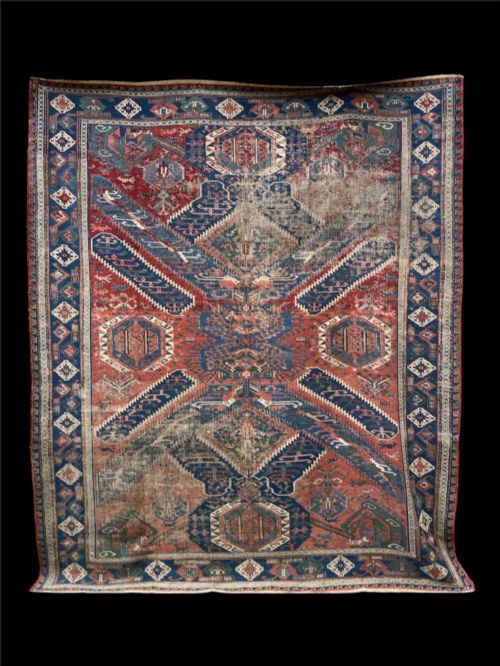
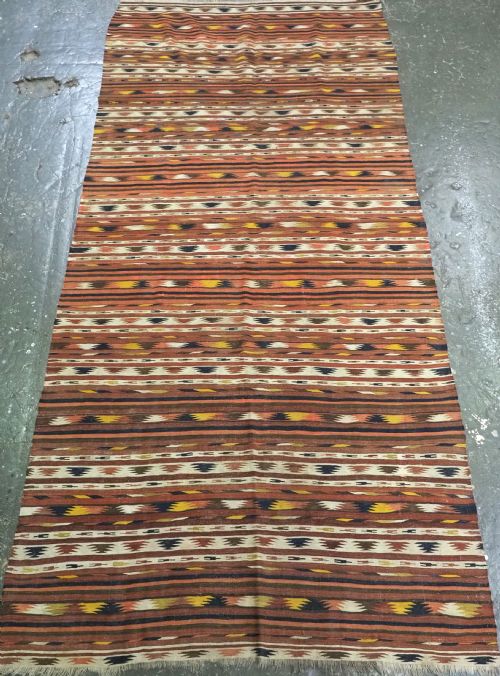
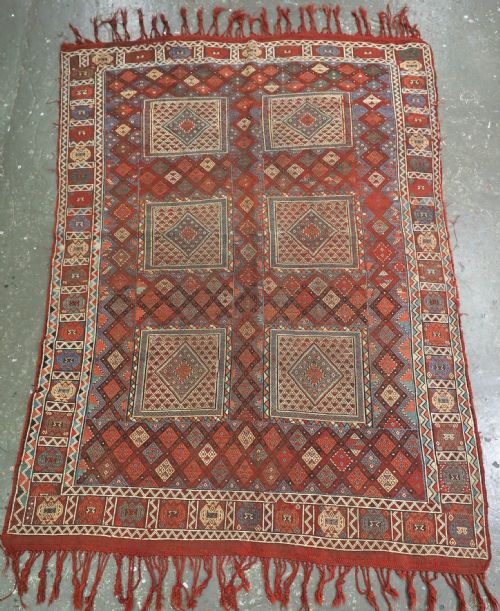
A 19th century kilim rug brings rich tribal geometry and saturated natural dyes into a room through flatwoven wool.
19th Century Kilim Rug
A 19th century kilim rug encompasses flatwoven floor coverings and textiles produced across the Caucasus, Anatolia, Persia, and Eastern Europe during the eighteen-hundreds. Buyers searching this phrase meet regional tribal weaves including Caucasian, Bessarabian, and Turkish pieces, alongside utilitarian storage bags and sofres.
The selections span distinct nomadic and village traditions, ranging from finely banded Shirvan examples to large floral Bessarabian compositions. These flatweaves lack pile, relying instead on interlocking weft techniques that create sharp geometric motifs and flat surfaces.
Materials and construction
Weavers constructed these textiles primarily using hand-spun wool and cotton foundations, occasionally incorporating camel hair and metal threads for specific structural or decorative effects. The application of natural dyes yielded deep, lasting hues that evolved gracefully over decades of use.
Techniques relied heavily on slit-tapestry weaving, where different coloured weft threads turn back at the boundary of each motif, producing tiny vertical slits. Master weavers also employed brocading and banded designs to add structural integrity and intricate surface detail.
Factors of quality
Quality rests upon the tightness of the weave and the precision of the geometric or floral layout. Finer, denser structures demand greater skill from the weaver and generally endure decades of handling with higher resilience.
The purity and richness of the natural dyes influence visual depth significantly. Examples displaying harmonious, complex palettes and intact original dimensions command greater appreciation among collectors.
The 19th Century Kilim Rug Glossary
- Kilim
- A flatwoven textile produced without a pile by interlocking coloured wefts over warp threads. These pieces served diverse domestic functions from floor coverings to wall hangings.
- Sumak
- A brocaded flatweaving technique where supplementary weft threads wrap around the warp threads before returning. This method creates a textured surface resembling a braid.
- Mafrash
- A large rectangular storage bag used by nomadic tribes for bedding and household goods during migration. They frequently separate into distinct panels or survive as complete structures.
- Sofre
- A flatwoven cloth traditionally utilised for dining or kneading dough among Persian tribal groups. They often display specific ritual or utilitarian layouts.
- Natural Dyes
- Colourants derived from plant, insect, and mineral sources prior to the widespread adoption of synthetic aniline dyes. They produce complex, mellow patinas over time.
19th Century Kilim Rug: Frequently Asked Questions
How do I clean a flatweave rug?
Gentle surface vacuuming without a beater bar removes loose dirt from the flatwoven structure effectively. Professional specialist cleaning remains necessary for deeper maintenance to protect natural wool fibres.
Water saturation and harsh chemical detergents risk altering the historic natural dyes permanently. Allowing proper ventilation prevents moisture accumulation within the dense weave.
Were these textiles used on floors?
Nomadic and village communities utilised flatweaves primarily as floor coverings, tent decorations, and insulating layers against cold earth. Their durable wool construction handled daily domestic foot traffic efficiently.
Smaller formats and bags served storage and transport functions rather than walking surfaces. Over generations, many survivors transitioned from utility to decorative display.
How can I tell regional styles apart?
Caucasian pieces tend to display crisp, angular geometry and striking primary medallions with banded borders. Anatolian and Turkish examples often feature bold tribal motifs, prayer niches, or large village formats.
Bessarabian and Ukrainian textiles diverge toward darker grounds and naturalistic floral sprays influenced by European traditions. Examining the palette and structural weave clarifies the geographic origin.
Can I place these rugs in bright rooms?
Natural dyes resist severe fading better than early synthetics, but prolonged direct sunlight still stresses historic textiles over years. Rotating the placement periodically balances exposure across the surface.
Filtering harsh light with window treatments preserves the saturated tones of the wool. Proper positioning ensures the textile remains vibrant without sustaining light damage.