

1920s Art Deco Table
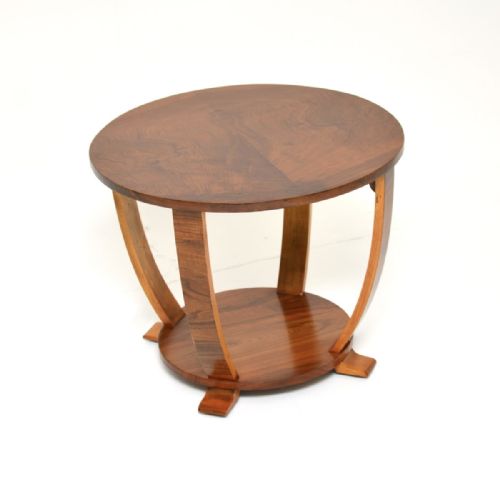
These 1920s art deco table items bring geometric character and striking veneer work to a room, offering functional surfaces defined by period craftsmanship.
Identifying these pieces
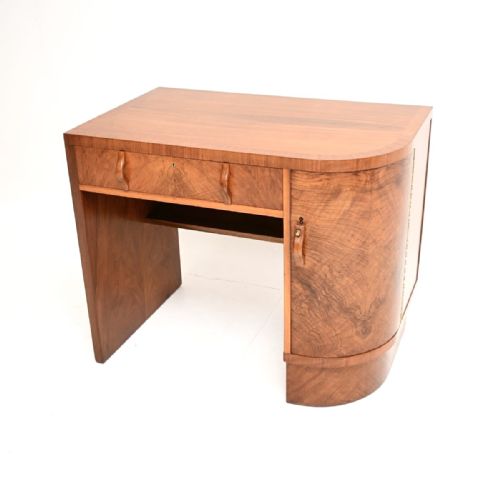
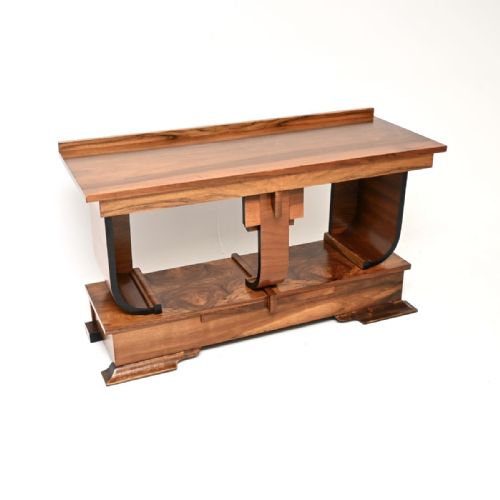
When searching for a 1920s art deco table, buyers encounter coffee tables and side or end tables originating from the nineteen-thirties and the nineteen-twenties. These forms display the signature aesthetic of the era through clean lines and structural geometry.
The coffee table is the version most frequently met on this page, representing the primary form currently listed alongside historical examples of side tables.
Materials and construction
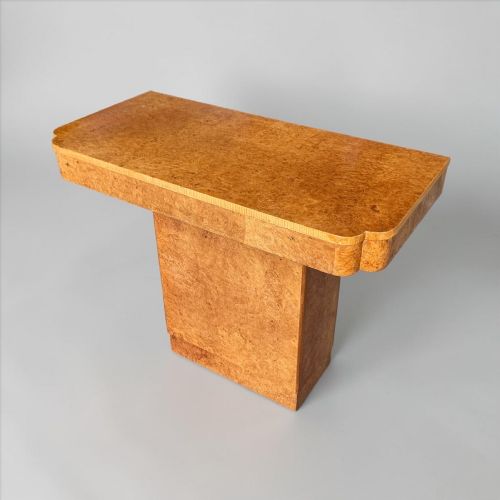
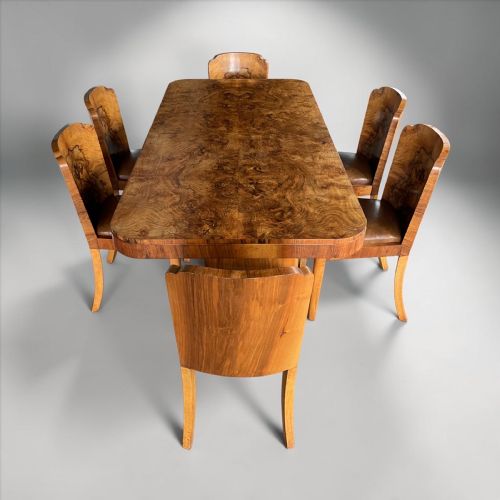
Makers utilised timber substrates finished with walnut veneer and burr maple, pairing patterned wood grains with solid hardwood components. Surviving examples also integrate mirror glass panels into the tabletop surface.
Construction techniques from the period prioritised visual contrast in the wood grain, often arranging veneers in geometric patterns across the top surface to catch the light.
Burr maple grain swirls so wildly that no two tabletops ever share the same visual fingerprint.
Assessing the range
Quality separates pieces by the selection of the timber veneer and the precision of its layout. Burr maple and walnut veneer demand expert matching across the surface to achieve the intended visual impact.
The sophistication of the silhouette and the integrity of the underlying hardwood frame distinguish finer examples from standard production.
The 1920s Art Deco Table Glossary
- Art Deco
- A design style emerging in the early twentieth century characterised by sleek geometric shapes, streamlined forms and modern materials.
- Walnut Veneer
- A thin layer of walnut timber applied to a supportive wood base, chosen for its rich dark tones and decorative grain patterns.
- Burr Maple
- Maple timber featuring distorted growth nodes that create intricate, swirling patterns when sliced into veneer.
- Side Table
- A small auxiliary table designed to stand beside seating or against a wall.
Frequently Asked Questions
What defines a 1920s art deco table?
These tables are defined by their geometric styling, structural forms and characteristic use of decorative wood veneers like walnut and burr maple.
They represent the design movements of the interwar period, combining functional surfaces with bold aesthetic choices.
Where should I place a side table?
A side table functions effectively beside a chair or sofa, providing a stable surface for lighting or everyday items within a room.
Their compact footprints allow them to fit into smaller spaces while contributing distinct period character.
How do I care for walnut veneer?
Walnut veneer requires protection from direct sunlight and excessive moisture to prevent fading and lifting of the wood surface.
Regular dusting with a dry cloth maintains the timber without introducing harmful chemical residues.
Are mirror top tables practical?
Mirror top side tables offer reflective surfaces that bounce light around a room while serving as functional display areas.
Care must be taken to avoid heavy impacts that could damage the glass insert within the wooden frame.