






Vintage Lounge Coffee Table
A vintage lounge coffee table anchors a room with period character, offering practical surface space paired with distinct historical craftsmanship.
Vintage Lounge Coffee Table
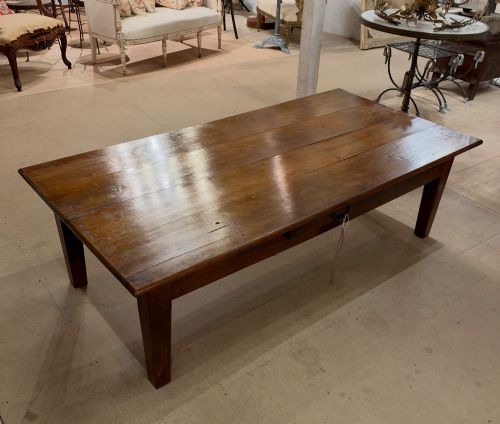
When you search for a vintage lounge coffee table, you are examining low tables and centre tables drawn from the nineteenth and twentieth centuries. The selection ranges from rustic farmhouse pine and oak pieces to grander revival designs.
You are most likely to meet walnut, mahogany, and hardwood constructions spanning Art Deco, Victorian, and Edwardian periods. Low tables adapted from earlier forms also appear alongside occasional tables and upholstered footstools.
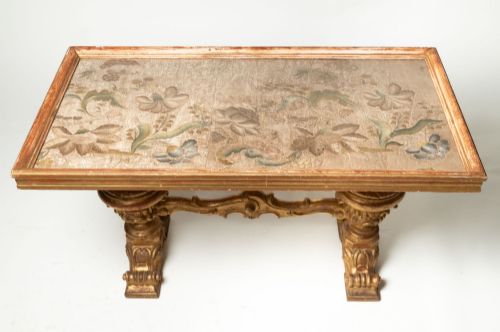
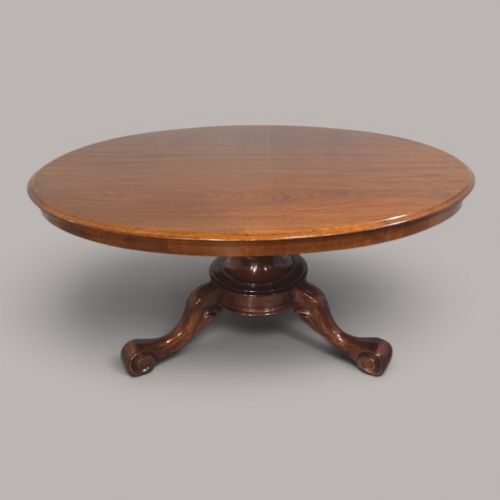
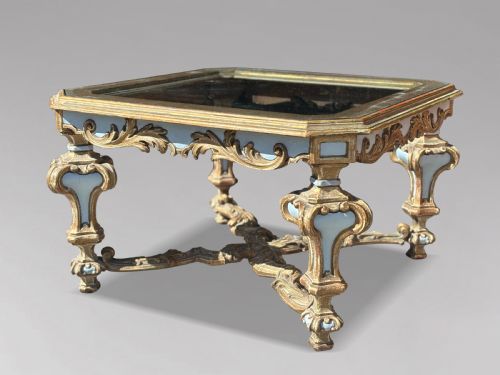
The origins stretch across English, French, Italian, and Chinese workshops, presenting varied silhouettes from simple square herringbone tops to ornate painted baroque frames and tripod bases.
Construction and materials
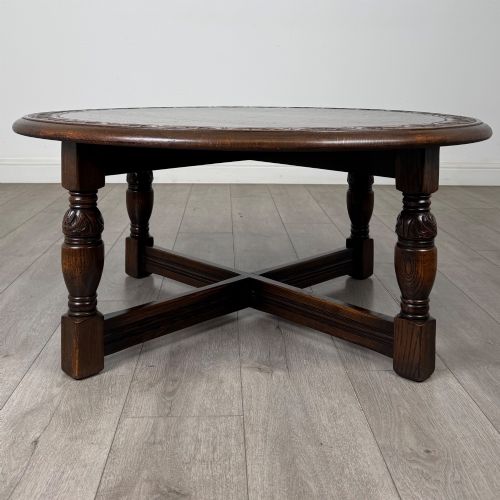
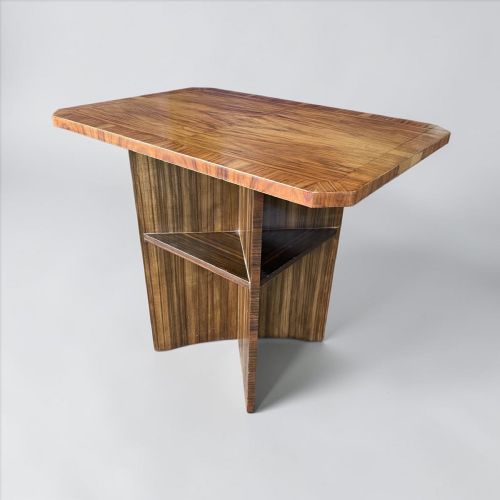
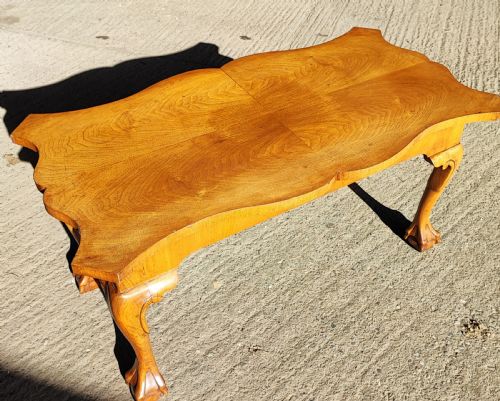
These pieces are built using traditional timber working methods, utilising solid hardwoods like oak, mahogany, and walnut alongside walnut veneer surfaces. Craftsmen applied clear polishes to highlight natural grain patterns or painted the wooden frames.
Decorative elements involve gold leaf application, intricate inlay work, and satin wood finishes. Structural supports range from modern cast iron tripod bases to turned wooden legs and low frames suited to Chinese low tables.
Vintage Lounge Coffee Table Retail Price Guide 2026
Typical asking prices for vintage lounge coffee table among the pieces listed under this phrase on Sellingantiques today, from the lower quarter to the upper quarter. They describe what is for sale here now, not the wider market.
A sturdy Victorian table top gets a second act perched upon a modern cast iron tripod base.
Assessing the craftsmanship
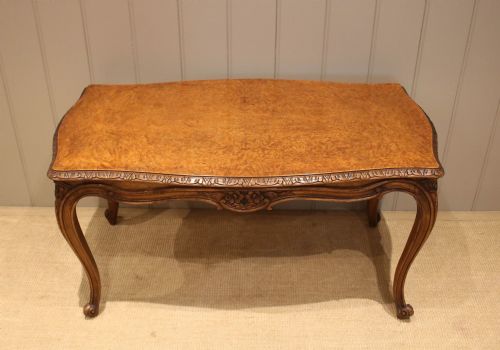
Quality in these tables rests upon the selection of timber and the precision of the veneer work, where burr walnut and figured mahogany elevate a piece. The treatment of decorative details, from hand-applied gold leaf to intricate inlay, distinguishes standard production from finer output.
Structural integrity depends on the joinery within the frame and the harmonious adaptation of altered pieces, such as period tops mounted on later bases. The depth of the finish and the preservation of original painted surfaces further separate simpler utility items from more ambitious workshop creations.
Harrods
The Vintage Lounge Coffee Table Glossary
- Burr walnut
- A figured wood grain harvested from the burl growths of walnut trees, prized for its swirling patterns on table tops. It appears frequently on twentieth-century low tables.
- Art Deco
- A design style emerging in the early twentieth century characterised by sleek lines and geometric forms. Pieces from this era often utilise blonde oak or walnut.
- French Rococo Revival
- A nineteenth-century revival style featuring elaborate, curving ornamentation and ornate framing. It draws inspiration from earlier continental court aesthetics.
- Hardwood
- Timber derived from broad-leaved deciduous trees, offering durability and dense grain structures. Chinese and English listings frequently employ this material.
- Tripod base
- A three-legged support structure providing stability for circular or oval table tops. Some Victorian examples combine these bases with earlier wooden surfaces.
Vintage Lounge Coffee Table: Frequently Asked Questions
What periods do these tables span?
The selection covers items from the nineteenth and twentieth centuries, encompassing Victorian, Edwardian, and Art Deco eras.
You will also encounter specific decade dates and broader century classifications within the listings.
Are all these tables original coffee tables?
Many are period pieces, while others include low centre tables and occasional tables adapted for modern lounge use.
Some examples pair antique wooden tops with later iron or wooden bases to achieve the desired low height.
What woods were commonly used?
Walnut, mahogany, oak, pine, and satin wood appear frequently across the different styles and origins.
Several pieces also feature hardwood construction or intricate veneer surfaces like burr walnut.
How do I identify an Art Deco table?
Art Deco pieces typically date from the 1920s and 1930s, showcasing clean lines and blonde oak or walnut materials.
They reflect the modern design shifts of the interwar period compared to earlier ornate Victorian styles.